United Minds: International Mail/Fax Art Exhibition,
Tampere House / MindTrek, Tampere, Finland, 2001. (Edited by Ilkka-Juhani Takalo-Eskola, design: Mikko Finneman)
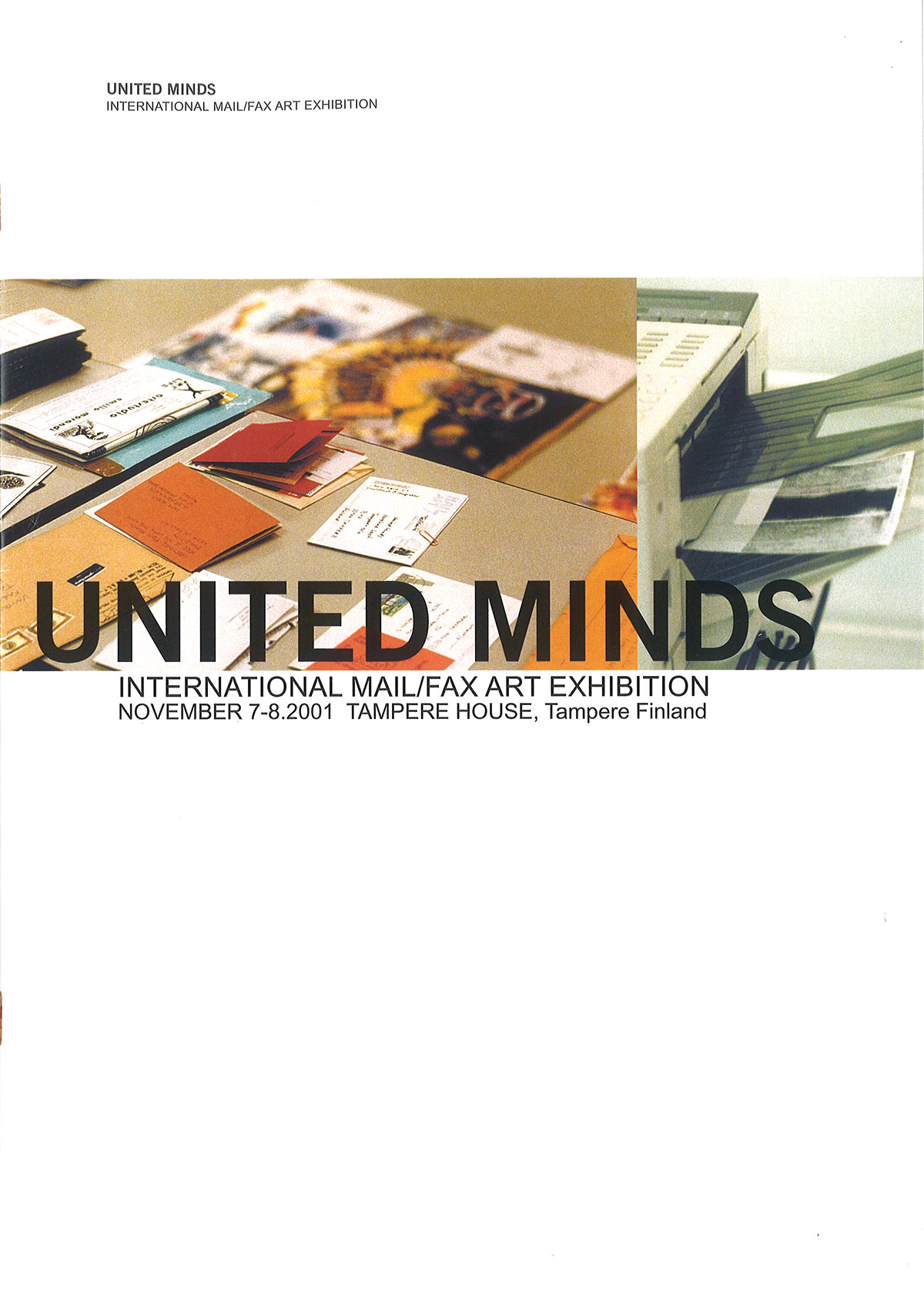
United Minds was an international Mail Art and Fax Art exhibition held on 7–8 November 2001 at Tampere House (Tampere-talo), Tampere, Finland, organized by Finnish artist and curator Ilkka-Juhani Takalo-Eskola. The exhibition was produced by Karoliina Leisti and took place in direct connection with the MindTrek technology and culture festival, reflecting the project's conceptual focus on human consciousness, networked communication, and the creative potentials of the mind in the information age.
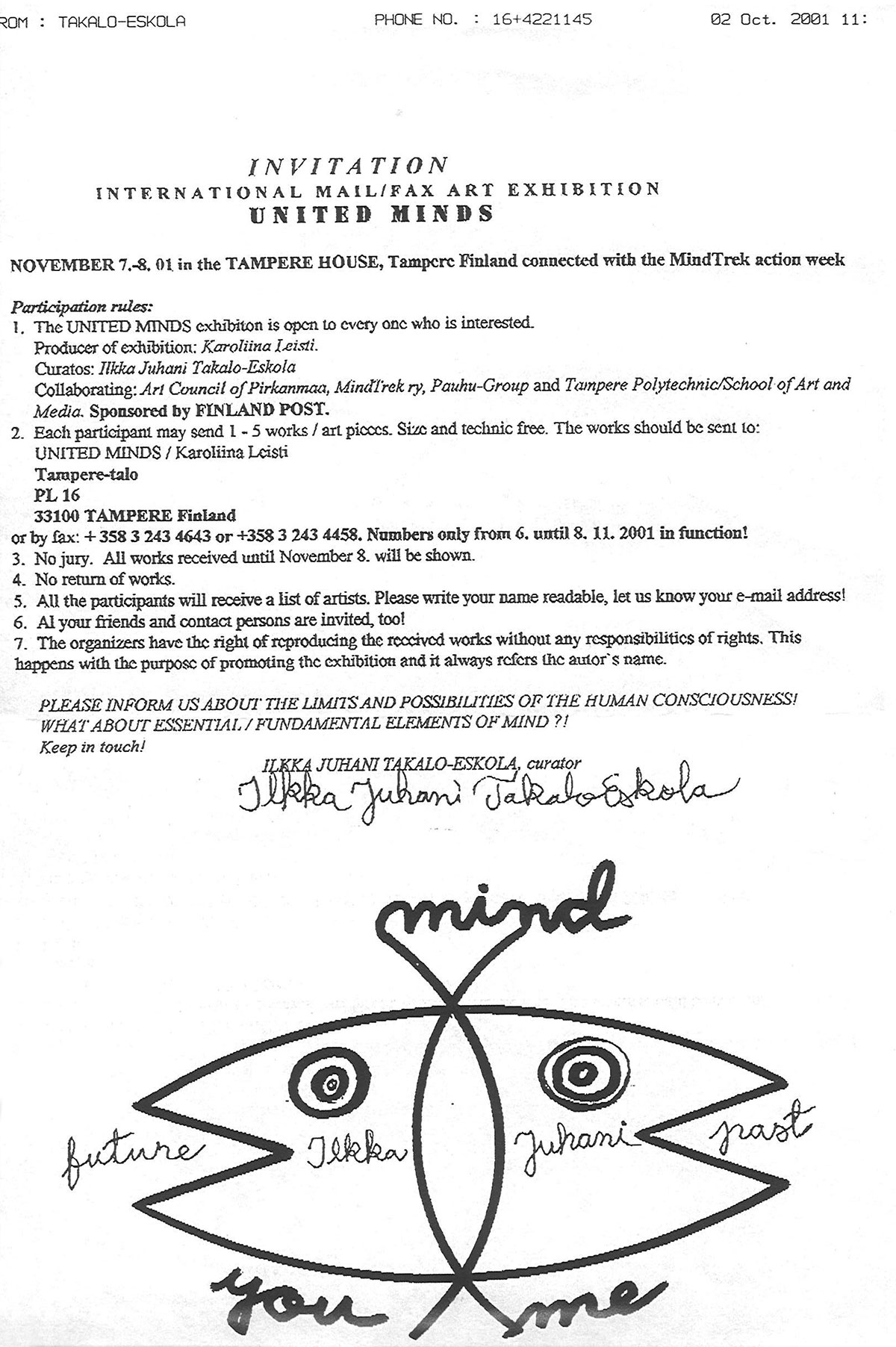
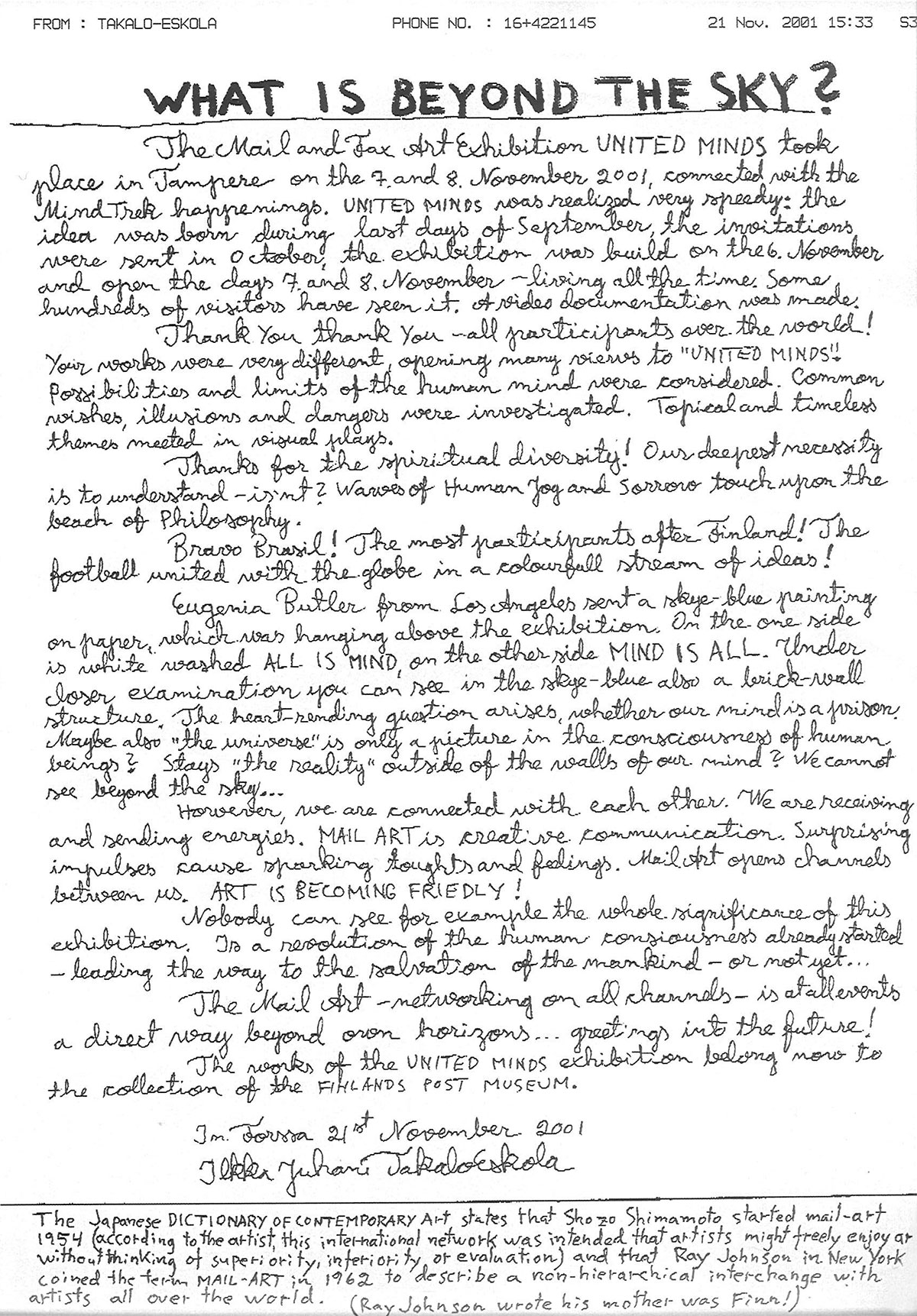
Takalo-Eskola, born 1937, is a Finnish visual artist known for his commitment to spontaneity, multivalence, and visual experimentation. His collage-based practice, intimately rooted in mail art since the 1990s, provided a natural conceptual spine for United Minds. The invitation — distributed by fax and post in early October 2001 — posed two open thematic questions to participants worldwide: "What is beyond the sky?" and "What about the essential / fundamental elements of the human mind?" These questions acquired an urgent, almost existential resonance given the geopolitical context: the exhibition opened less than two months after the September 11 attacks in New York, and the post-exhibition newsletter written by Takalo-Eskola on 21 November 2001 explicitly acknowledges this global moment, describing how United Minds became "a resolution of human consciousness already started — leading the way to the salvation of mankind, or most yet."
The call was notable for its deliberately non-hierarchical, open-access structure: the exhibition was open to any, no jury, works were not returned, and each participant could submit between one and five works in any mail- or fax-transmittable media. Finland Post served as a co-sponsor, underscoring the institutional significance of the postal medium to the project's identity.
The resulting exhibition drew 166 participants from across the globe, with particularly strong representation from Brazil, Finland, Italy, Germany, Argentina, the United States, Japan, and Australia. Among the internationally recognized Mail Art networkers present were Vittore Baroni (Italy), Ruggero Maggi (Italy), Cornelis Vleeskens (Australia), John Hopkins (USA), Alfredo P. Mauderli (Argentina), Permario Ciani and AAA Edizioni (Italy), and the Gutai artist Shozo Shimamoto (Japan). Finnish performance artist Roi Vaara was also among the contributors, alongside numerous students and groups from Finnish art and polytechnic institutions, pointing to the exhibition's explicit educational and community-building dimension.
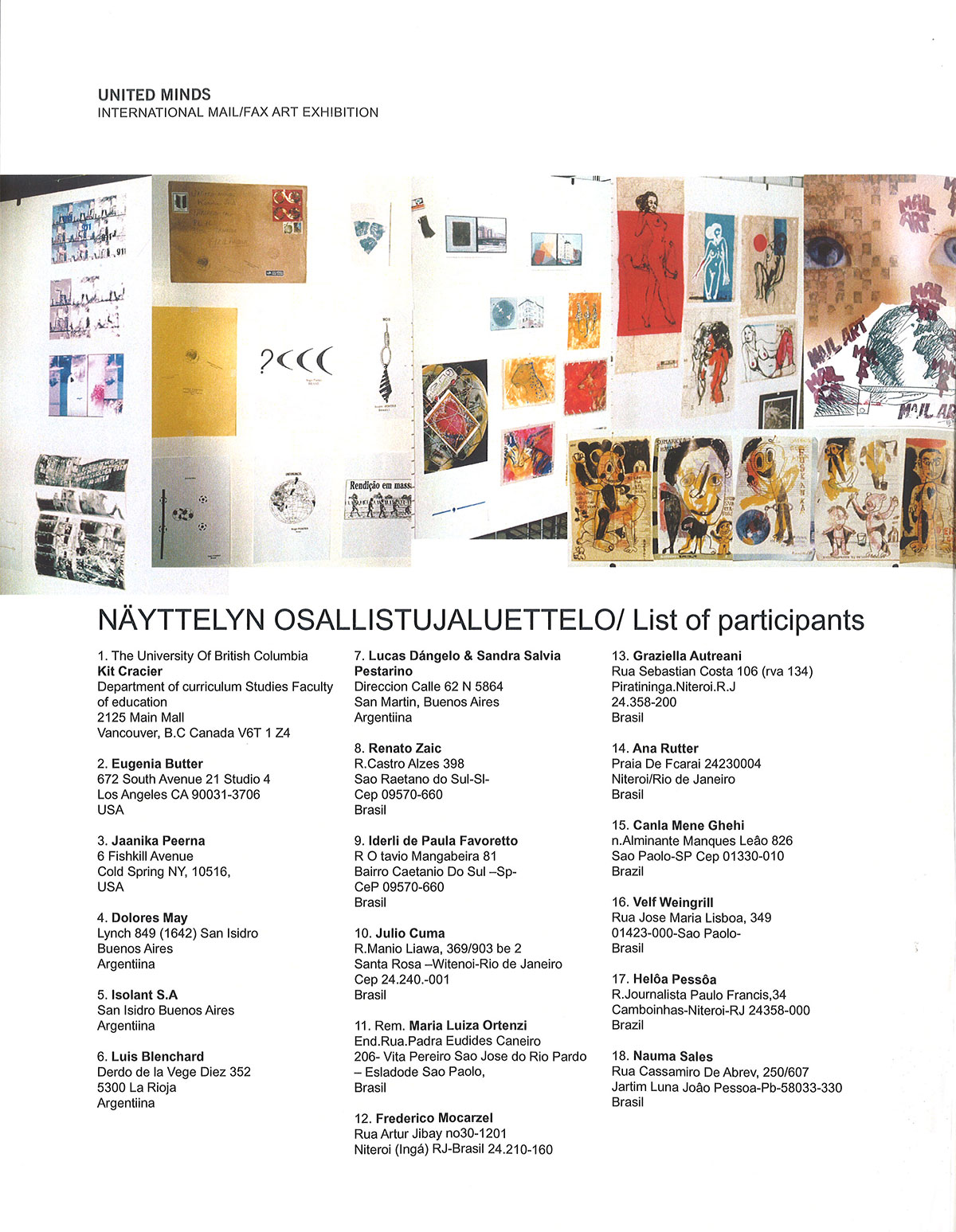
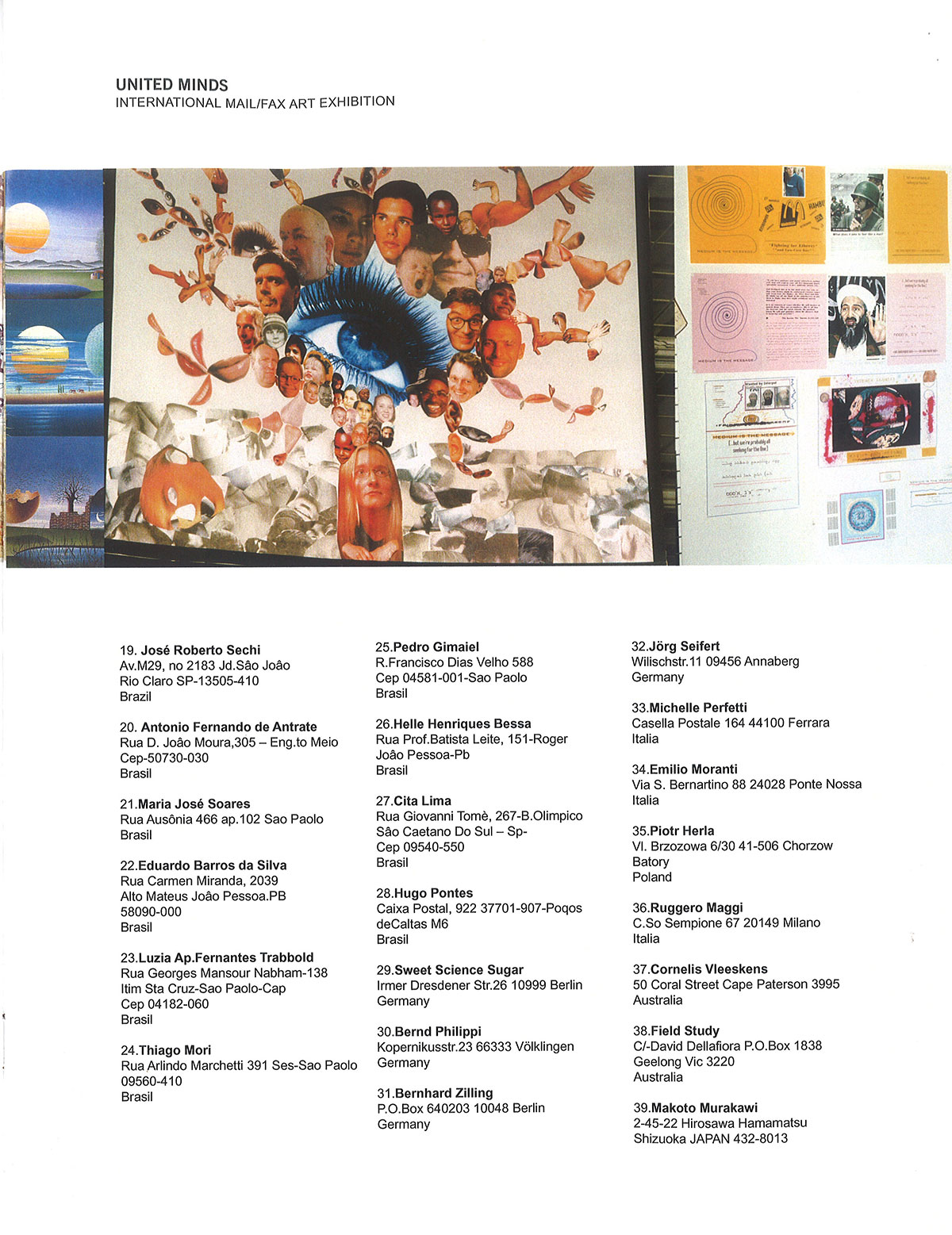
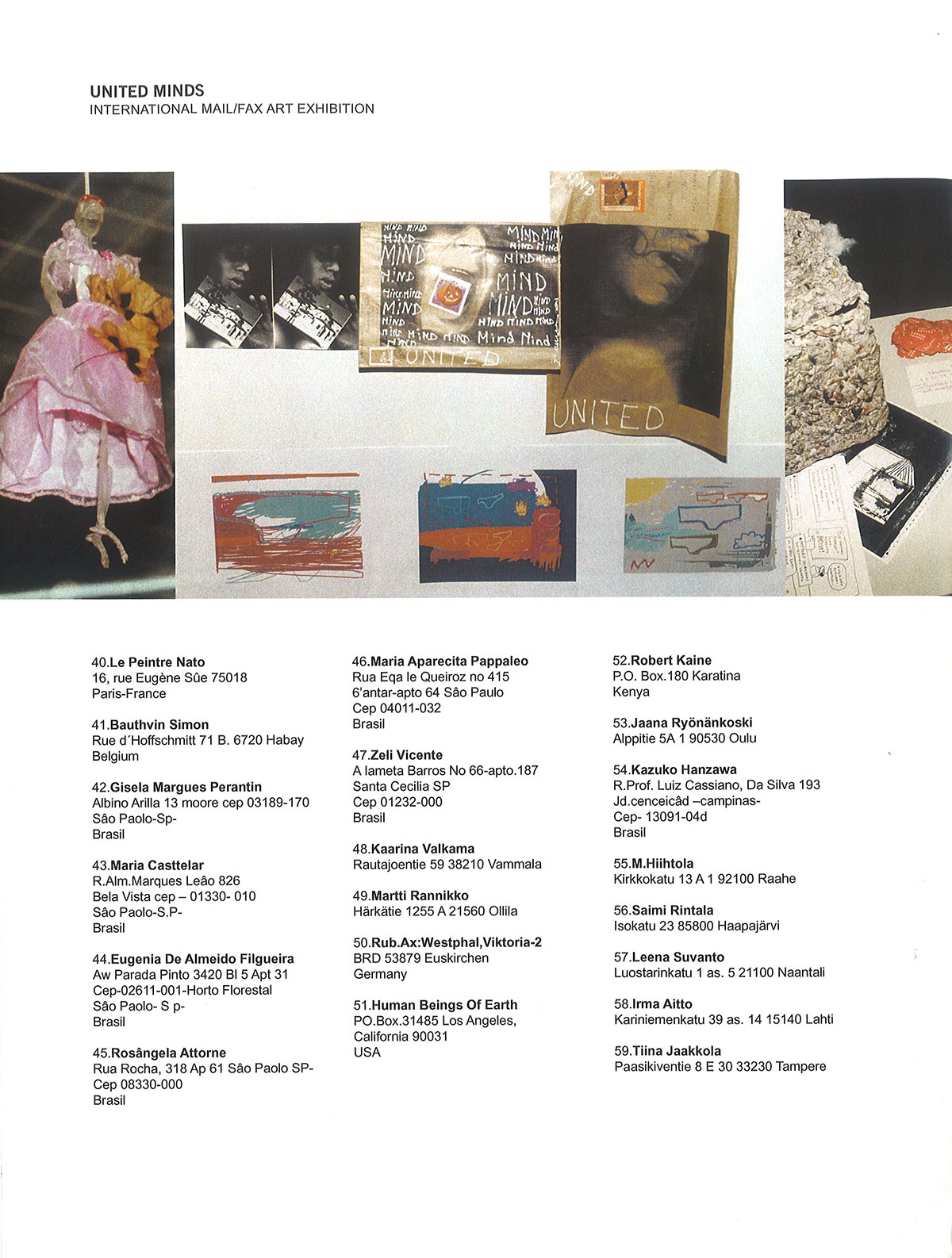
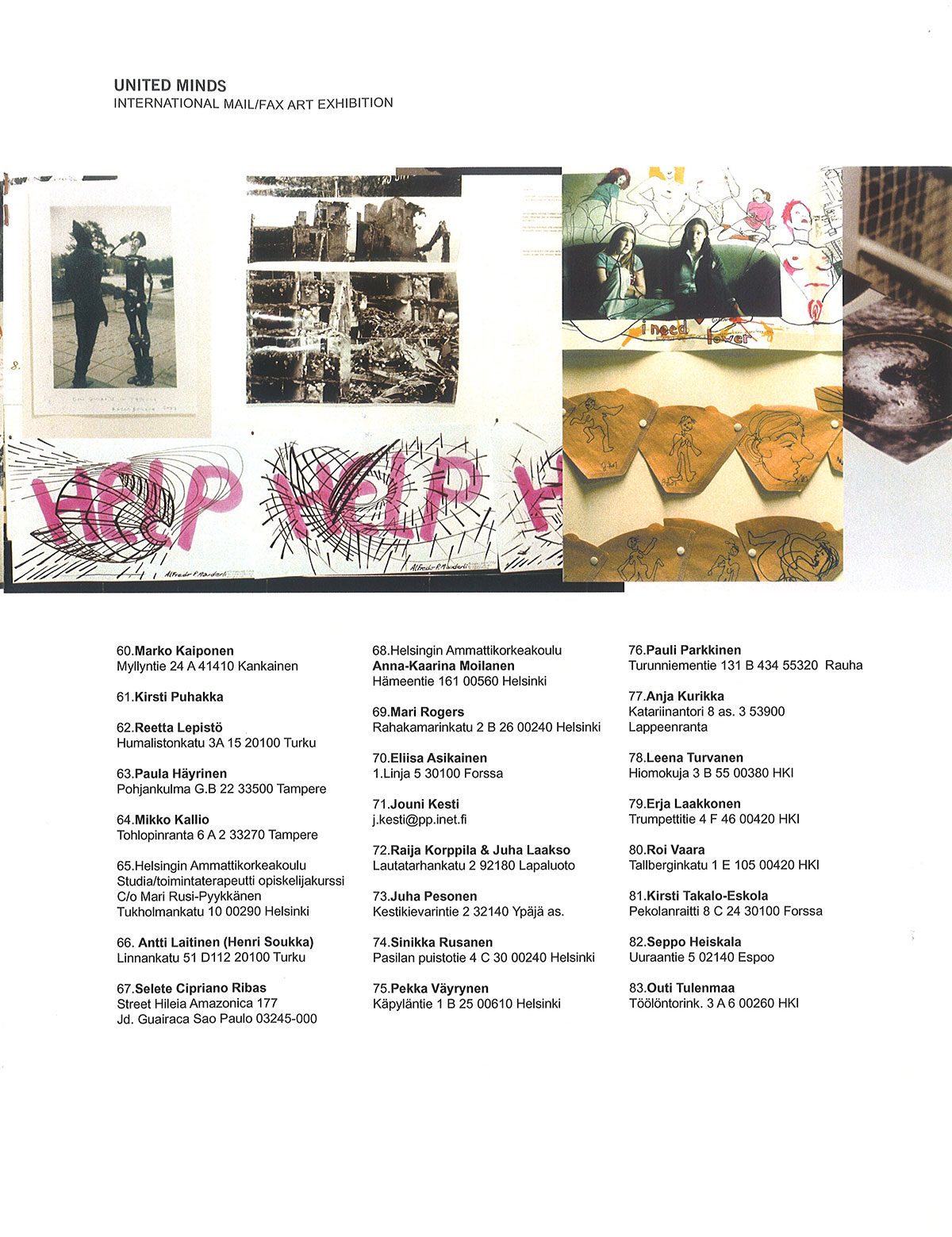
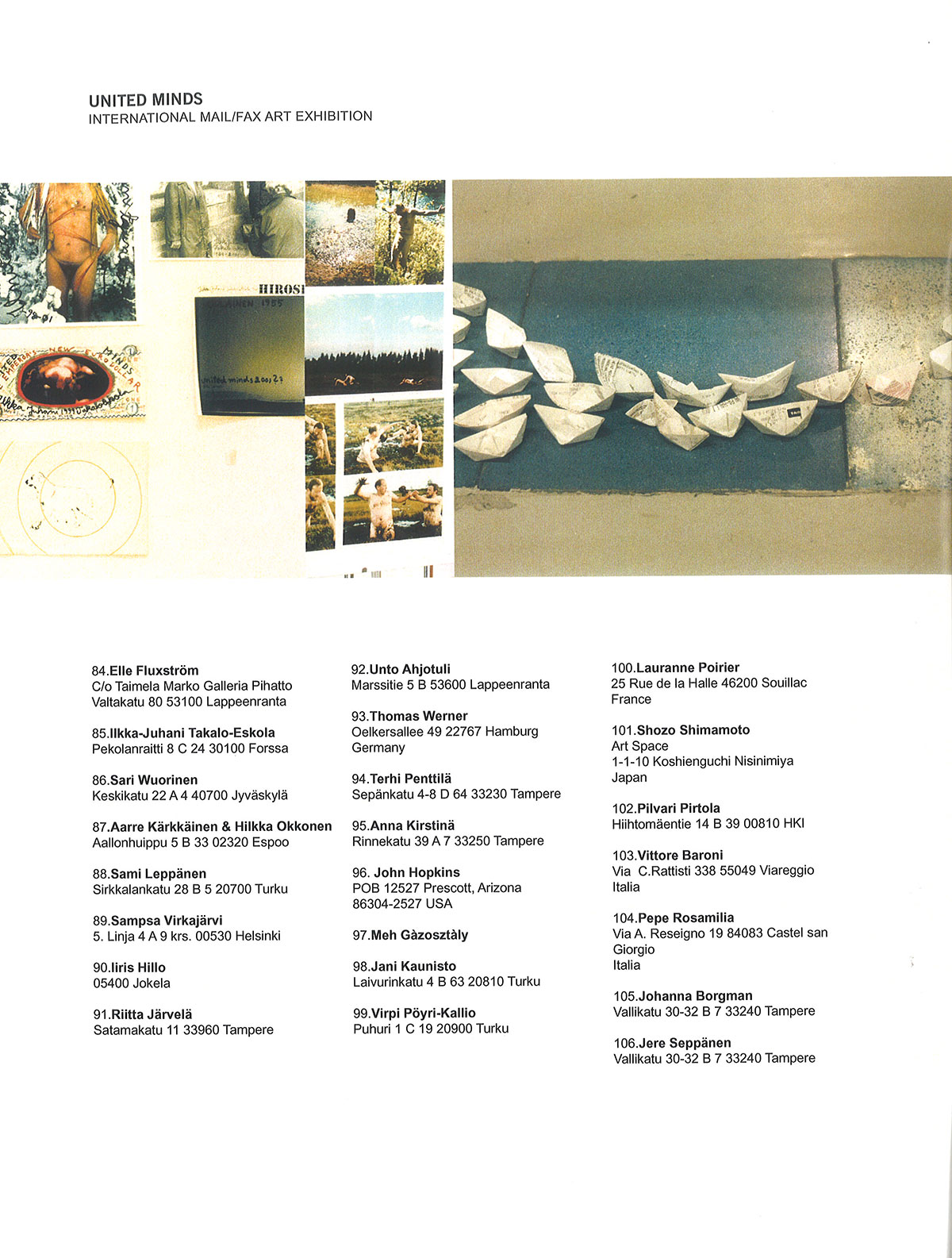
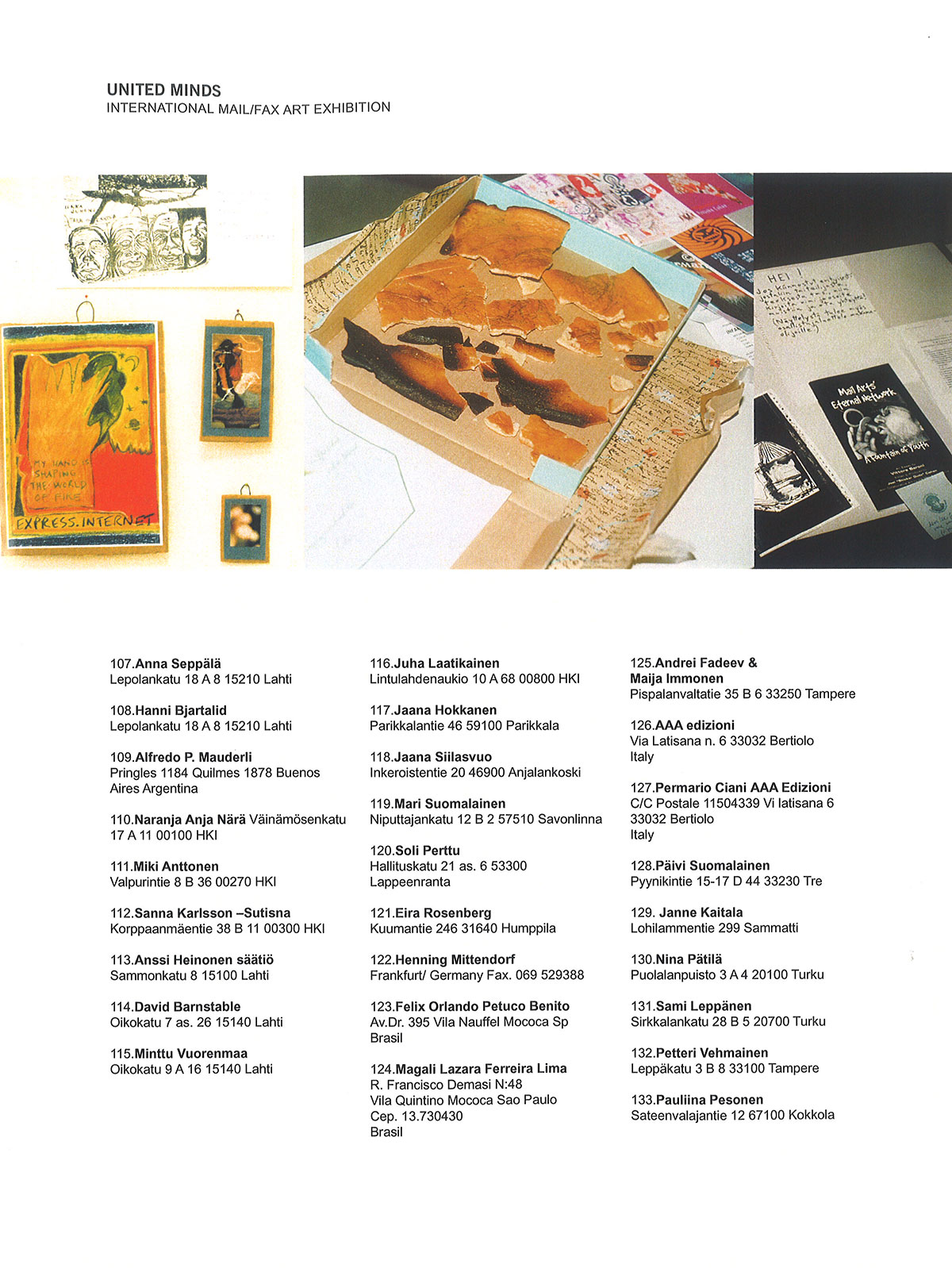
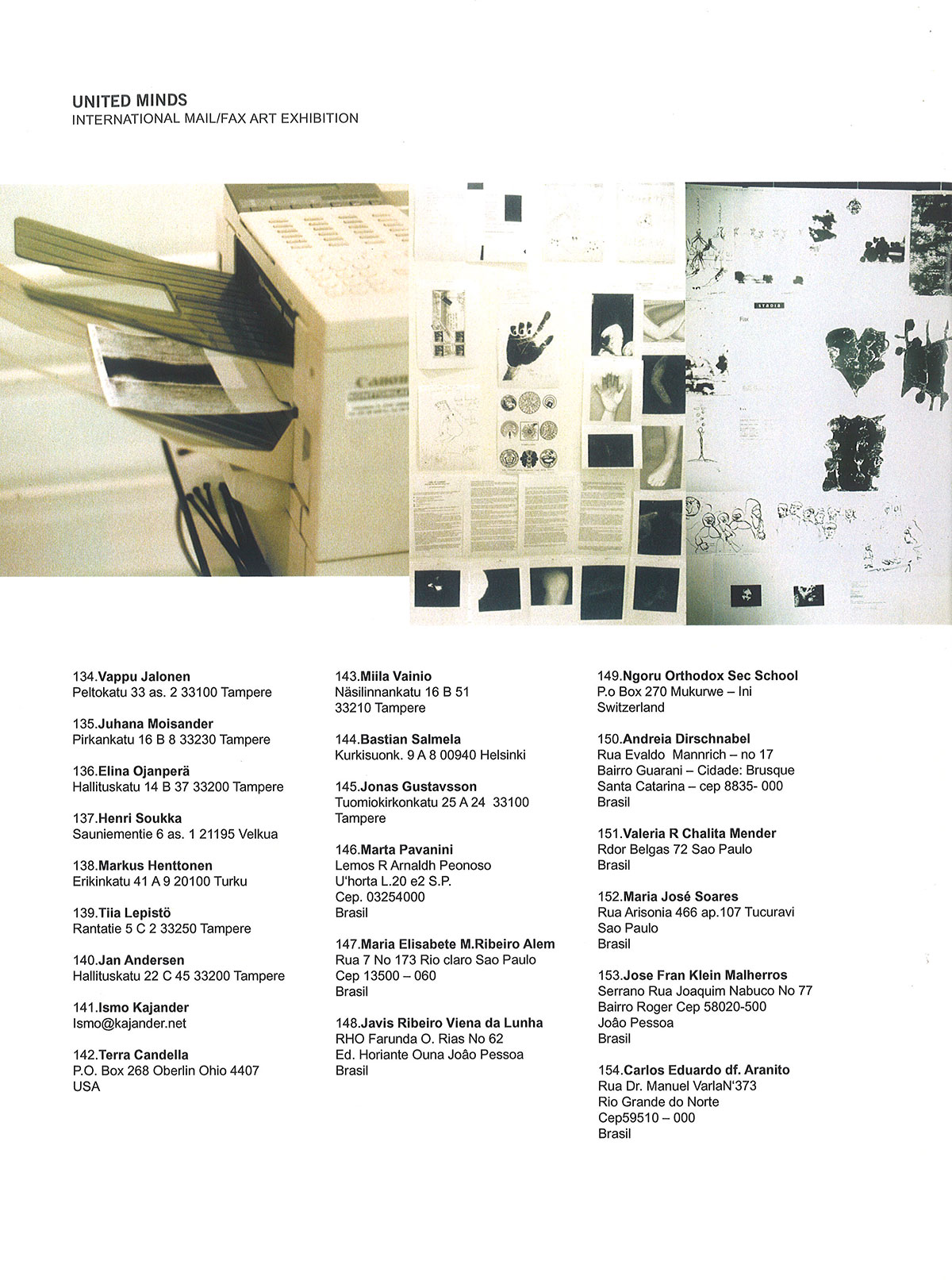
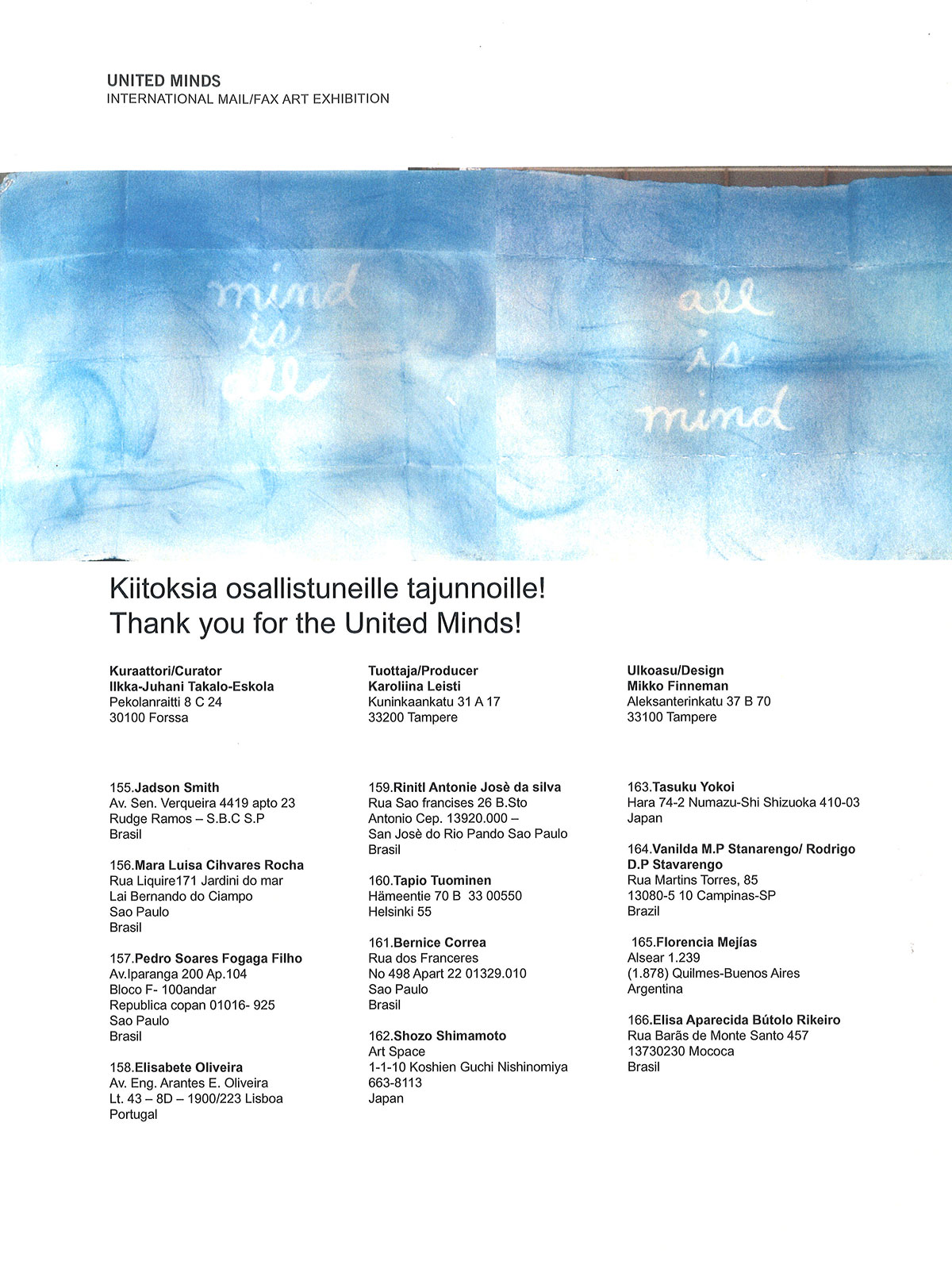
The catalog, designed by Mikko Finneman, functions simultaneously as a List of Participants and exhibition document. Each page pairs a photographic spread of displayed works — collages, assemblages, fax transmissions, objects, and paintings installed at Tampere House — with a numbered list of contributors and their postal addresses, preserving the global breadth of the network in a single compact publication. The closing page reproduces a blue-toned artwork bearing the inscription "mind is all / all is mind", offering a meditative summation of the project's philosophical premise.
United Minds stands as a significant document of how the Mail Art network of the early 2000s was adapting to and absorbing new communication technologies — particularly fax art — while maintaining the egalitarian, no-jury, open-participation ethics that had defined the network since Ray Johnson's correspondence practice in the 1960s. The exhibition's location within a technology festival signals the transitional moment between postal and digital networking cultures that characterized the turn of the millennium.