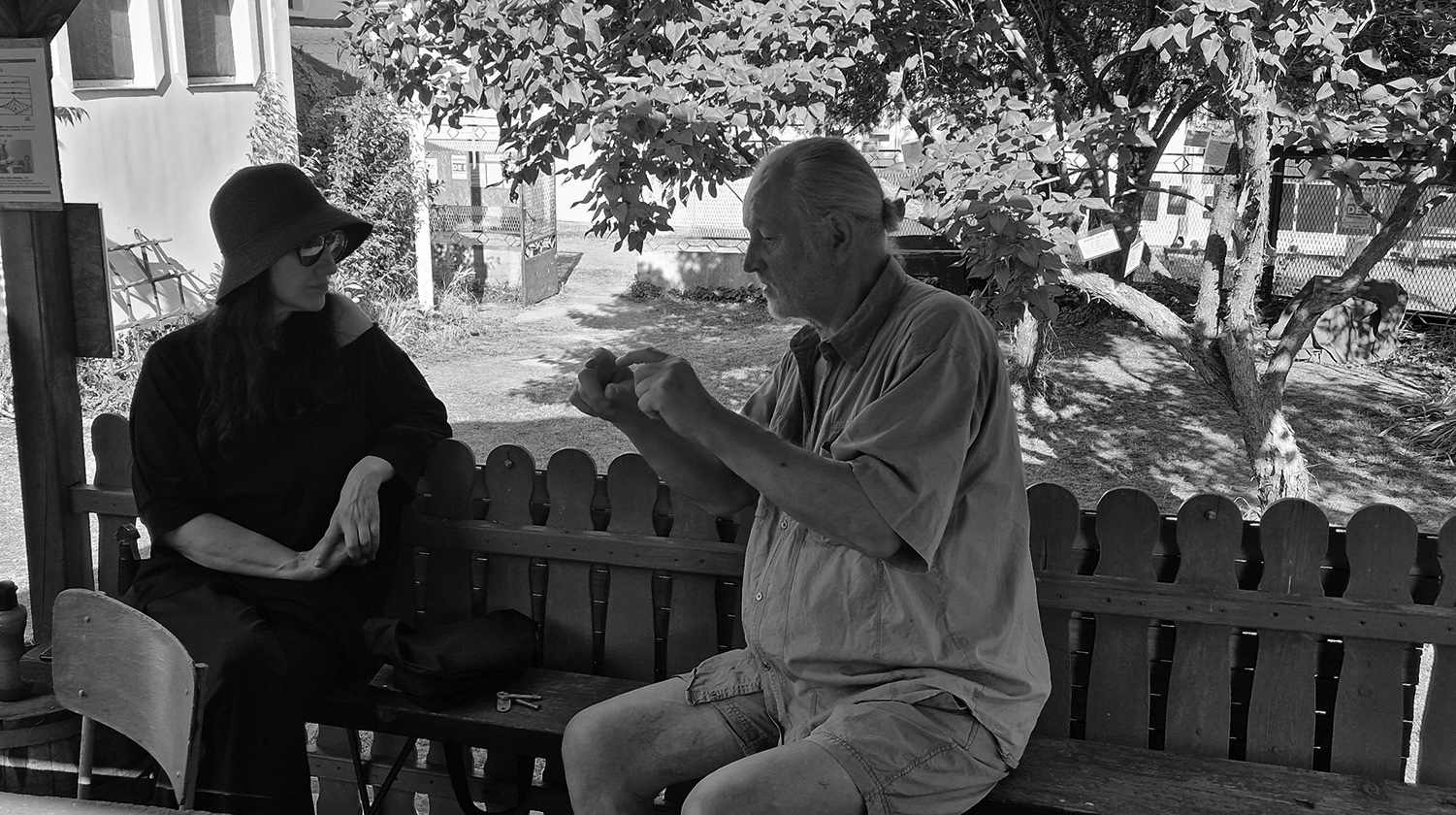
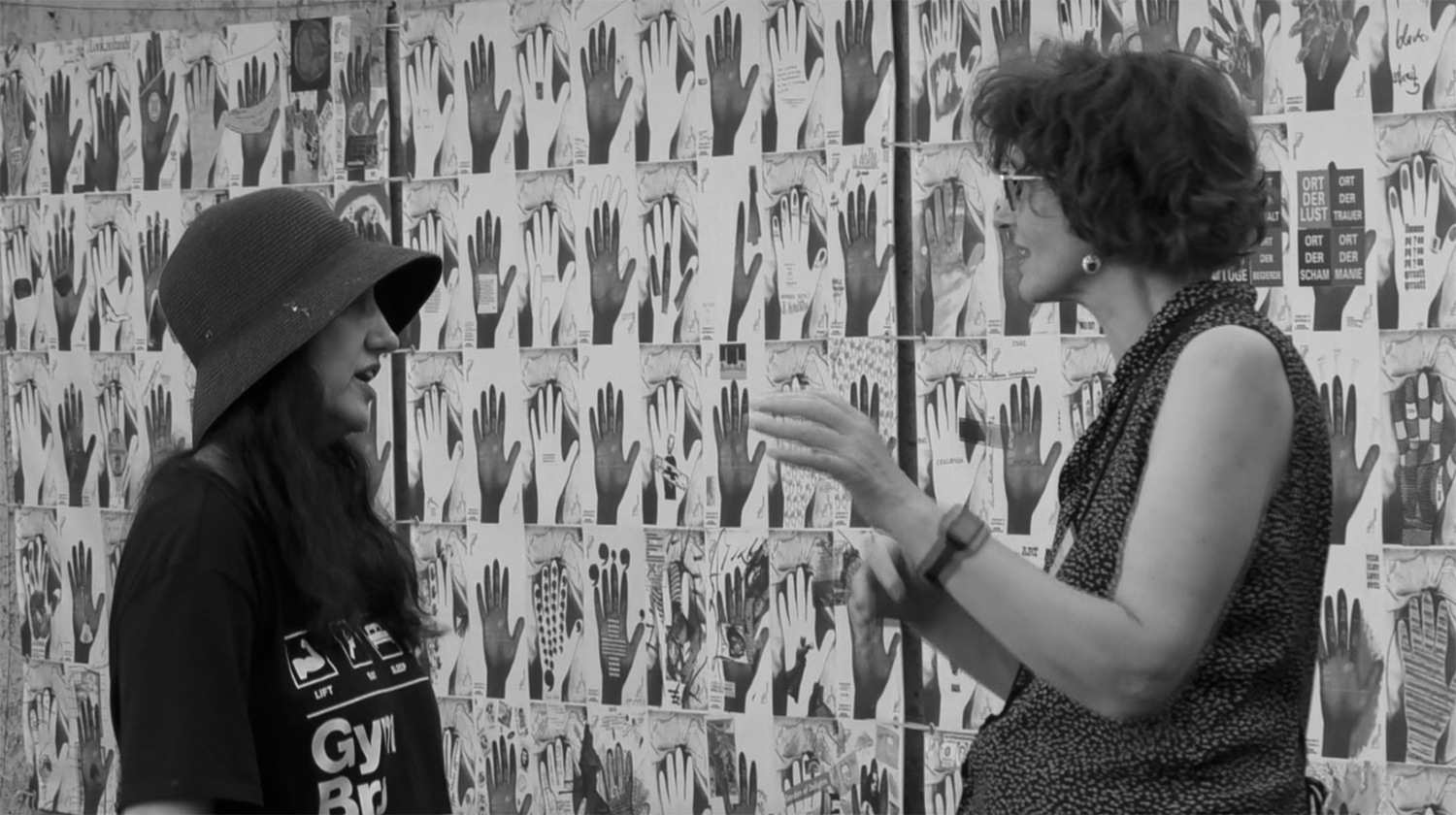
Writings by Mira Falussy in Area 51, Kapolcs
in July–August 2026 at the Artpool Art Research Center's traditional summer exhibition event titled “The Future Continues”
Published by LUFT ART PRESS
≈≈≈≈≈
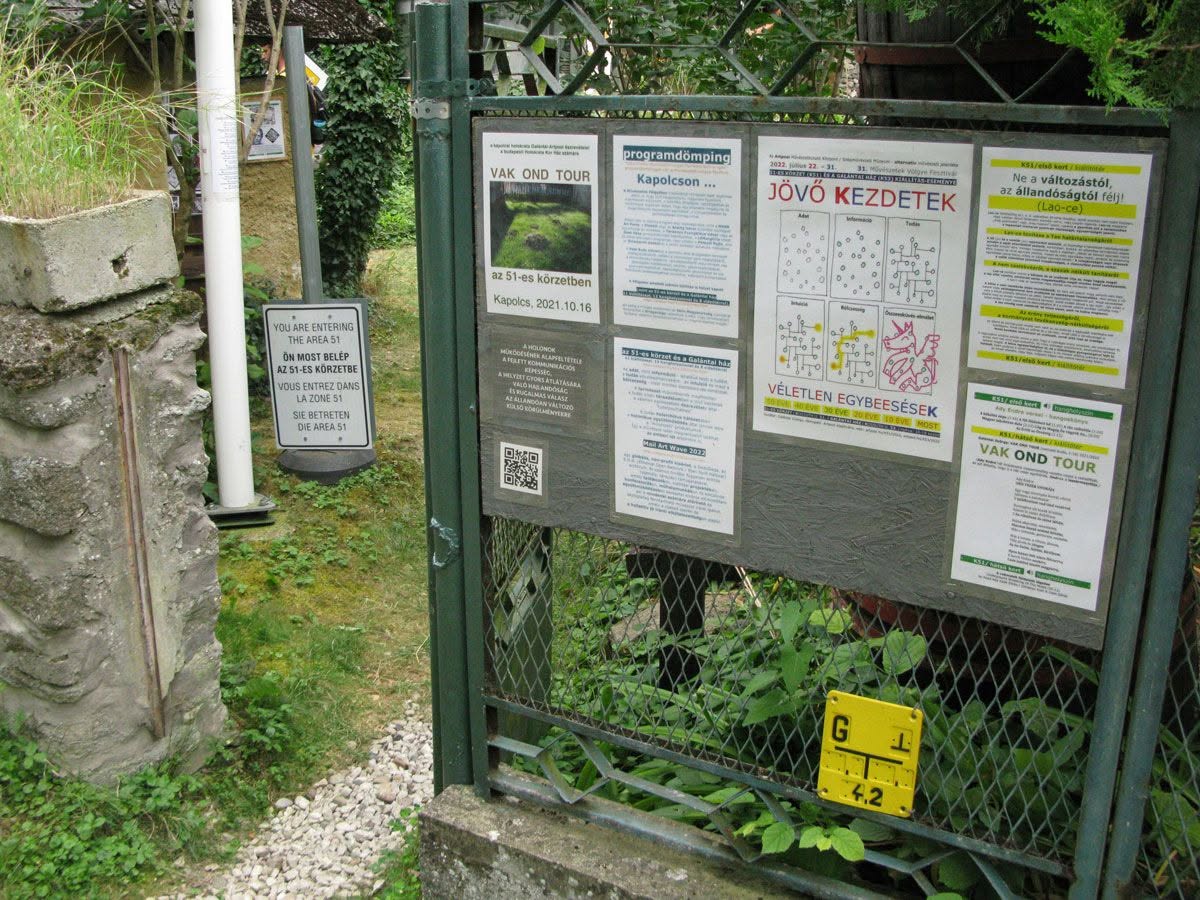
Area 51 and the Galántai House serve as the contemporary, avant-garde art hub for Artpool and György Galántai at the Valley of the Arts Festival on Kapolcs’s main street, at 51 and 53 Kossuth Street.
The venue’s name derives from the house number and an ironic parallel to the secret base in Nevada. It is a place of artistic freedom and chance encounters.
Progressive, multimedia, and conceptual exhibitions are not housed in a gallery but in the converted spaces of a traditional village farmhouse—cellars, attics, gardens, a former pigsty, and a woodshed.
Interactive sound and video installations that reflect on the history of the Hungarian avant-garde—for example, Balatonboglár—and on the philosophy of the future.
≈≈≈≈≈
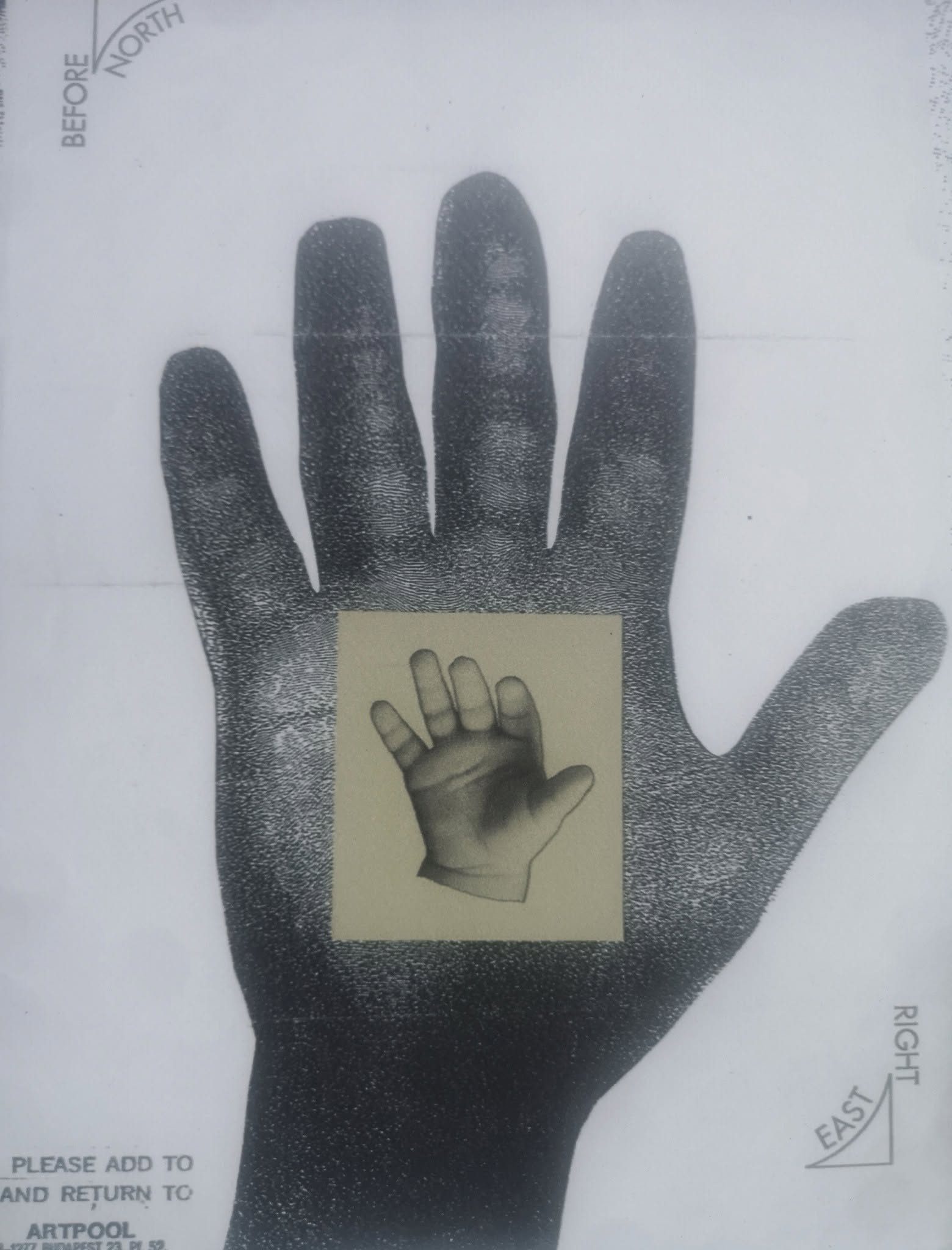
The Hand as a Universal Symbol
György Galántai’s 1995 project, *Hands*, was an international mail-art collaboration that focused on the human hand as a universal symbol of creation, communication, and personal relationships.
The works submitted in response to the call explored the motif of the hand in a wide variety of forms.
It appeared, among other things, as human touch and as a means of identification and metacommunication.
György Galántai’s goal was to keep alive and expand the analog, mail-based international friendships among artists in the years following the fall of the Iron Curtain.
The project demonstrated that art is capable of generating a shared collective mindset that transcends national borders, centered around a single, simple theme.
≈≈≈≈≈
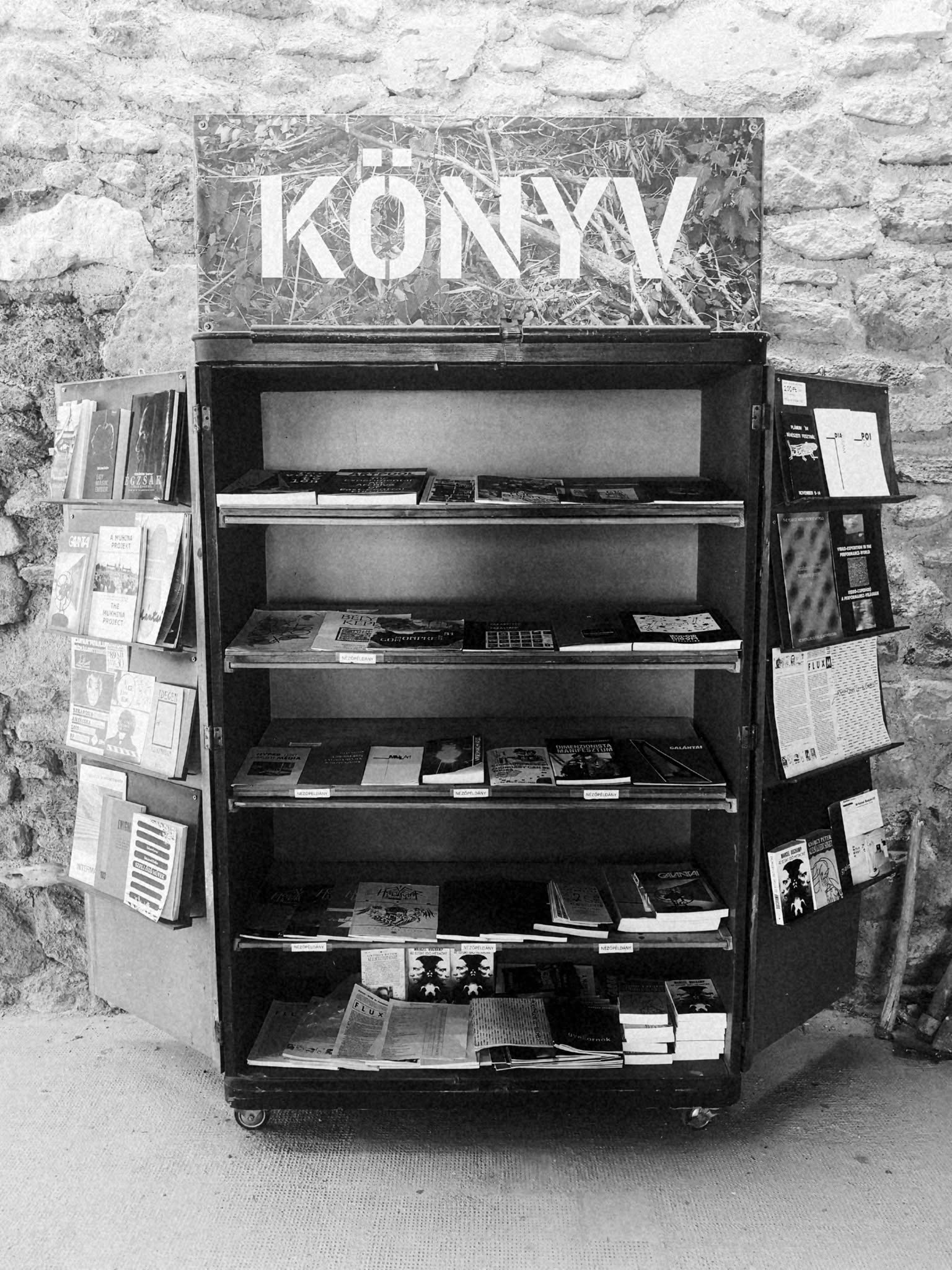
György Galántai: Bookcase (Photo | Falussy©)
The active archive as a living organism...
In György Galántai’s neo-avant-garde and Fluxus art, as well as in the Artpool Art Research Center he founded, books and bookcases carry a very specific, conceptual, and political meaning. For him, the library is not a passive storage space, but an active artistic medium and a form of resistance. Galántai uses the motifs of the bookcase and the archive, for example, in his projects in Kapolcs or at his bases in Budapest, through which he conveys specific messages
In his concept, the bookshelf—with its archives and shelves—represents a continuously functioning, intellectual and creative space. It is an interactive hub where both the artist and the visitor can incorporate their own thoughts, so that the shelf itself is constantly changing and growing.
During the Kádár regime, in the early years of the Balatonboglár Chapel Studio and Artpool, official cultural policy strictly censored art and literature.
In this environment, a bookshelf filled with alternative samizdat publications and foreign “mail art” materials served as a repository of freedom and forbidden information.
The bookcase symbolized hidden yet accessible knowledge in an era when independent thought was considered illegal.
By placing the bookcase in the attic, cellar, or kitchen of an old farmhouse within the context of Kapolcs K51, Galántai transforms this ordinary, rural space into a spiritual center.
The presence of books in a woodshed or a pigsty creates a thought-provoking and jarring clash between high culture and the mundane realities of everyday life.
≈≈≈≈≈
Luft Art Press, August 1, 2026
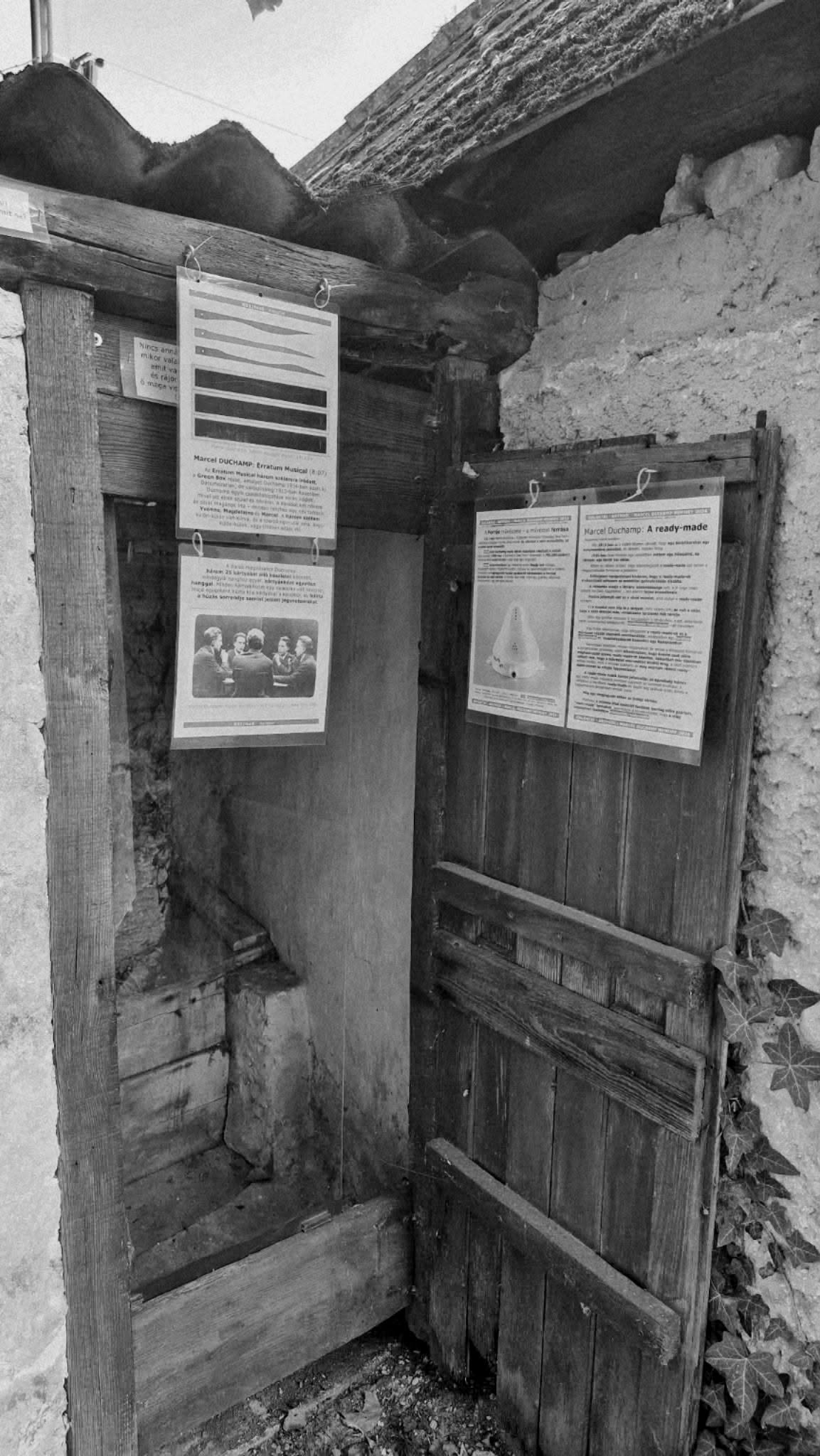
Duchamp
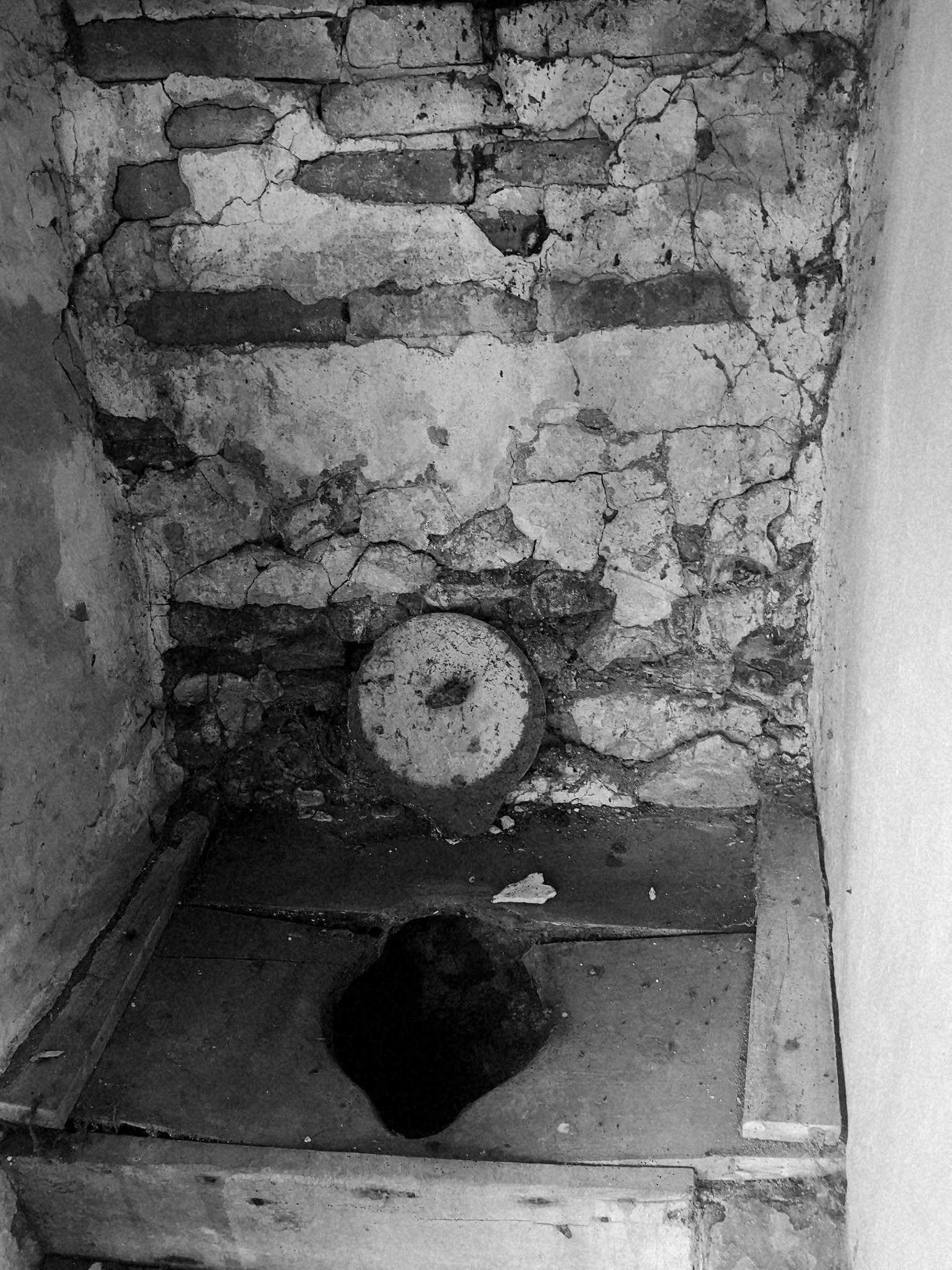
Duchamp’s original 1917 urinal was lost almost immediately. Today, the world knows the work only through Alfred Stieglitz’s black-and-white photograph and based on later reproductions. By placing a photograph of the porcelain urinal—rather than the physical object itself—next to the rural outhouse in the Kapolcs context, Galántai also alludes to the fact that in conceptual art, the photograph itself—the document—and the archive become the medium of the artwork.
Overall, this parallel demonstrates that the Duchampian spirit is perfectly adaptable and works well even in the most mundane, rural setting of the Hungarian village of Kapolcs.
≈≈≈≈≈
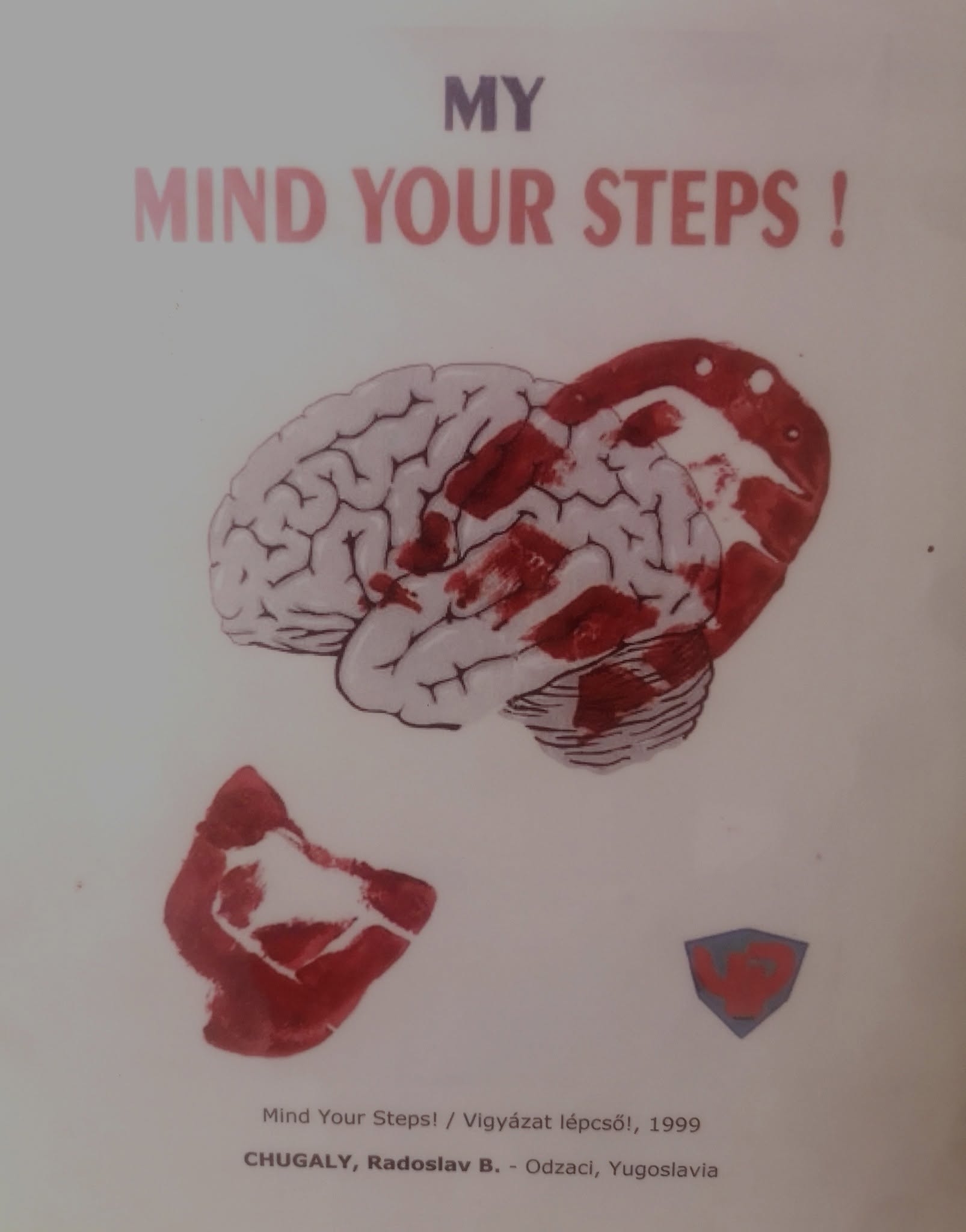
Radoslav B. Chugaly: My mind your steps
Luft Art Press, August 2, 2026
Radoslav B. Chugaly is a Serbian conceptual artist, poet, and performer. He is a regular participant in international multimedia art projects and festivals.
Chugaly was an active member of the international mail art network. He sent his unique artistic postcards, visual poems, and objects to Budapest.
These items were added to the archives of the Artpool Art Research Center, founded by György Galántai and Júlia Klaniczay. The museum continues to preserve Chugaly’s works alongside world-renowned museums such as MoMA in New York and the Tate Gallery in London.
≈≈≈≈≈
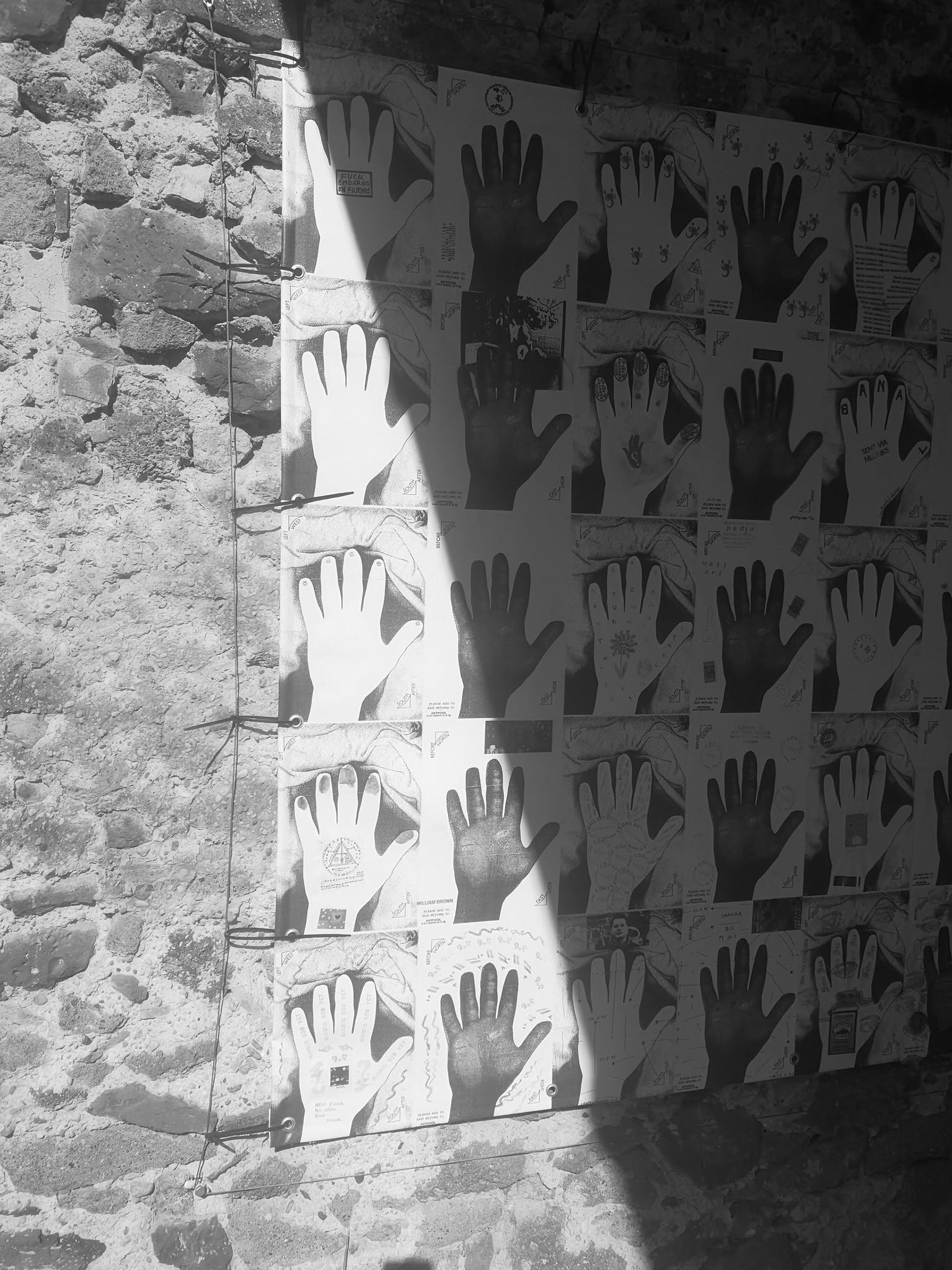
György Galántai: Hands | Kapolcs | Area 51 (Photo | Falussy©)
Luft Art Press, August 3, 2026
Hands
Mail art is not the postal service.
It is not a static art movement but a dynamic system, a continuous interaction that breaks down boundaries.
In the censored, closed world of socialism, official channels were under control and unsuitable for artists to communicate through.
That is why Artpool built pseudo-channels. The spirit of these channels is evident in the spaces of the Galántai House and Area 51, which have not become exhibition spaces but remain, to this day, active alternative transmitter-receiver stations.
The hand is not merely a body part. The hand is an interface. When you press your palm against the paper, you do not merely leave an imprint; you close a circuit with creators living in the rest of the world, and with those who tune in to this spectacle in space and time.
≈≈≈≈≈
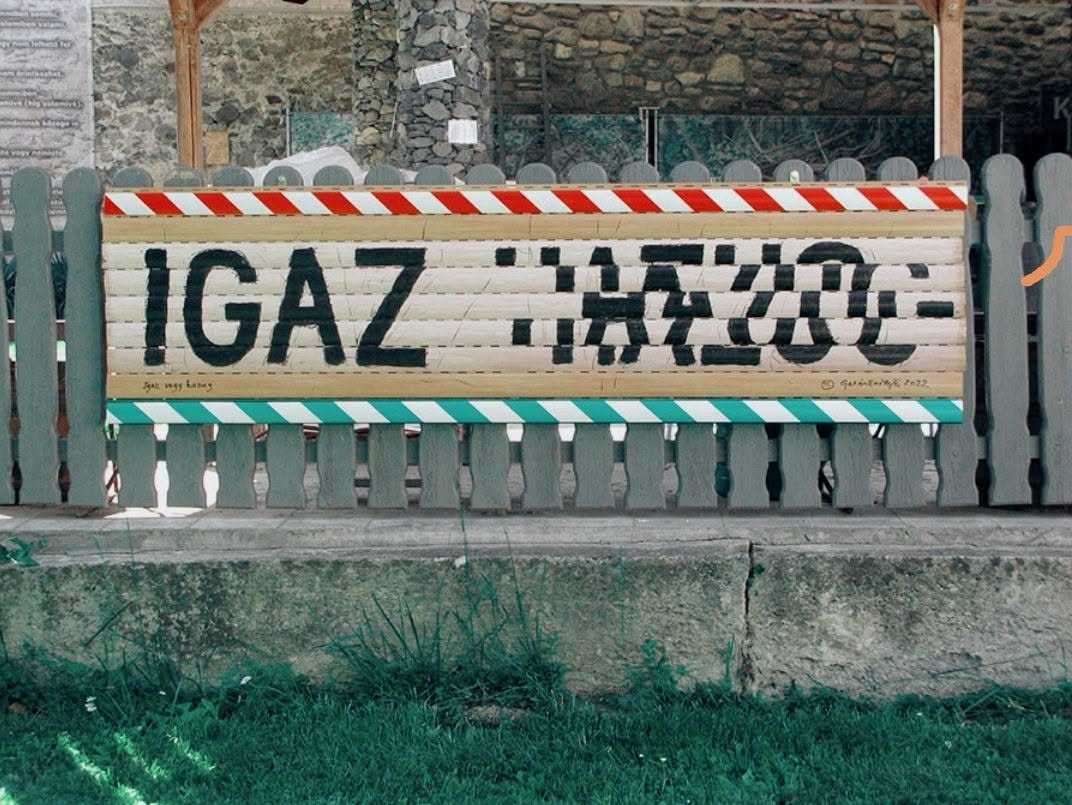
György Galántai: TRUE or LIE. A Concrete Poetic Reuse of a Worn-Out Shutter
In Memory of Endre Szkárosi, 2022 (Photo | Artpool)
Luft Art Press, August 3, 2026
TRUE–LIE
In György Galántai’s artistic method, the concept of “self-assembling” meanings is based on the viewer’s active participation, the free interplay of contexts, and the networked interconnection of found elements that take on new meaning. The core of the term originates from the avant-garde polymath Miklós Erdély, but Galántai has developed it into a completely unique creative practice—a new essence of his own—within his visual poetry, installations, and archival art.
≈≈≈≈≈
Luft Art Press, August 5, 2026
FOOT-WARE is a significant network-based mail art and Fluxus project by Neo-Avant-Garde and Fluxus artist György Galántai and the Artpool Art Research Center, which he founded.
Artpool launched this contextual project in 1999, exploring footwear, the act of stepping, and shoes themselves as symbols and conceptual objects. The title is a brilliant play on words.
The word footwear was styled as Foot-ware; the suffix -ware—as in hardware or software—alluded to the digital revolution of the turn of the millennium.
Galántai viewed the shoe and the foot as a form of human hardware. The foot is the instrument through which a person connects with the earth and with reality. The step serves as a symbol of progress, movement, travel, or even marking time in one place.
International artists invited by György Galántai explored the theme as a philosophical, social, and technological metaphor. In conjunction with the project, Galántai incorporated several of his past and contemporary works into the exhibition, such as In Exile 1979, A Step on the Edge 1985, and On All Fours, 1979, as well as the works titled Interleg Spaces / Interleg Sounds 1988–89.
Clemente Padin, the Uruguayan avant-garde artist, poet, performance artist, and essayist, and a world-renowned, pivotal figure in the international mail art network, who passed away last year, also participated in the action. His work closely linked radical artistic experimentation with political activism and protest against oppression. He had been building an alternative art network based on postal exchange since the 1960s. His aim was to bypass official, institutional, and market-driven art in order to foster a free, global cultural dialogue.
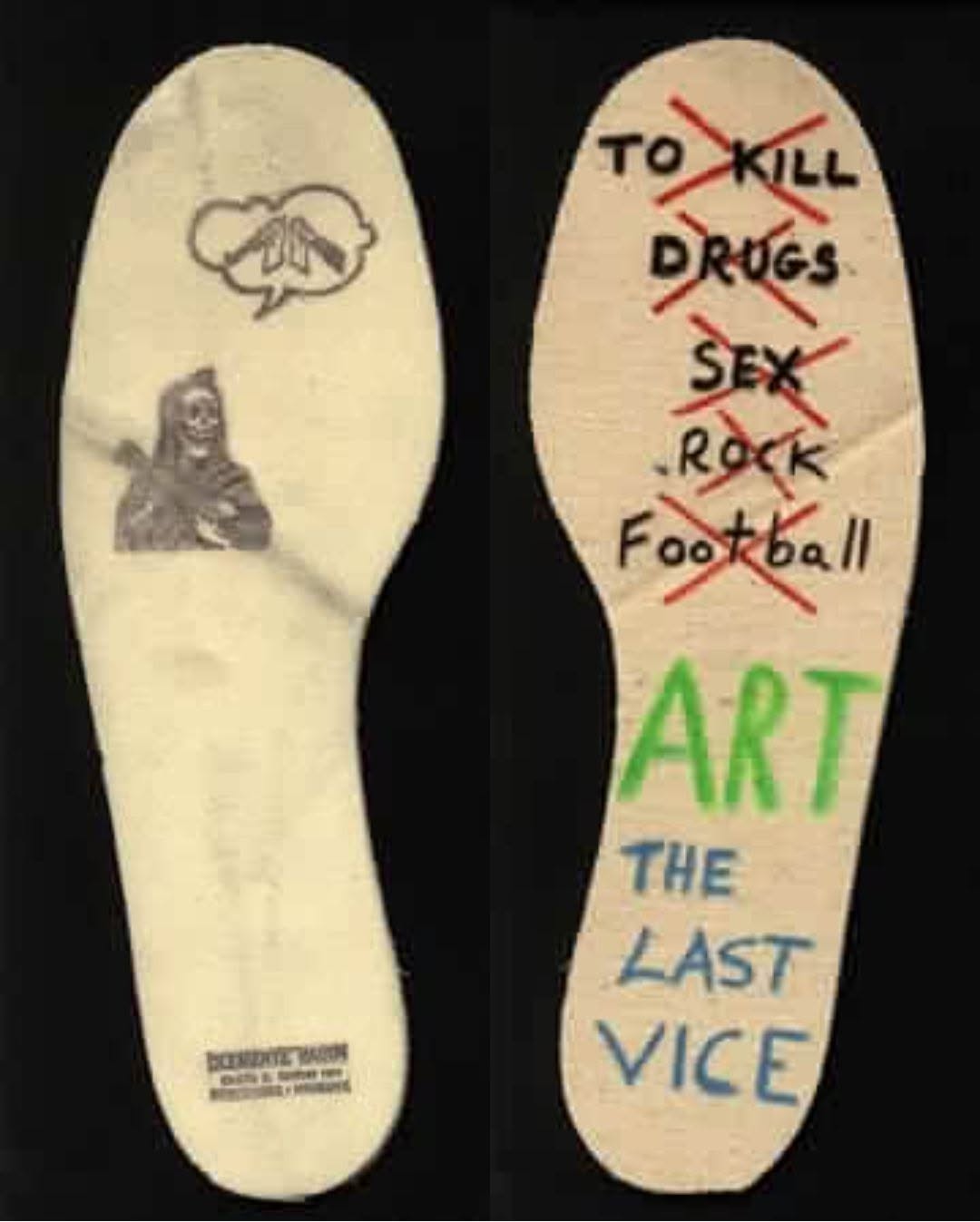
Title of the artwork: ART: THE LAST VICE
The work is based on a graphic design featuring two shoe insoles or footprints; true to Padín’s style, it simultaneously conveys ironic, socially critical, and philosophical meanings. Crossing out the vices on the right sole The List comprising classic earthly pleasures and pop-culture addictions such as drugs, sex, rock music, and football is crossed out in red. Above them appears the inscription TO KILL.
This parodies the urge to purge characteristic of dictatorships, prudish social conventions, or excessive moral control that seeks to deprive humanity of bodily and worldly pleasures. At the bottom of the list, the word ART shines, highlighted in green, with the inscription THE LAST VICE appearing beneath it. Through this, Padín conveys the message that once authority or society has restricted or banned all other human passions and experiences of freedom, art remains the last, indestructible and thus the only free realm where one can still live out rebellion and creativity.
ART: The Last vice
Clemente Padin, 1999.
≈≈≈≈≈
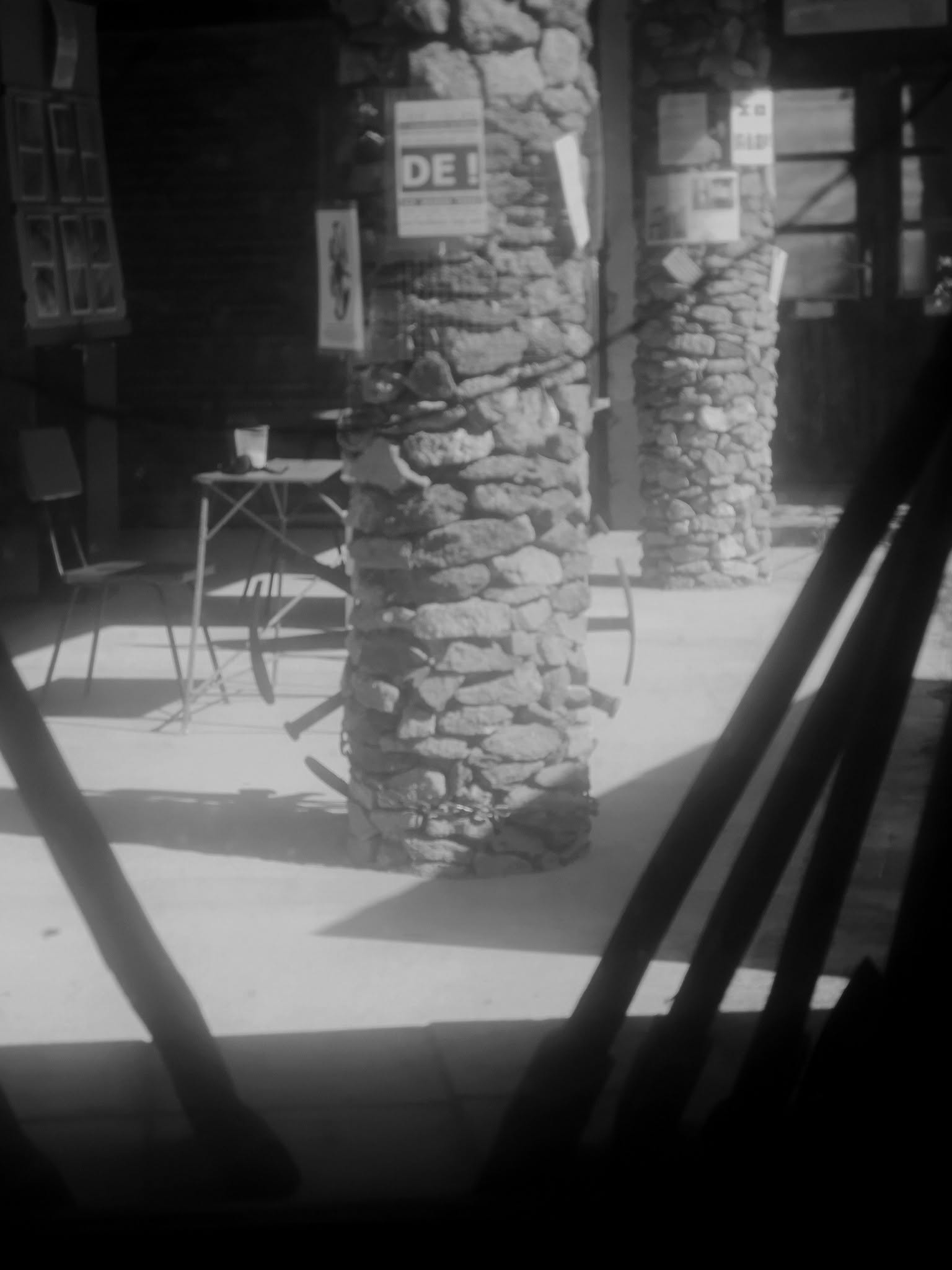
Luft Art Press, August 9, 2026
György Galántai’s Exhibition Spaces
György Galántai rejects the sterility of art galleries. His spaces are organically linked to the reality of everyday life and to social issues.
His work represented a radical departure from the rigid, bureaucratic, and exclusionary attitudes as well as the isolation of traditional art institutions.
The atmospheres he created serve not merely to display artworks but have become active sites for social dialogue, collective memory, and everyday life. His exhibitions defy the conventional definition of the term, as he connects his works with the settings of real life.
During the era of the Balatonboglár Chapel Studio (1970–1973) amidst the anti-religious regime of the time he transformed an abandoned, dilapidated cemetery chapel into an alternative art center. These exhibitions, which became renowned, served as a source of freedom during the Kádár dictatorship. They were venues not only for exhibitions but also for performances, debates, and communal gatherings, while simultaneously representing a direct political and social stance activities that were frequently reported to the authorities.
Nature, rural courtyards, barn lofts and sheds, as well as the sacred past and ruined environments, provided the opportunities and dimensions for his further experiments with space and art.
From 1979 onwards, the Artpool Art Research Center entered the bloodstream of the art world both domestic and international as a living space.
Thus, Artpool is not a static museum, but rather an active information network and research center. Following the principle of "art in life, life in art," and through the mediums of mail art and samizdat culture, they elevated everyday communication channels such as the postal service, photocopying, and now the internet to the level of art. A heroic aspect of Artpool’s mission was establishing a living connection with the international art world from behind the Iron Curtain, thereby breaking through the isolation imposed by official cultural policy.
György Galántai has always thought in terms of community and solidarity. For him, the viewer is not a passive recipient but an active participant in the processes, while the exhibitions are open, constantly evolving events.
Galántai’s works-and consequently the spaces they inhabit-are context-sensitive. They consistently reflect the political, censorial, and social realities of the times. They also constantly blur the boundaries between high art, documentation, biographical elements, and everyday objects.
György Galántai | Kapolcs | Area 51
Text & Photo | Falussy©
≈≈≈≈≈
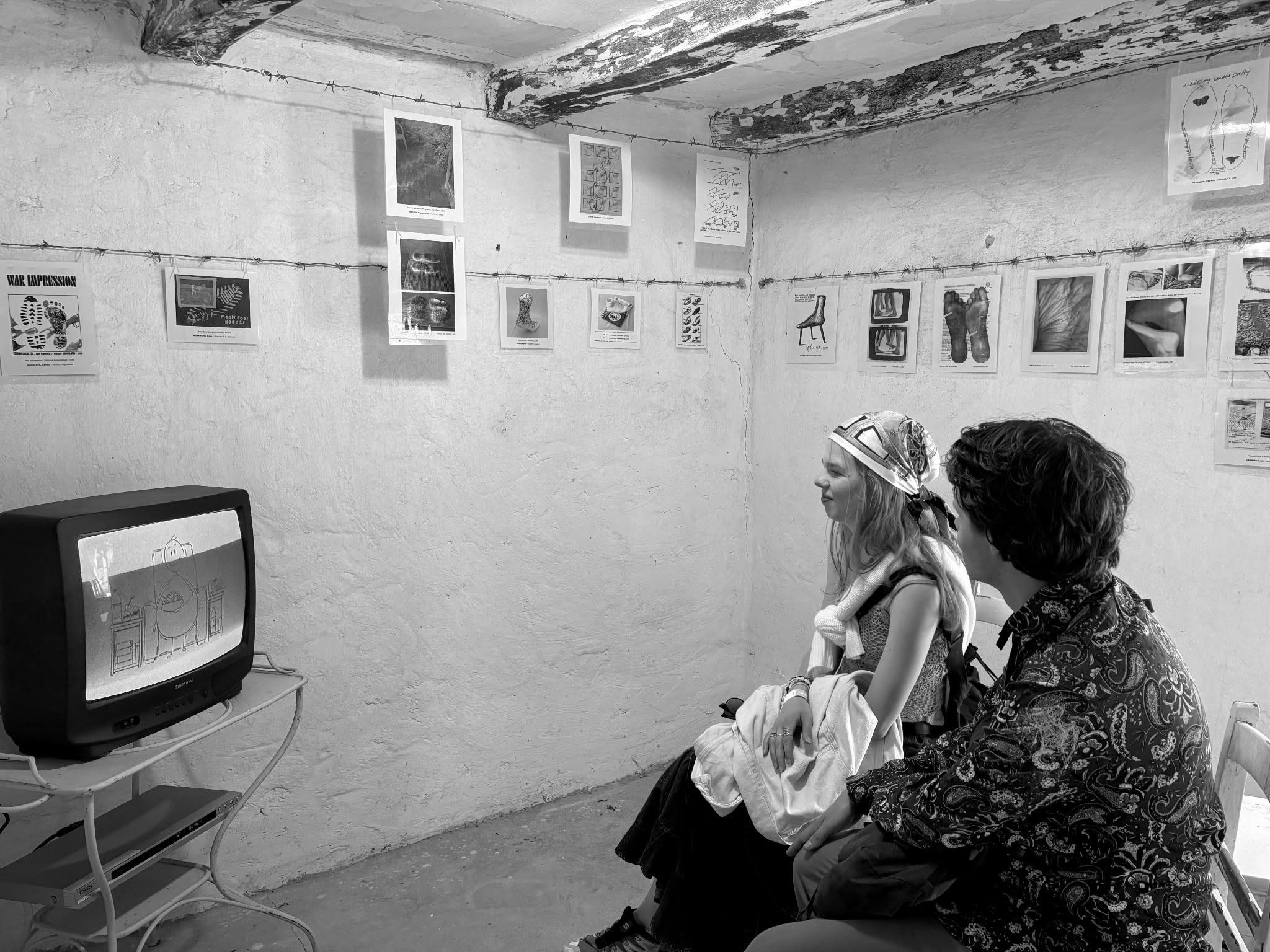
Luft Art Press, August 8, 2026
THE FUTURE CONTINUES
The artistic complexity of Area 51—run in Kapolcs by Fluxus and multimedia artist György Galántai—lies in the fact that, unlike traditional galleries, every tiny detail of the rural living environment is part of the exhibition.
The central theme of Area 51 in the 2026 Valley of the Arts program is titled
“THE FUTURE CONTINUES”
In György Galántai’s installed spaces this year, the videos explored themes that examine human relationships and existential questions.
For example, how do we talk to anyone?
How do we connect with one another in a technological society?
How do we handle the most important decisions that shape our lives?
How do we overcome procrastination?
How do we wisely spend the short time we’ve been given?
Just as in Area 51 every year, the goal with this year’s theme was to create a “zone of deep reflection” where visitors could break free from their usual patterns of thought and liberate their minds.
text | Mira Falussy
photo | Holda Lea Kozák-Sólyom
≈≈≈≈≈
Luft Art Press, 9 August, 2026
Connections
György Galántai views art not as a commodity to be sold, but as a means of free exchange of ideas and global human connection.
According to his philosophy, isolated individuals can only come together to form a larger, functioning whole and reach a higher level through connections. The screens placed in a rural barn setting projected both a technological contrast and a critique into the space. Through these juxtapositions, he illustrates how, in the digital age, we tend to lose our genuine relationships by hiding behind monitors. Through his works, Galántai consistently argues that our future can only be built upon our existing and newly formed spiritual connections.
Photo | Falussy©
≈≈≈≈≈
Artpool Art Research Center's traditional summer exhibition event at the Valley of Arts Festival in Kapolcs
July 24 – August 2, 2026
Kapolcs, Area 51 and Galántai House
Curator: György Galántai
Websites:
https://www.artpool.hu/K51/2026/
https://www.artpool.hu/K53/2026/