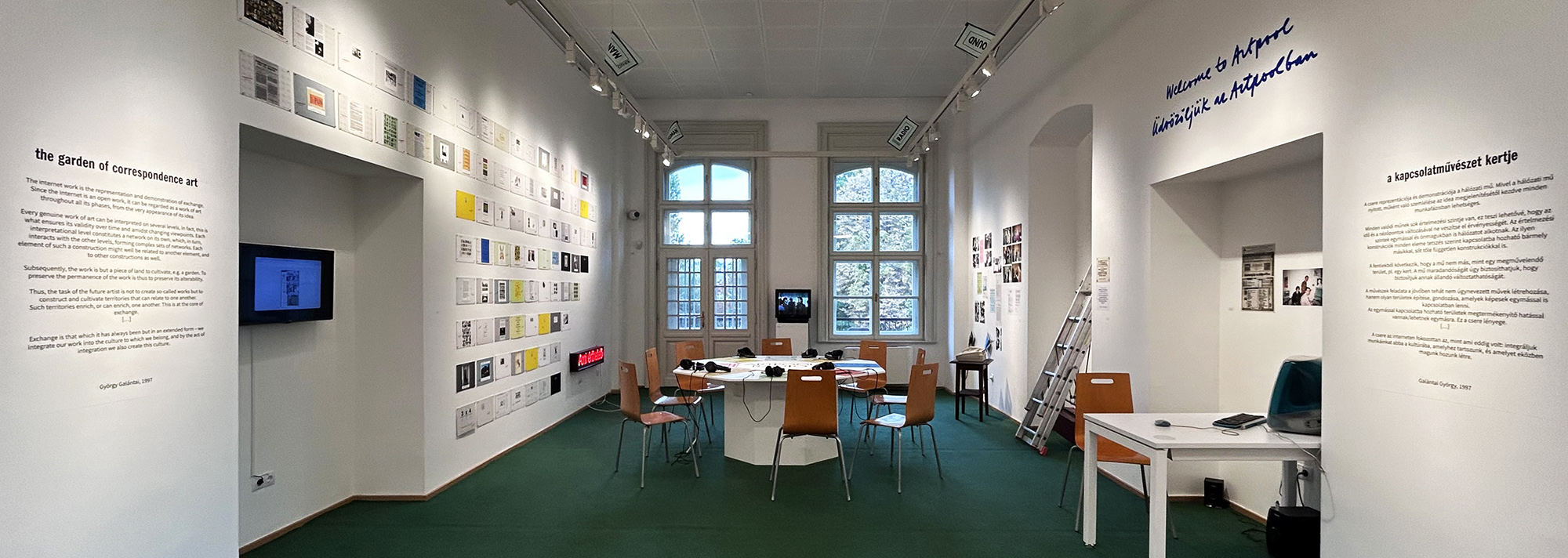
archivuminternetwork: 30 years of artpool.hu [installation view]
(Photo: Dóra Halasi)
exhibition guide
archivuminternetwork
30 years of artpool.hu
open to the public from May 22 to October 16, 2026, on weekdays from 10 a.m. to 5 p.m. by appointment (artpool@szepmuveszeti.hu).
Artpool Art Research Center
H-1135 Budapest, Szabolcs u. 33., D ép.
Curated by Judit Bodor and Roddy Hunter
The first Hungarian institutional cultural website – operating since 1995 – turned 30 years old!
Since its launch in December 1995, artpool.hu has expanded György Galántai's idea of the ‘active archive’ into digital time and space, where art and information exist in flux and flow, becoming, at times, indivisible.
archivuminternetwork presents a sound and visual installation featuring archival documents and original works. It contextualizes artpool.hu as both a network infrastructure and an artistic tool, positioning it as a continuation of the international telecommunications projects of the 1980s, such as Artpool Radio, the Budapest–Vienna–Berlin Telephone Concert, the Danube Connection, and Horizontal Radio. The exhibition’s highlights include previously unseen drawings and plans made for the HTML-structured webpages, the first website running on a historical computer, a new video interview offering insight into the conceptual thinking behind the website-building by György Galántai, the designer of artpool.hu (biography).
By examining how Artpool developed ways of working with once-unfamiliar technologies, such as the internet, archivuminternetwork also invites reflection on the present. How might artists, archivists and curators continue to develop new approaches in an age of automation and superintelligence - systems we are still only beginning to understand.
Special thanks to Artpool founders György Galántai and Júlia Klaniczay, as well as the production team from Artpool: György Cséka, Dóra Halasi, Ádám Gara, Zsófia Kókai, Éva Bárdits, Anna Horváth, and András Szőnyi
About the curators:
Dr. Judit Bodor is an art educator, curator, and researcher living in Glasgow and working at the University of Dundee. She began her career in the early 2000s at Artpool Art Research Center. Her projects focus on artist archives of post-1970 counterculture to investigate the possibilities of “living archives” as a way to preserve not only the material collections but also the artistic methods that produced them. Dr. Roddy Hunter is an artist and researcher interested in how experience and knowledge unfold over time, are mediated by location and context, and are constructed into personal and collective histories. Bodor and Hunter have worked together since the early 2000s and currently lead the Curating the Digital Attic Archive research network (2024-2026). Their co-authored publications include Art, Meeting and Encounter: The Art of Action in Great Britain (Palgrave, 2012), The Poipoidrome in Budapest: a case study in art and changeability (Apparatus, 2020) and most recently artpool.hu. a user’s guide: remediation, digitization and the networked art archive (Transcript Verlag, 2021), which provided the basis for their research towards archivuminternetwork.
LIST OF EXHIBITS
Descriptions follow the numbers on the floorplan and next to the exhibits. Possible points of connection are indicated by the “[see also]” references.
1️⃣
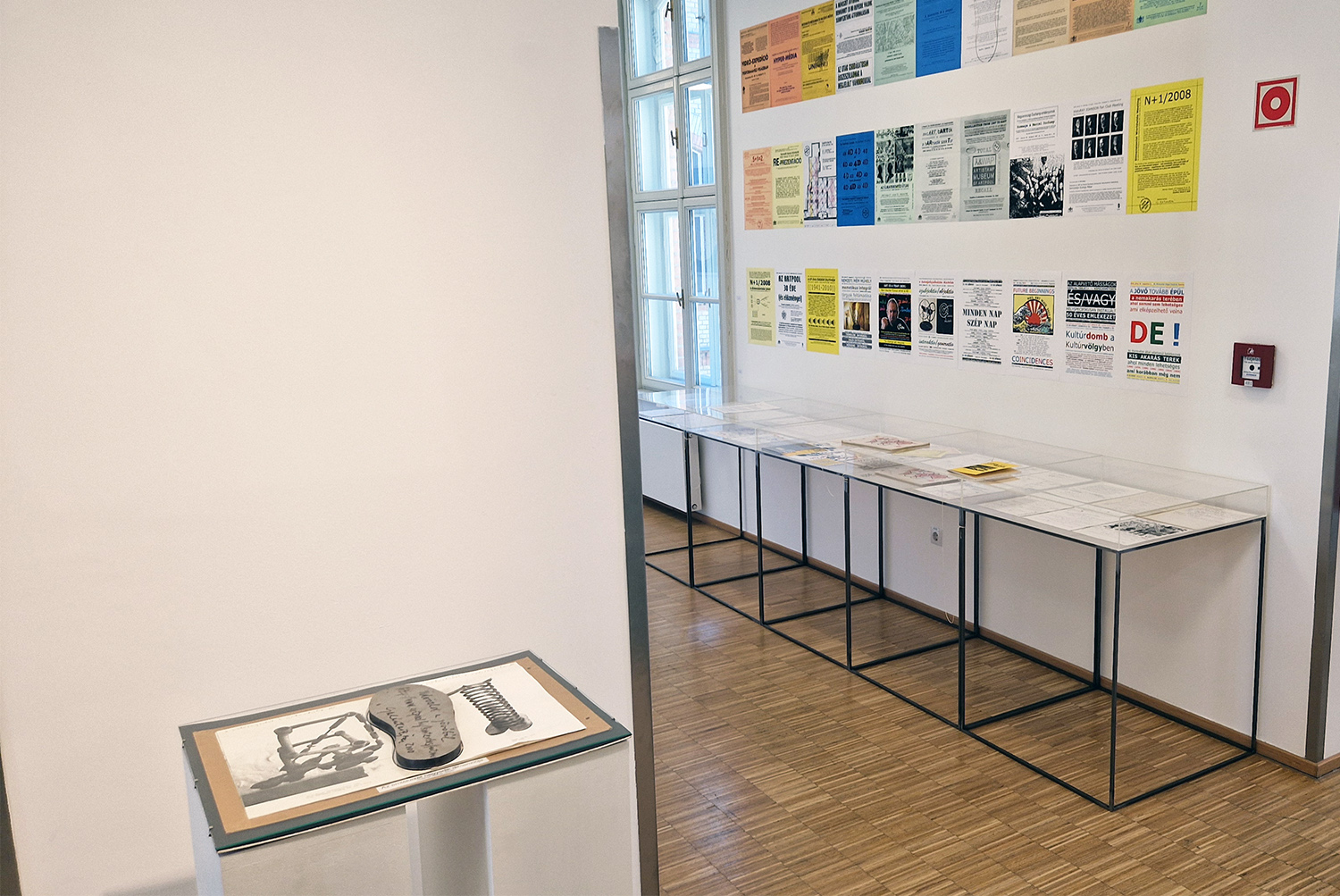
Invitations to key events and projects from 30 years of artpool.hu (1995–2026)
30 A3 prints
(Photos: Júlia Klaniczay and Ádám Gara)
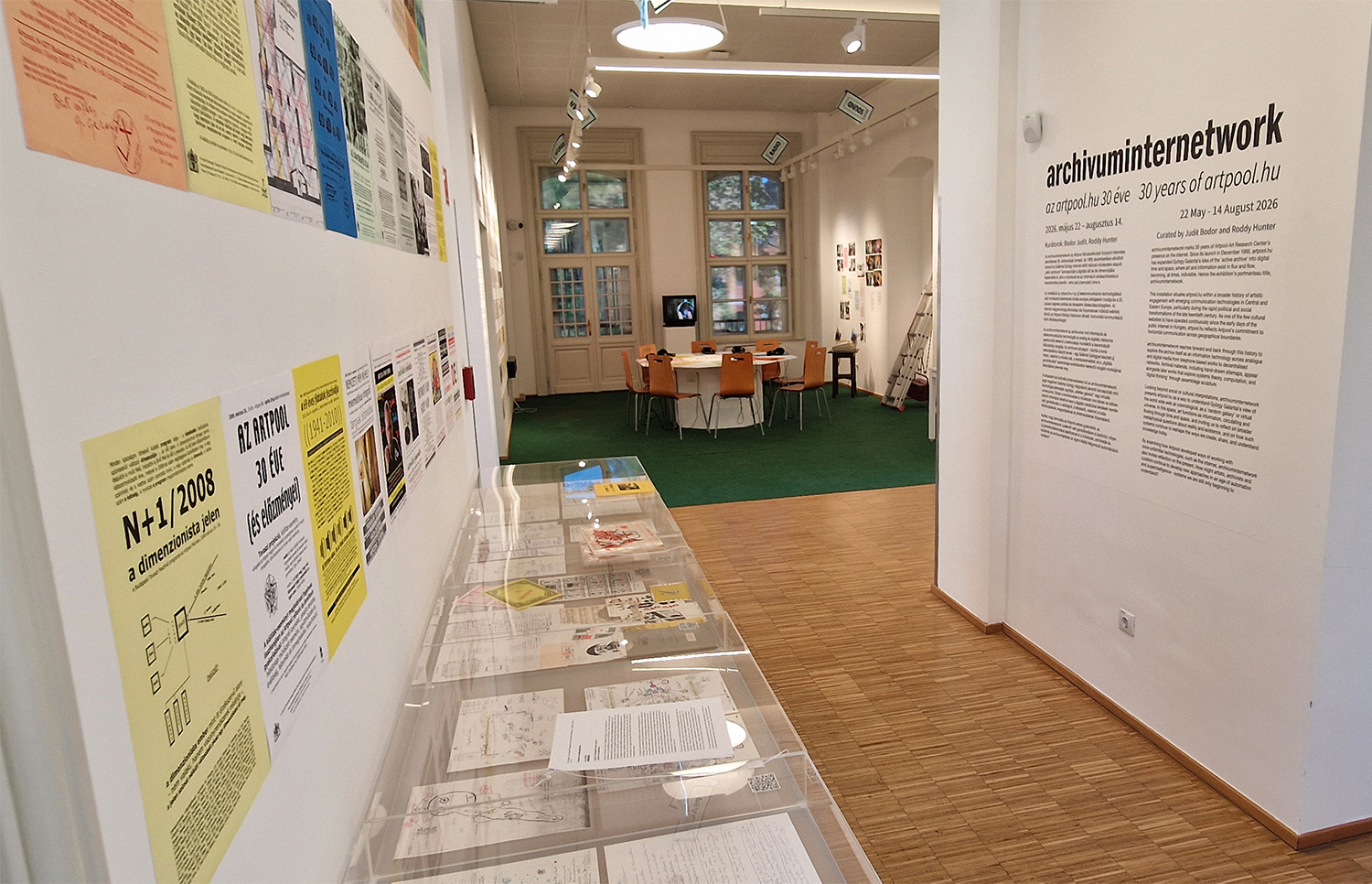
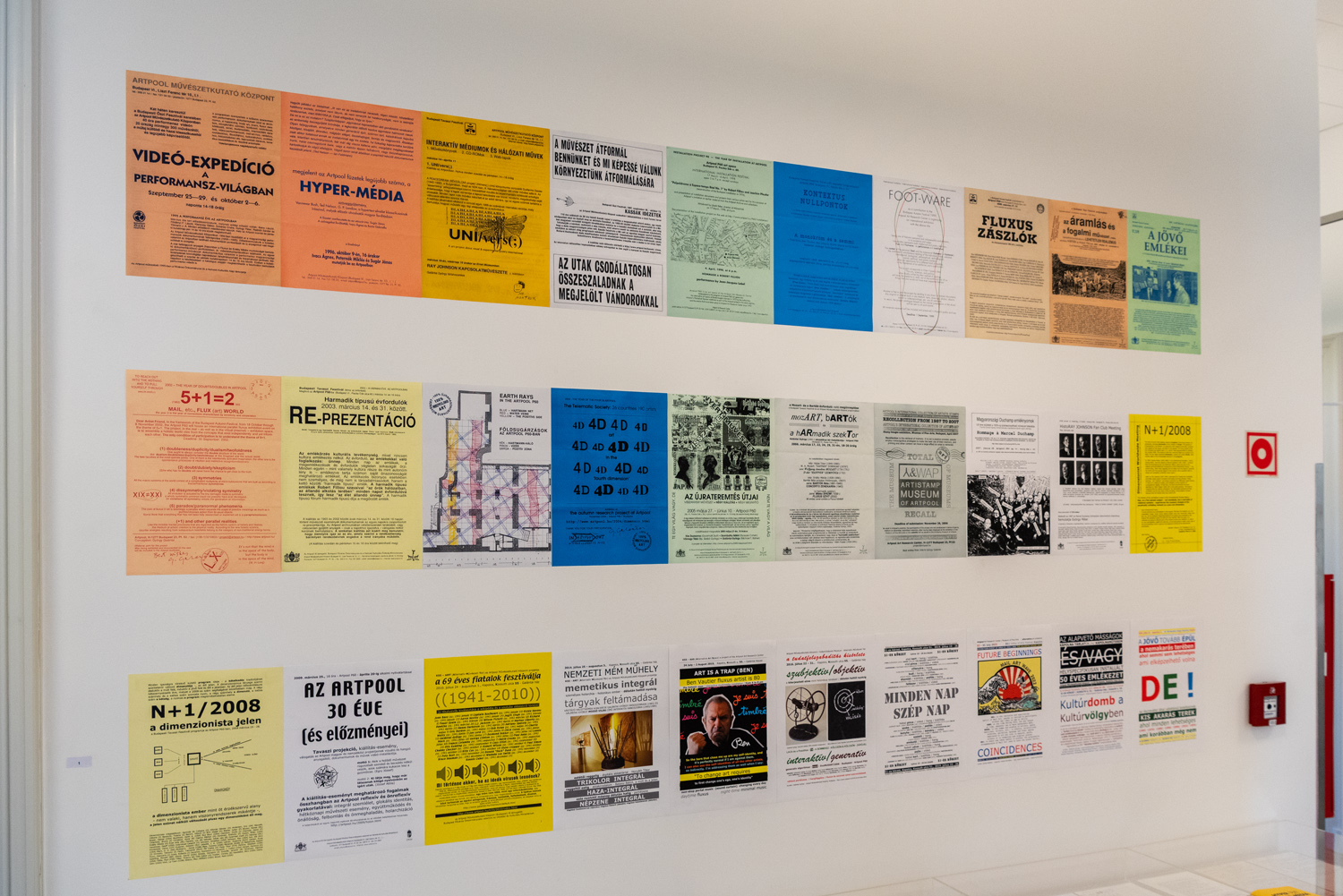
The invitations and callouts selected for the exhibition trace a thirty-year visual trajectory of Artpool’s projects, revealing an evolution from art historical themes in the 1990s to number-based curation from 2000 onwards. Every event and exhibition featured maintains an online presence through artpool.hu. This curatorial methodology was explored further in the accompanying video interview with the artist, "I Am a Researcher Who Knows Nothing."
2️⃣
György Galántai’s hand-drawn maps created for the artpool.hu website, his drawings for web adaptations and memorial pages, as well as the original publications that inspired them
5 vitrines
(Photos: Júlia Klaniczay and Ádám Gara)
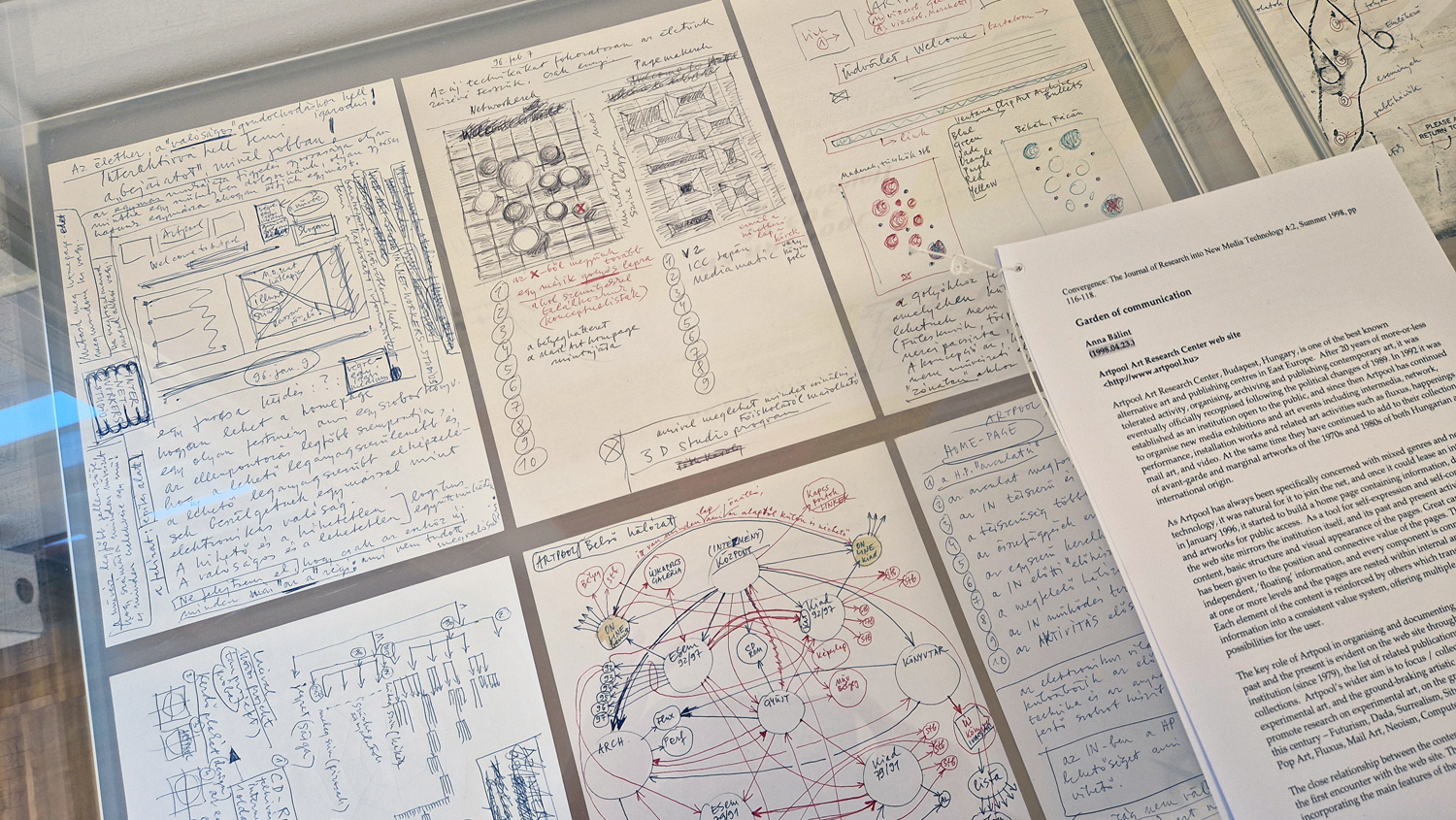
1: Early designs for artpool.hu homepage with notes, 1995-1996
These hand-drawn sketches — never previously published or exhibited — offer rare insight into the “internal network” of artpool.hu as conceptualised by György Galántai from its inception. They map the connections between Artpool’s various activities and organisational, revealing how the internet was envisioned as a new tool for realising Artpool’s artistic practice. The notes also highlight the importance of using “counterpoints” as a method of building the archive on the web - that is, “the coexistence of the most immaterial and the most material concepts”- alongside the importance of preparation for creating “connections” to shape the archive’s visual identity.
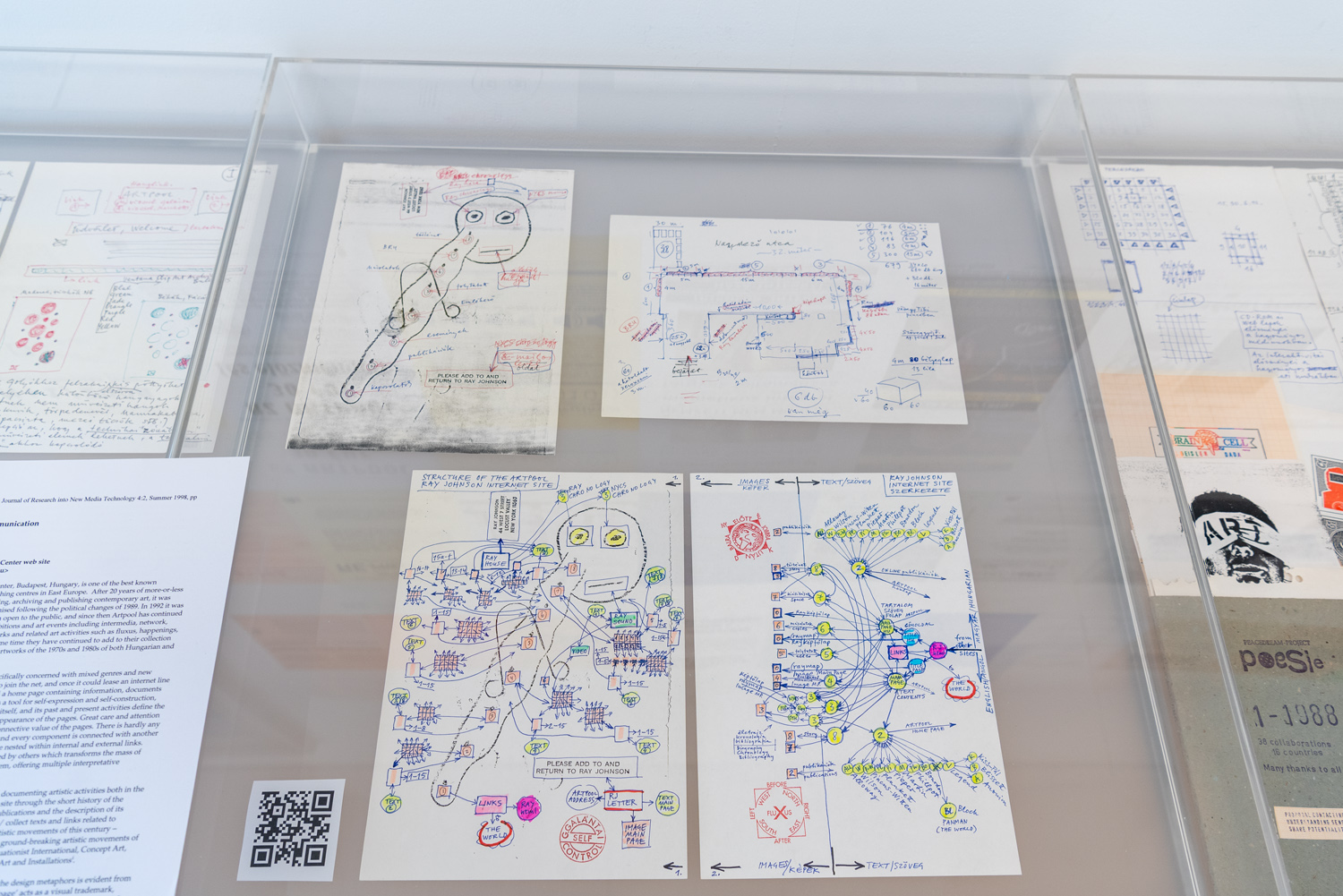
2: An exhibition and its web adaptation. The Ray Johnson Website as a “work for the internet”, 1998
original plans (1997) and publication
Plans for the Ray Johnson memorial exhibition held at Budapest’s Ernst Museum (now the Robert Capa Contemporary Photography Centre) in February 1997, and for the Ray Johnson Website both focused on presenting mail art works that entered Artpool’s archive through the network projects of the Buda-Ray University stemming from correspondence between Ray Johnson and György Galántai. Using the possibilities of the internet, the construction of the website extended the research of correspondence art by combining the sensation of a walk in a museum with leafing through a catalogue or studying a book, and providing links to discover all other sites related to Ray Johnson worldwide. Presenting the drawings for the web and the gallery side-by-side to highlight different curatorial possibilities between physical and virtual exhibition space, which Galántai also wrote about in his accompanying hyperlinked text The Garden of Correspondence Art.; also included in archivuminternetwork as a wall text [see also: 6]. Alongside Galantai’s drawings, there is also an article displayed in the vitrine published in 1998 by then Artpool archivist Anna Bálint, drawing on the Ray Johnson Website and other examples to discuss the functioning of artpool.hu as a “garden of communication’.
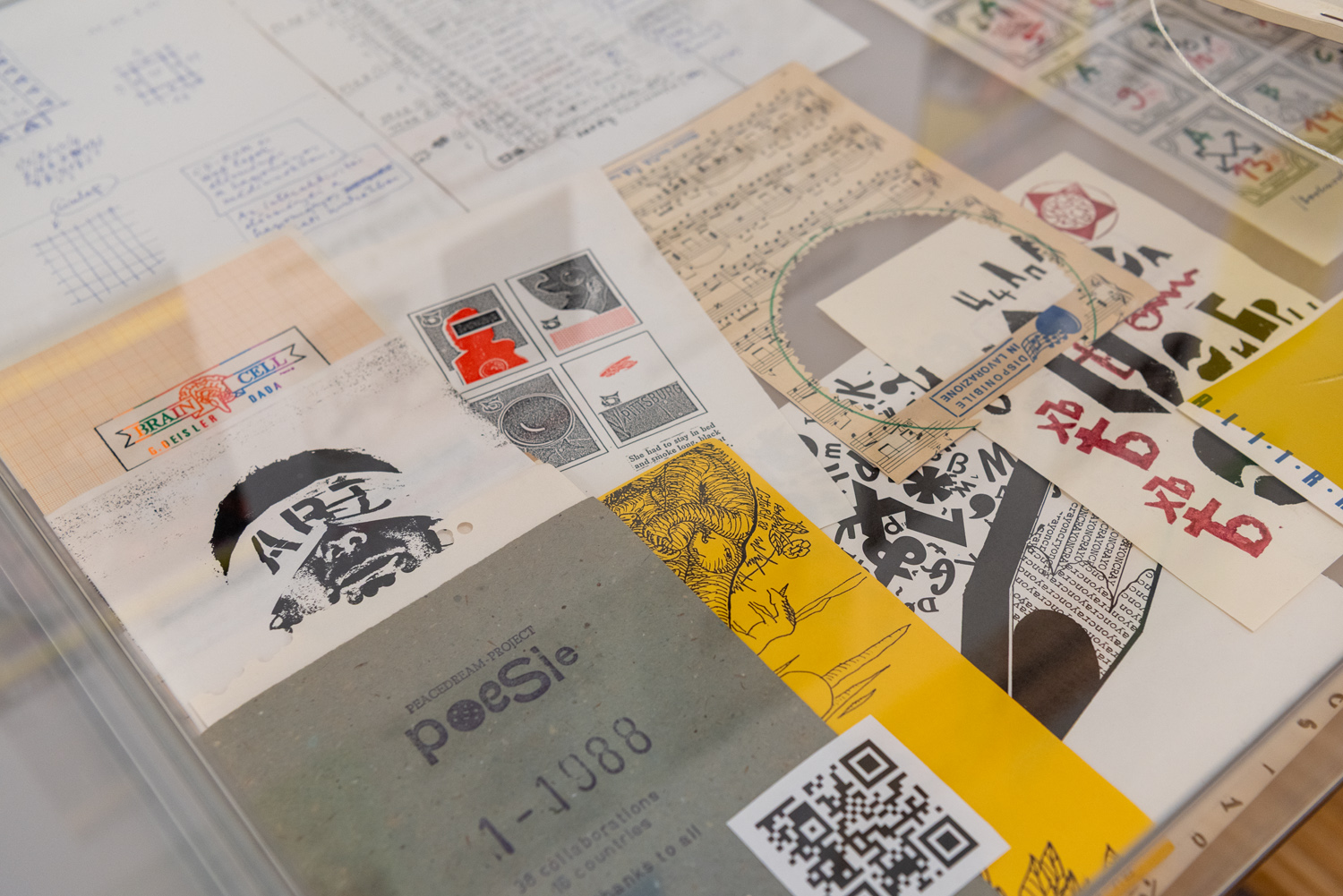
3: Web adaptations of bookworks made through network activities: “UNI/vers (;) – drawings for web adaptation (1998) and the original bookwork (1988), as well as NETWORKER BRIDGE
web adaptation plan (1998) and the original bookwork (1994)
The 1998 web adaptation of the 1988 anthology UNI/vers (;) remediates a publication containing 38 works of visual and experimental poetry from 16 countries. The anthology was produced as part of Peacedream, a series of Mail Art portfolios created between 1987 and 1995 by Guillermo Deisler, a Chilean artist living in exile in East Germany at the time. György Galántai’s web adaptation mirrors the interactive nature of the physical bookwork, whose pages the readers could assemble in multiple ways. Online users navigate the work through a random sequence of pages by clicking on image maps created from the digitisation of each page. This approach effectively preserves both the performative mode of engaging with the physical work and its content, making the web adaptation an ‘ideal copy’ (a term we borrow from Wire).
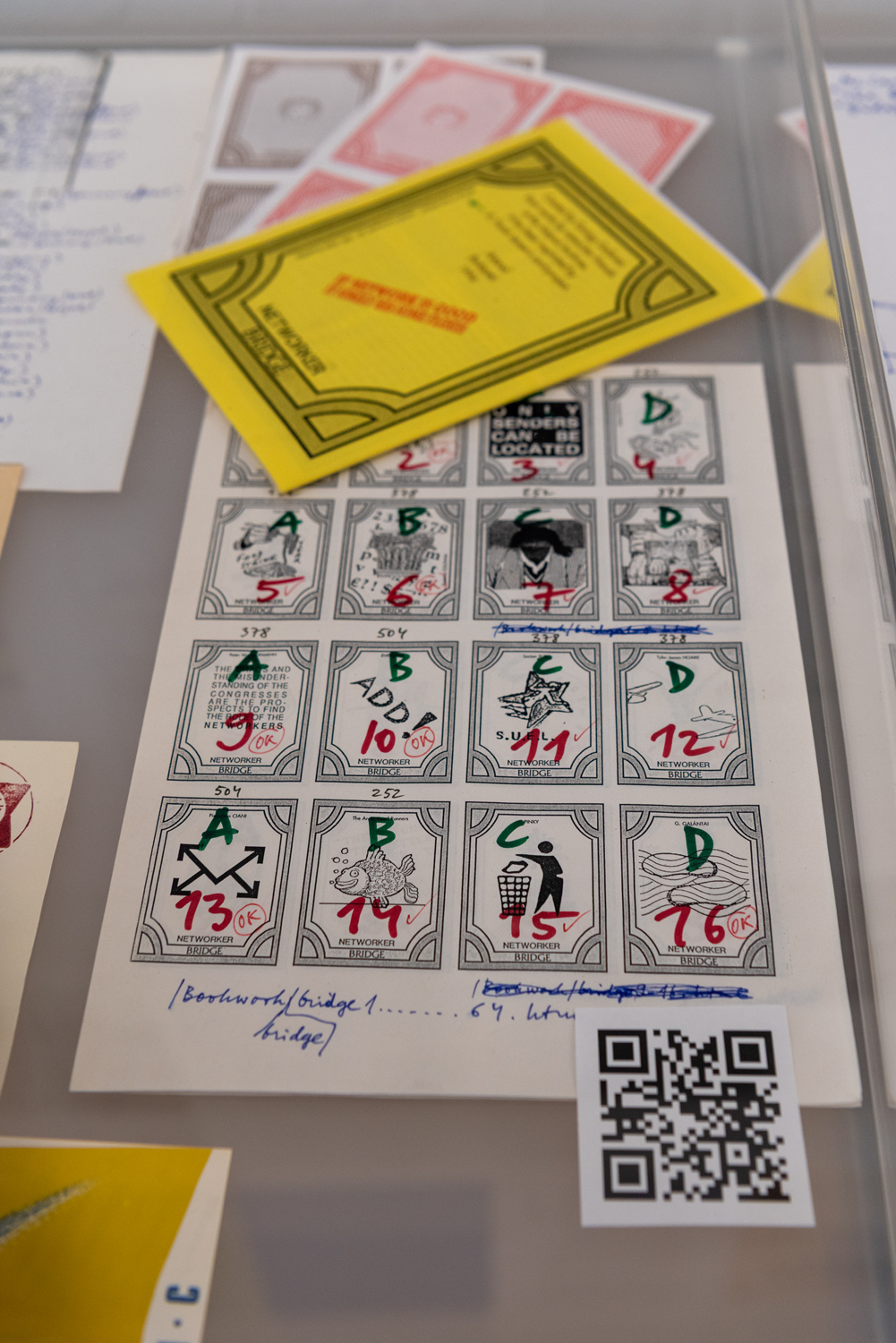
NETWORKER BRIDGE
plan for web adaptation (1998) and original bookwork (1994)
The 1998 NETWORKER BRIDGE web adaptation is an example of “recycled art.” In it, György Galántai remediated his own earlier A5-sized bookwork, which itself repurposed material from the 1992 Decentralized Worldwide Networker Congress, [see also: 4], specifically the photocopied booklet titled Networker Post, assembled from artistamp sheets. The 1998 interactive website, a “virtual” 64-card tarot deck created “in honour of Artpool’s networker friends,” was inspired by the work of K. Frank Jensen (1933–2016), a Danish tarot collector, researcher, and archivist. In the browser window, four face-down virtual cards appear side by side, and below them, the names of 64 artists are displayed with hyperlinks. Clicking on the names reveals individual graphic works. One new feature of the web version is that each card flip also triggers a sound work, thereby creating new associations and connections within the materials of the Artpool Archive. Visitors can activate up to the sound of four cards simultaneously, thus further expanding the range of possible combinations. Although the web adaptation clearly departs from the 1994 bookwork, the shared title continues to emphasise the significance of the original source work. (Unfortunately, some pages no longer function today, highlighting the vulnerability of internet-based works and the urgency of preserving artpool.hu.)
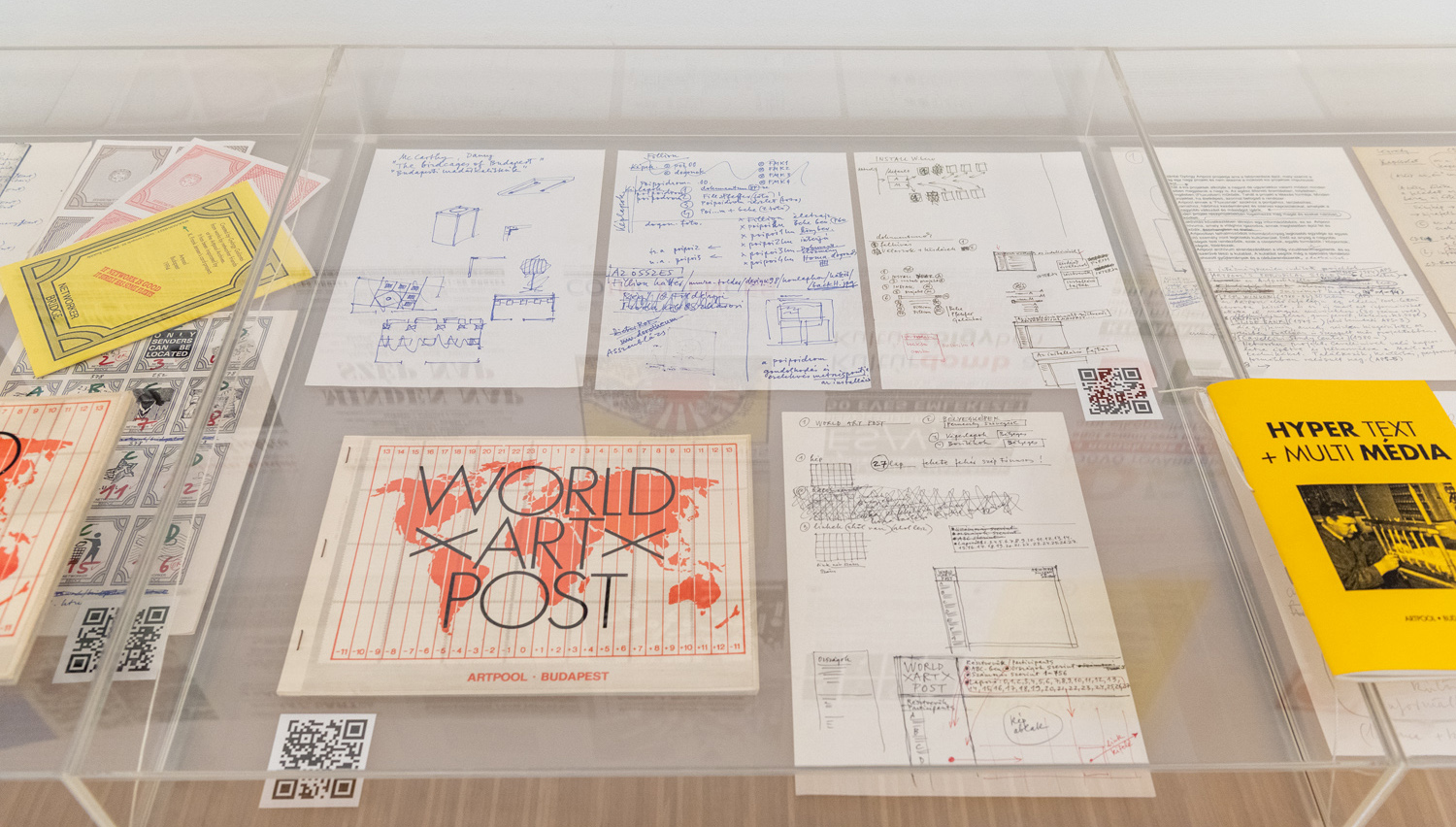
4: The web adaptation of a pre-internet mail art project and designs for a ‘memorial site’:
World x Art x Post – drawings for the web adaptation (1998) and original catalogue (1982),
Robert Filliou memorial site-plans (1998)
World x Art x Post was an international artists’ stamp project initiated by Artpool in 1982, first presented as an exhibition at the Fészek Gallery, and reworked into a stamp album catalogue and a film. The 1998 web adaptation is an interactive online version of the original bookwork catalogue, in which the individual pages of the album can be opened by scanning across a cover-like, borderless world-map interface. On the first pages, corresponding to the printed version, participants are listed in alphabetical order by country; next to each name are one or more numbers indicating the arrival order of the submitted works, which can be clicked to view enlarged versions of the respective stamp images. Additional codes mark *= commemorative stamps created by Galántai for those friends whose works were confiscated by the secret services and never arrived, as well as indicate what other artistamp works by the given artist were exhibited (e.g. S = original artistamp, E = used on an envelope, L = used on a letter, or C = used on a postcard).
The Filliou memorial page was created in 1998 as part of the “Year of Installation” programme, on the occasion of the International Installation Festival, which also marked the opening of Artpool P60 exhibition space. A key part of the festival was the reconstruction of the 1976 “Budapest” Poïpoïdrome, by Fluxus artist Robert Filliou and architect Joachim Pfeufer, which is considered a key example of installation art. The reconstruction also inspired the creation of an online research page that mapped the relationship between Robert Filliou and Artpool and provided insight into Filliou’s broader oeuvre. The virtual memorial space, interconnected with hyperlinks, was completed on January 17, 1999- a date that simultaneously marks Robert Filliou’s birthday and Art’s Birthday, the annual celebration he initiated. This international event conceptually echoes Filliou’s idea of the “Eternal Network” as a conceptualisation of an artistic network of shared communication and consciousness emerging from a state of ‘permanent creation’, of ‘la fête permanente’.
The Filliou website is a prominent example of pages created in memory of artists and thinkers who inspired György Galántai’s artistic practice and thinking. The interconnected sites open new perspectives and reinterpret archival documents by placing them within international contexts.
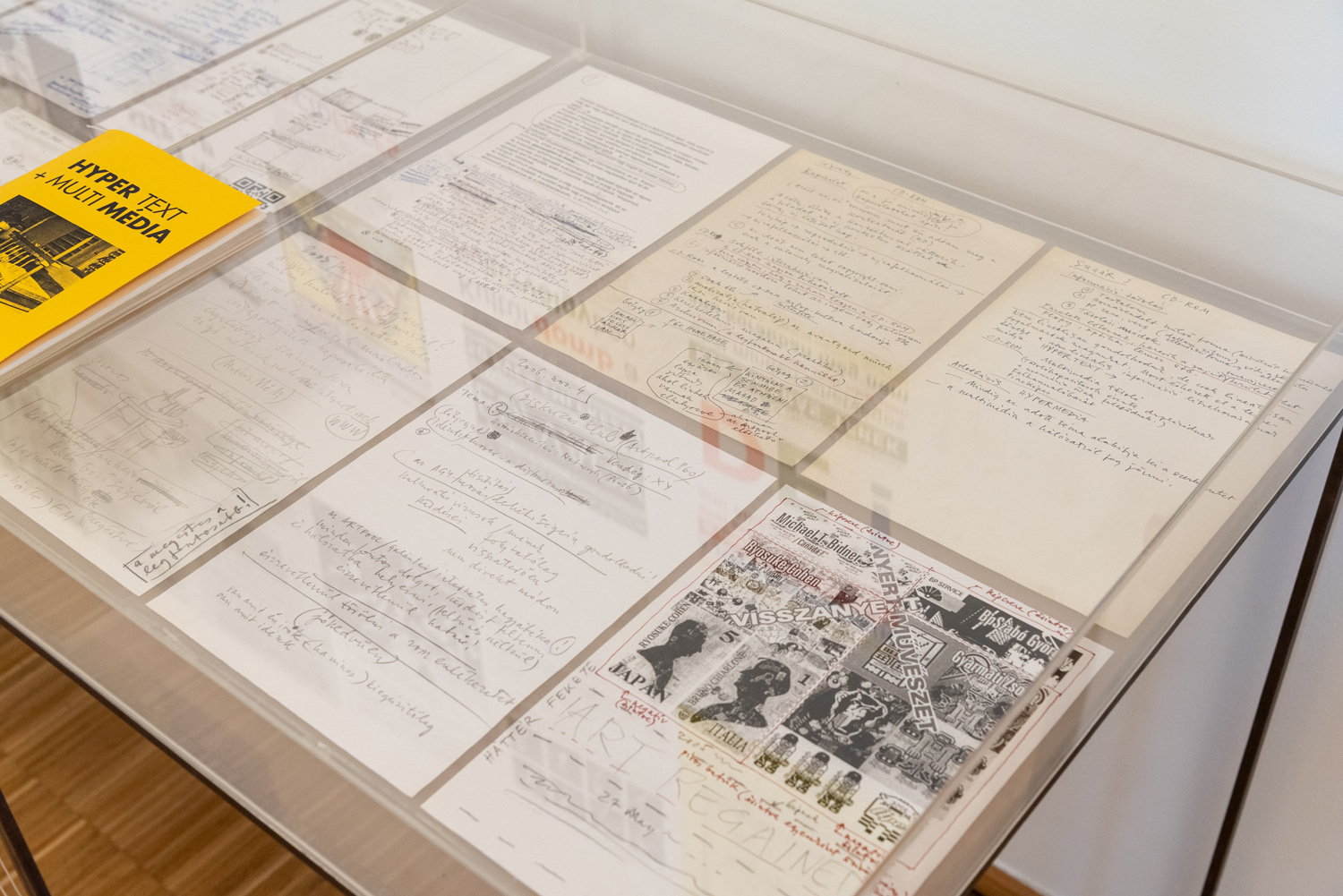
5: Notes from 2000-2006
Notes from the early 2000s describe the web as the “primary source of information” and refer to the possibilities offered by hypertext. Alongside the notes, the exhibition includes a print copy of Hypertext + Multimedia, a booklet put together for educational purposes and published by Artpool in 1998 with a foreword by the editor, János Sugár.
3️⃣
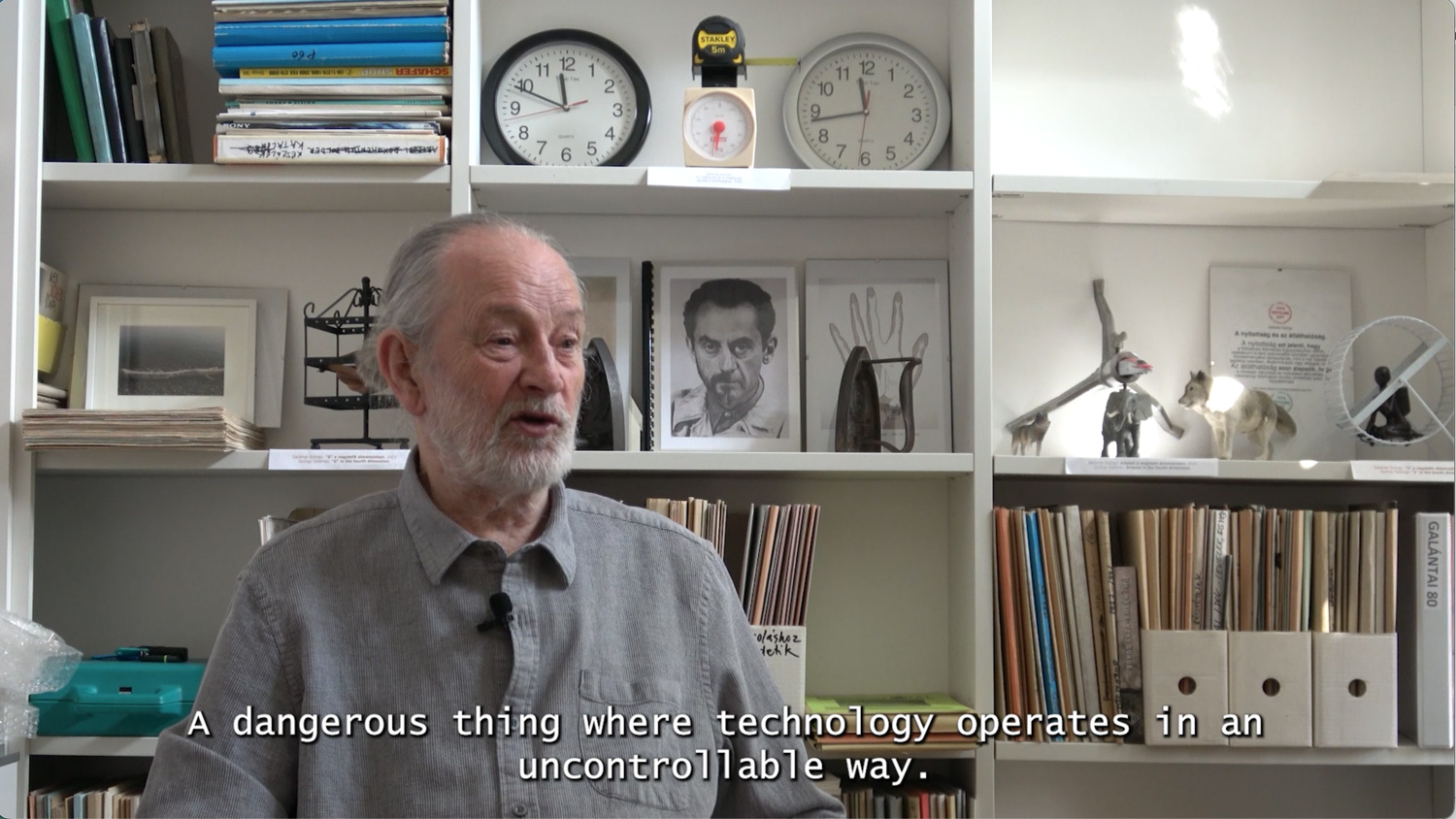
György Galántai: “I am a researcher who knows nothing”
Video interview [26’34”] and LED scrolling sign
(Photo: Ádám Gara)
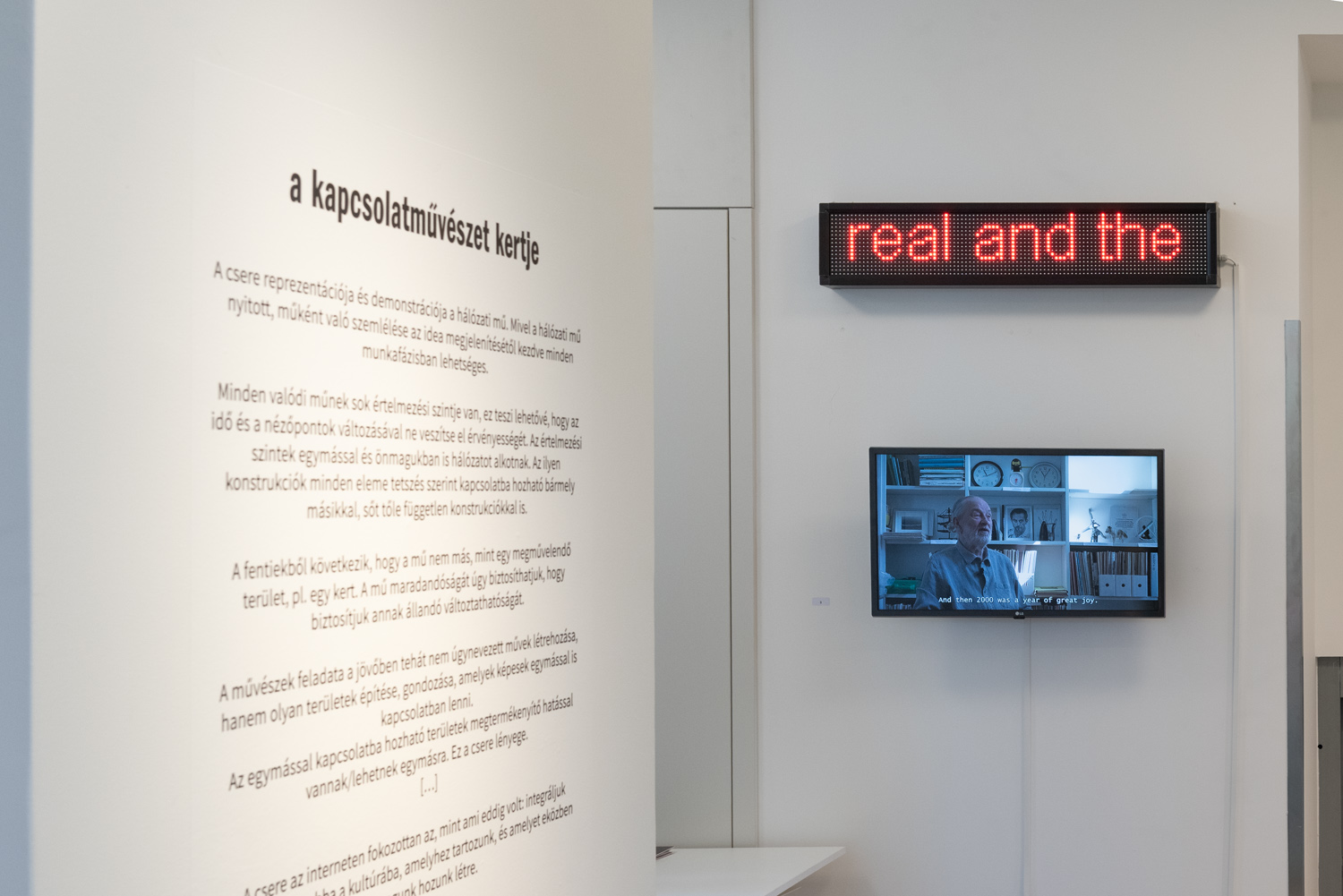
In this interview recorded for archivuminternetnetwork on 13 March 2026, Galántai responds to questions by the curators about the beginnings of artpool.hu, the antecedents of his research from the perspective of numbers (digits), his approaches to archive-building on the web, and the impact of artificial intelligence on the ‘active archive’. On the scrolling sign next to the monitor, you can read notes found in the archive and quotations from Galántai.
4️⃣
The analogue antecedents of artpool.hu as a digital telematic space: four international network events, 1982-1995
(Photos: Ádám Gara)
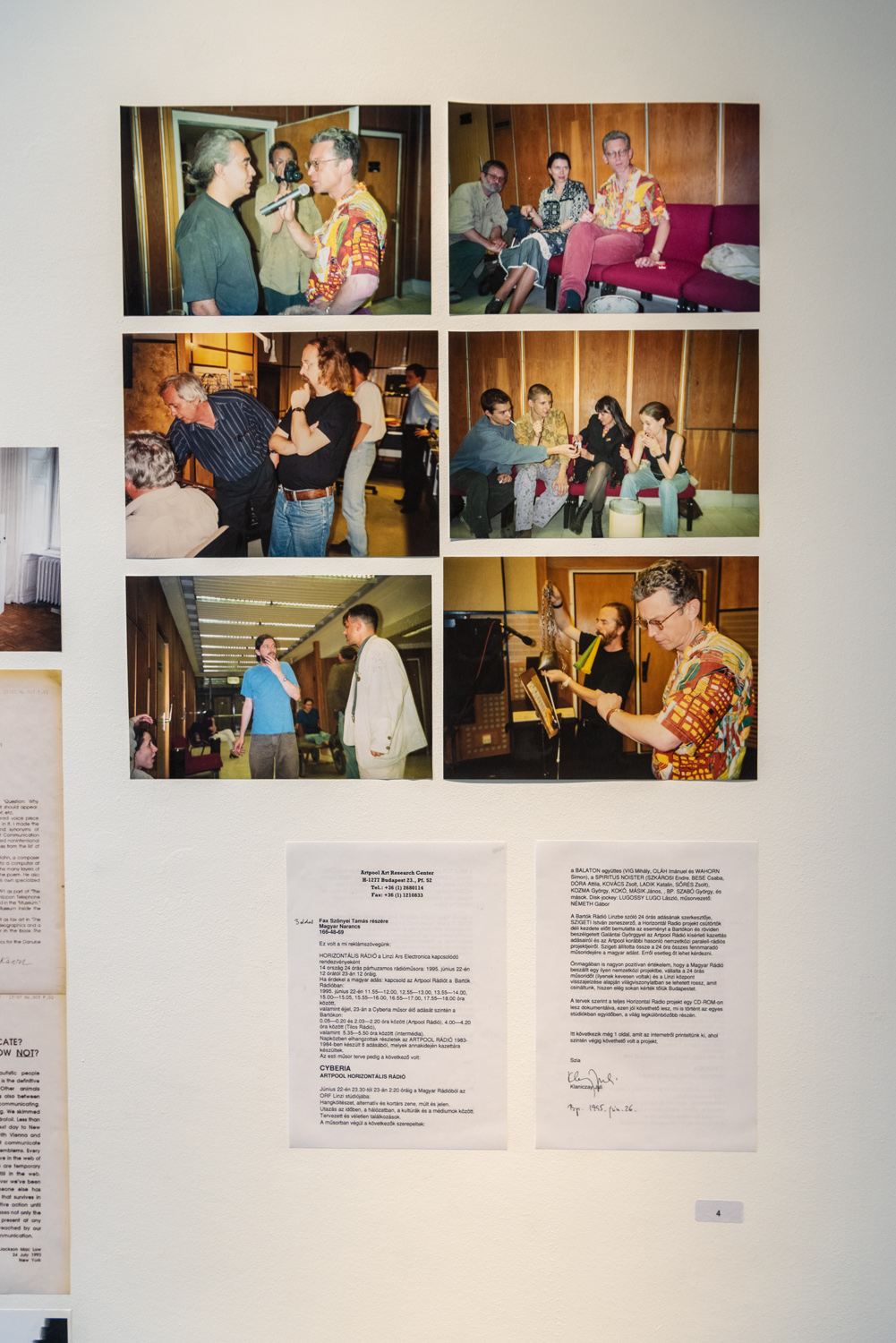
1: Budapest–Vienna–Berlin concert over the phone, April 15, 1983
Video documentation [monitor, edited version: 19’07”] and photo documentation [wall]
The event, also known as Telephone Music and Konzert Über Telefon, was an initiative by Robert Adrian X and Helmut J Mark [members of the Vienna-based BLIX artist group active between 1983-1986], which used the telephone to connect artists in “Western” Vienna, divided Berlin, and “Eastern” Budapest. The concert, taking place simultaneously in the three locations, was realised in the spaces of Vienna’s “ÖKS” [Österreichischer Kultur-Service], Berlin’s Aufbau/Abbau (coordinator: Rainald Schumacher), and the Budapest Artpool Studio (coordinators: Artpool and János Vető). Video documentation was made only of the Vienna event, while photographs of the Budapest event seen here include György Galántai, János Vető, Zoltán Lábas, János Szirtes, Miklós Erdély, and Sándor Czakó [VHK]. The broadcast “transmitted” from Artpool also featured bands like Európa Kiadó, Trabant, and Bizottság. The concert (the 12th event of the Artpool Periodical Space) was also documented in Issue 4 of Artpool’s “Aktuális Levél / Artpool Letter (AL)” and as the third cassette release of Artpool Radio.
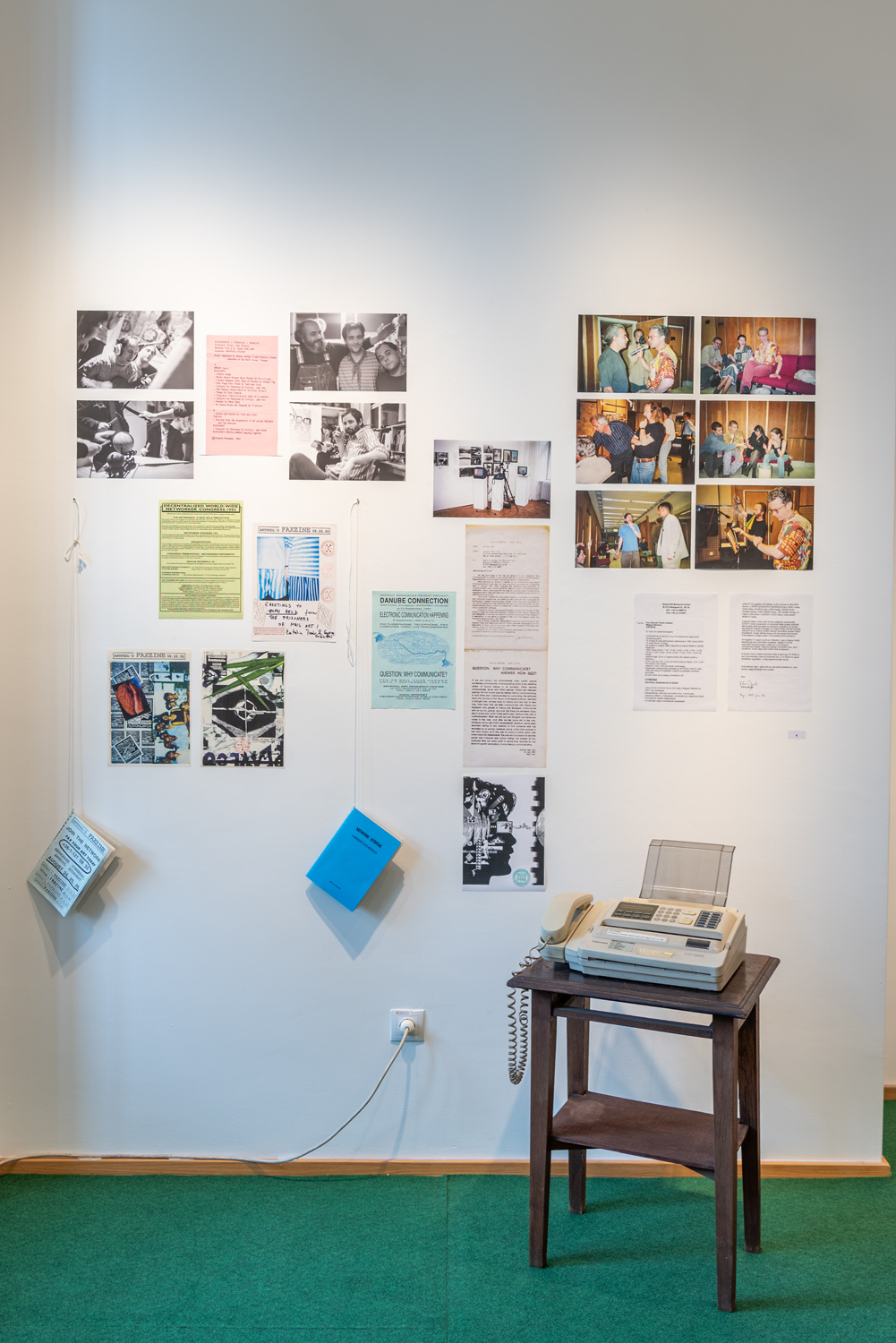
2: Decentralized Worldwide Networker Congress, Budapest session, Artpool Art Research Center, 24–26 August 1992
Video documentation [on monitor, edited version: 20’15”] and copies of fax works [wall]
The Decentralized Worldwide Networker Congress project was initiated in 1986 by Swiss artists H. R. Fricker and Günther Ruch with the aim of supporting regular [every 6 years], in-person international Mail Art meetings. By 1992, the initiative had become a forum for “network builders.” At that time – as part of the international event series – Artpool, which had just begun its public operation, also organized a network world meeting in Budapest. The three-day “Budapest session” was essentially a Fax and Copy Art workshop in which 86 international participants exchanged electrographic works with one another. On the wall, alongside the video documentation of the event, a selection of documents is displayed. Participants were informed about the events of the Networker Congress and the works produced during the three days via Artpool’s FaxZine newsletter, which was sent out using the fax machine also exhibited here.
3: Danube Connection, 4–10 September 1993
Video documentation [on monitor, edited version, 4’54”], photo documentation, and copies of fax works [wall]
This electronic communication happening connected the Freihaus-Kunstlabor in Vienna (coordinator: Robert Adrian X) and Artpool Art Research Center in Budapest using only two telephone lines and a videophone, within the framework of the project Game without Borders. In response to Artpool’s question “Why communicate?”, answers arrived from Austria, Brazil, Canada, Germany, the United Kingdom, Greece, Japan, the Netherlands, the United States, Switzerland, Uruguay, and Yugoslavia. On the wall, works by the American sound poet Jackson Mac Low and the Dutch artist Johan van Geluwe are displayed.
4: CYBERIA – Artpool’s Horizontal Radio broadcast, 22 June 1995 from noon to 23 June noon
Video documentation [on monitor, edited version, 18’28”], photographic documentation, and programme.
Conceptualised by Heidi Grundmann of ORF Kunstradio and Gerfried Stocker of x-space, Horizontal Radio was co-produced by the European Broadcasting Union (EBU) and Ars Electronica. The 24-hour project connected radio stations worldwide, creating a shared performance space for artists, musicians, and writers. By linking radio and the internet, the event transcended the usual geographical boundaries of broadcasting and enabled broader participation.
The specific aesthetics of the event were also shaped using different radio technologies in various parts of the world – stereo radio lines, telephone audio lines, and shortwave radio – resulting in varying sound quality in the transmitted material. Artpool’s 24-hour broadcast, including the CYBERIA programme, was realized in cooperation with Hungarian Radio (Bartók Radio).
5️⃣
The beginnings of artpool.hu, 1995-1996 [Macintosh computer, website, photo and A3 print]
(Photos: Ádám Gara and Judit Bodor)
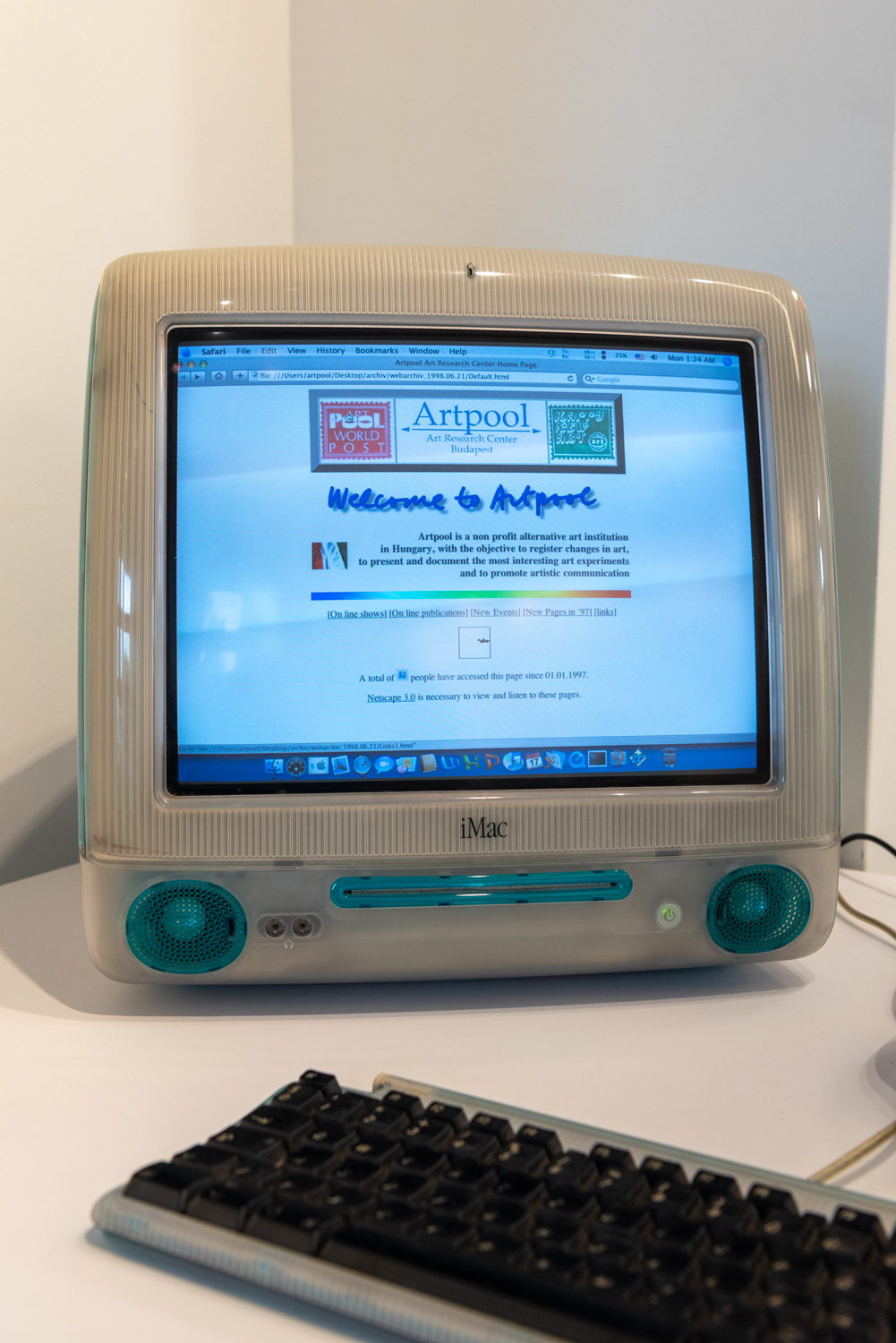
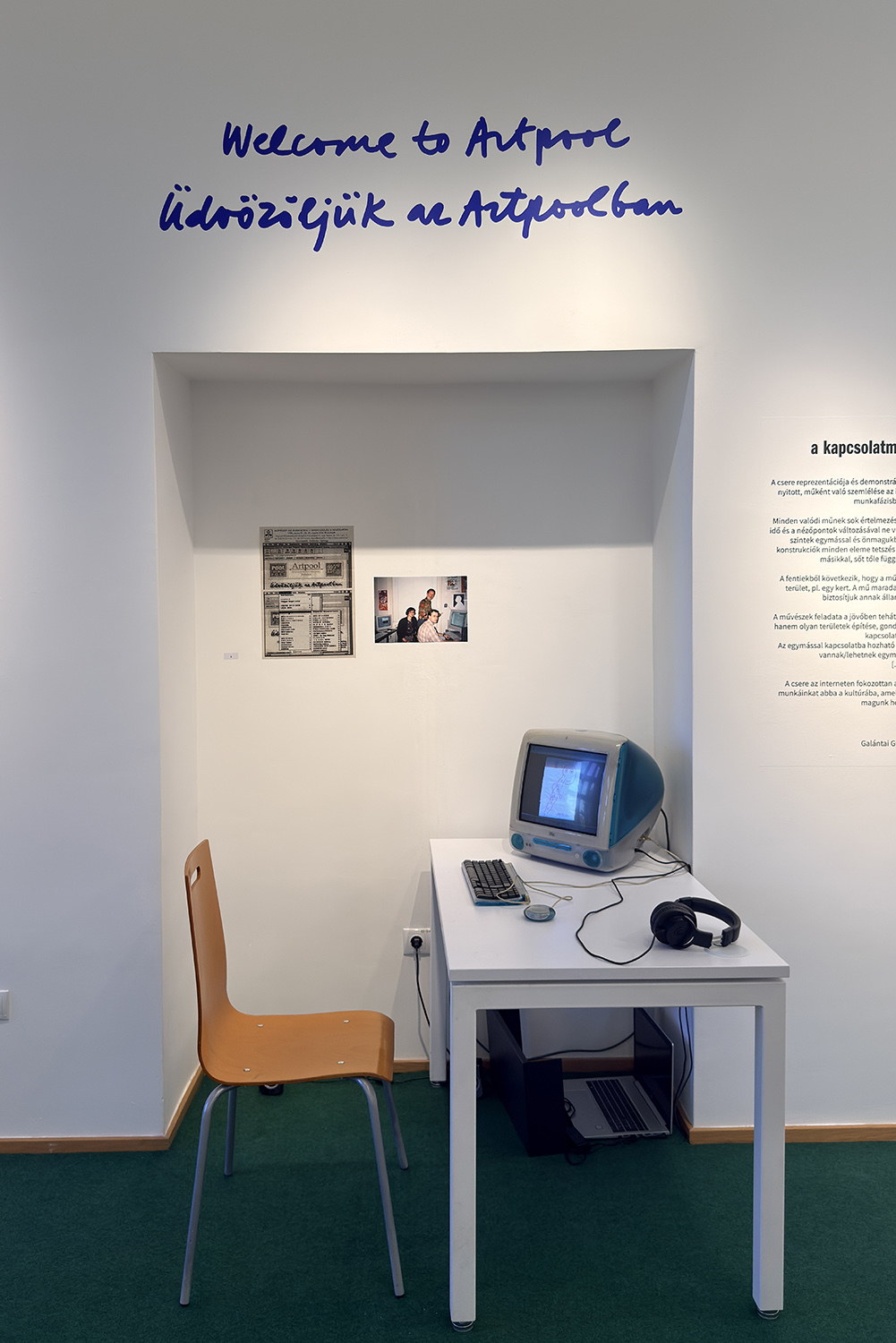
On the Macintosh computer, once used at Artpool and still functioning today, you can see and explore an offline archived version of the artpool.hu website from October 1997. Artpool was one of the first institutions in Hungary where visitors could freely use the internet. On the wall is the invitation to Artpool’s 1996 event held as part of the Budapest Spring Festival, and titled Art on the Internet – Wandering Through the Network, featuring a “tour guide” proposed by György Galántai, and presented the invitation as a drop-down bookmark list. On the photo Artpool’s office at Liszt Ferenc square with György Galántai, Júlia Klaniczay and László Tölgyes - the development team of artpool.hu
6️⃣
György Galántai: The Garden of Correspondence Art, 1997
(Photos: Ádám Gara and Júlia Klaniczay)
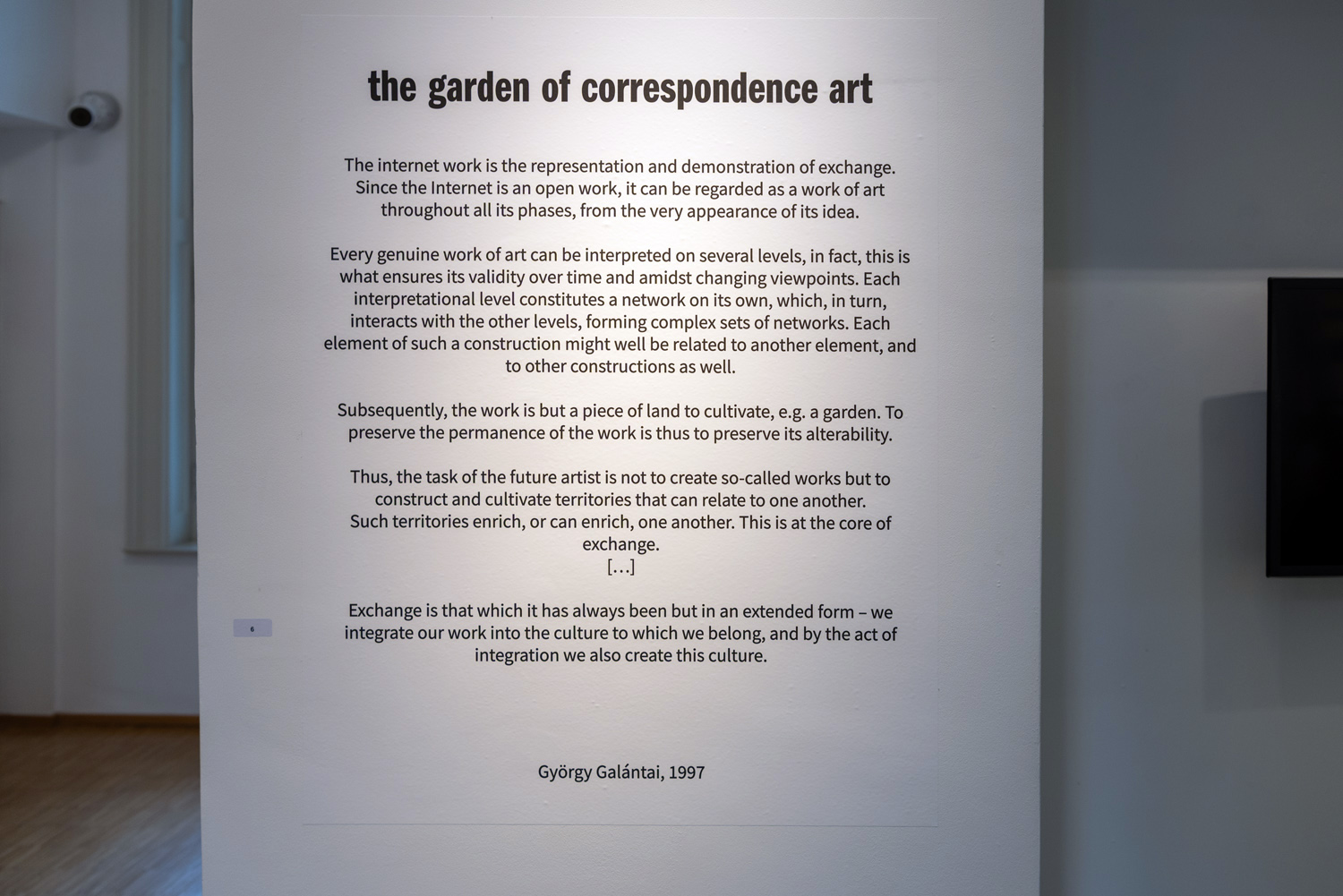
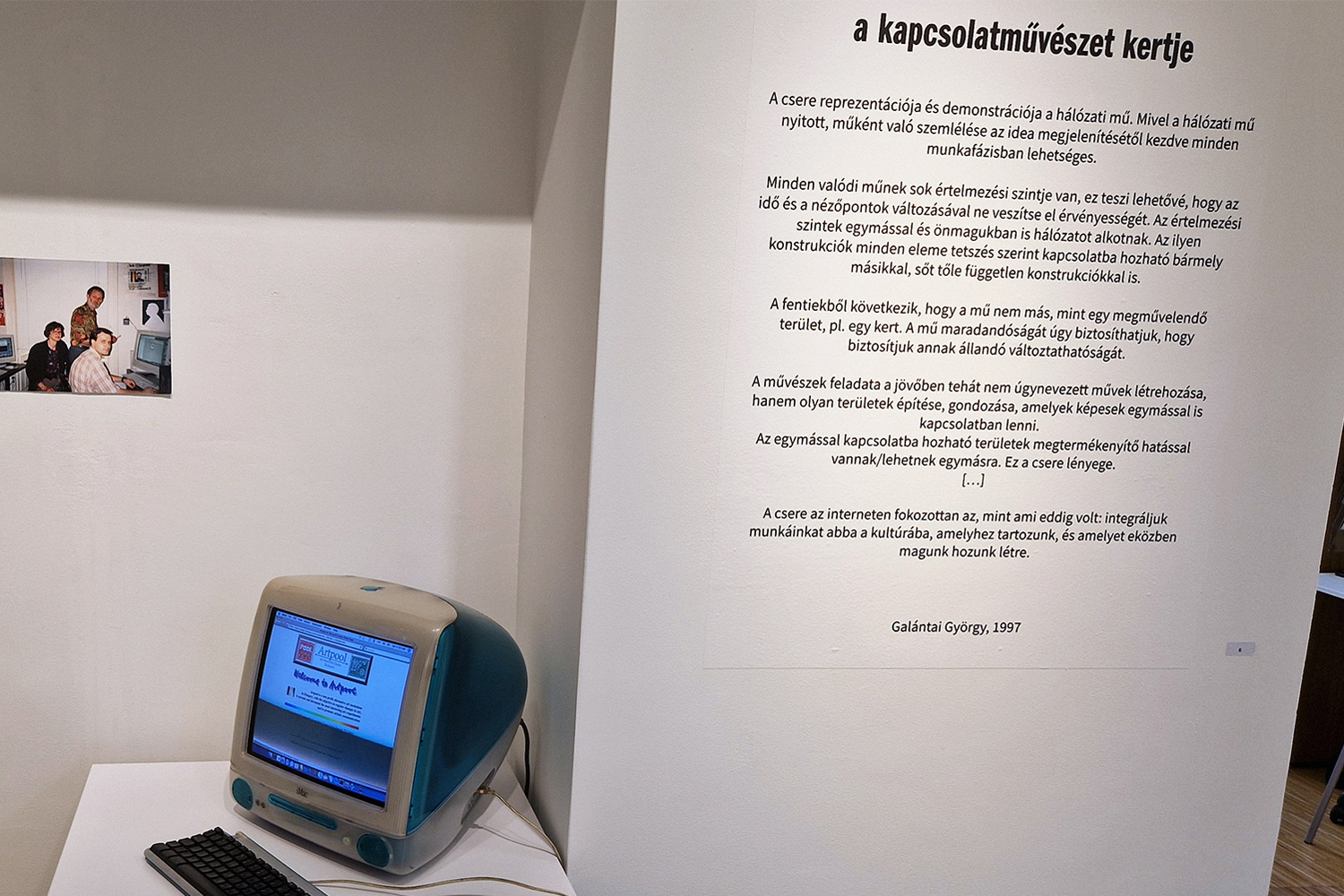
Excerpt from the text written to accompany the web adaptation of the exhibition presenting Ray Johnson’s correspondence art and his relationship with Artpool and György Galántai (Ernst Museum, Budapest).
The text is key to understanding the broader conceptual thinking behind artpool.hu.
7️⃣
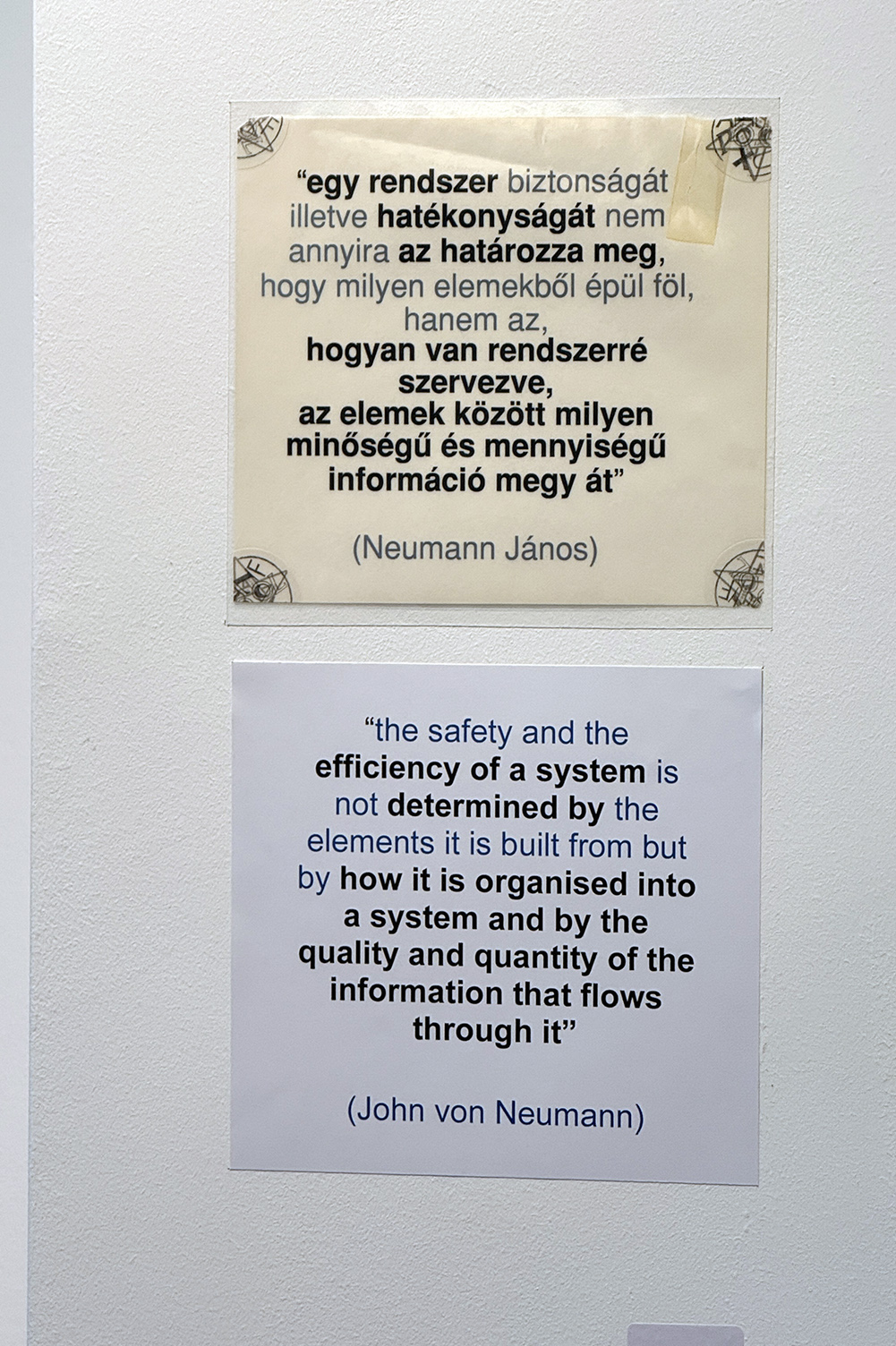
György Galántai: The Dimension of Knowledge, 2004
(Ladder, toolbox, and a quotation from John von Neumann)
(Photos: Ádám Gara and Júlia Klaniczay)
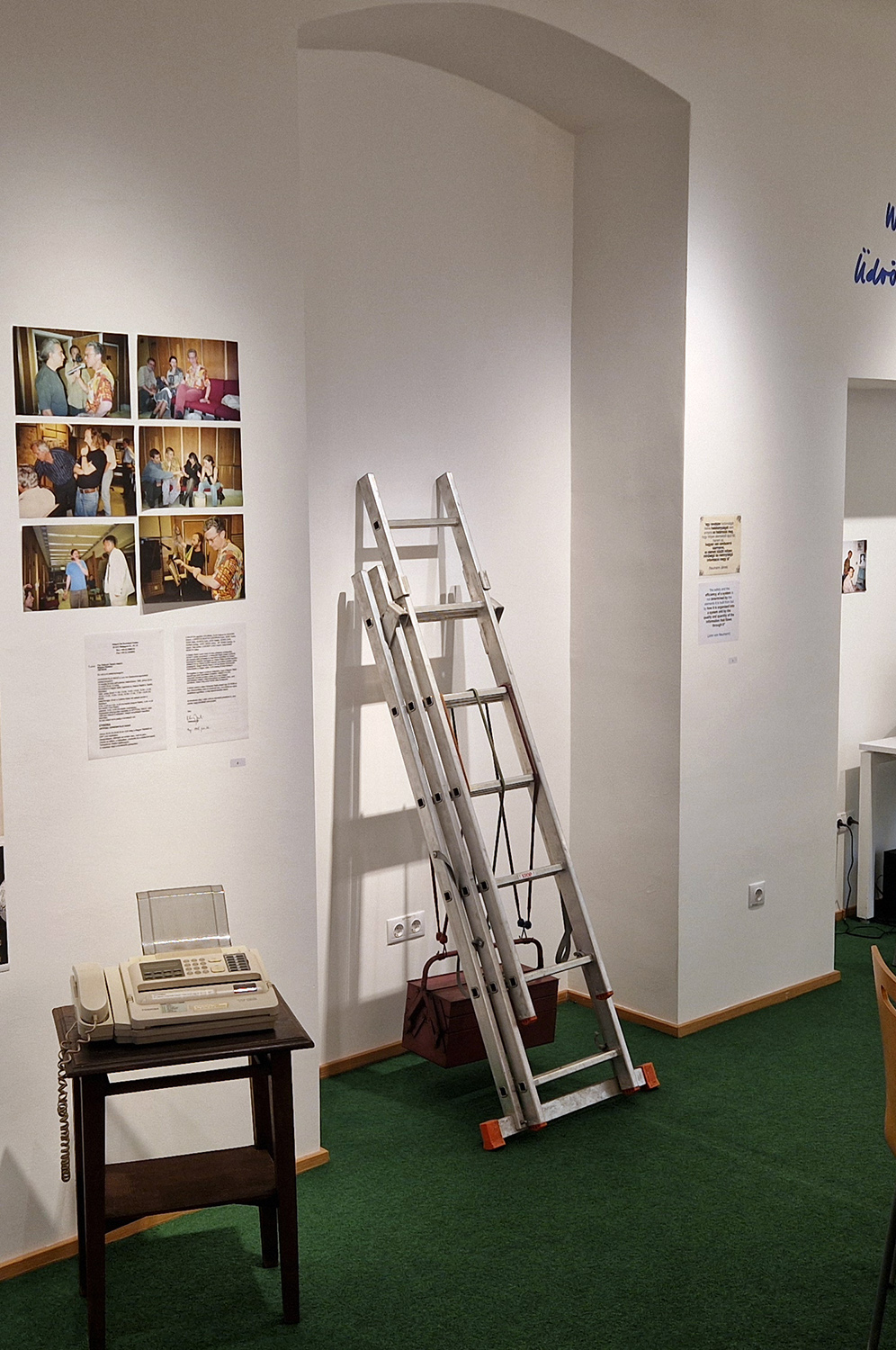
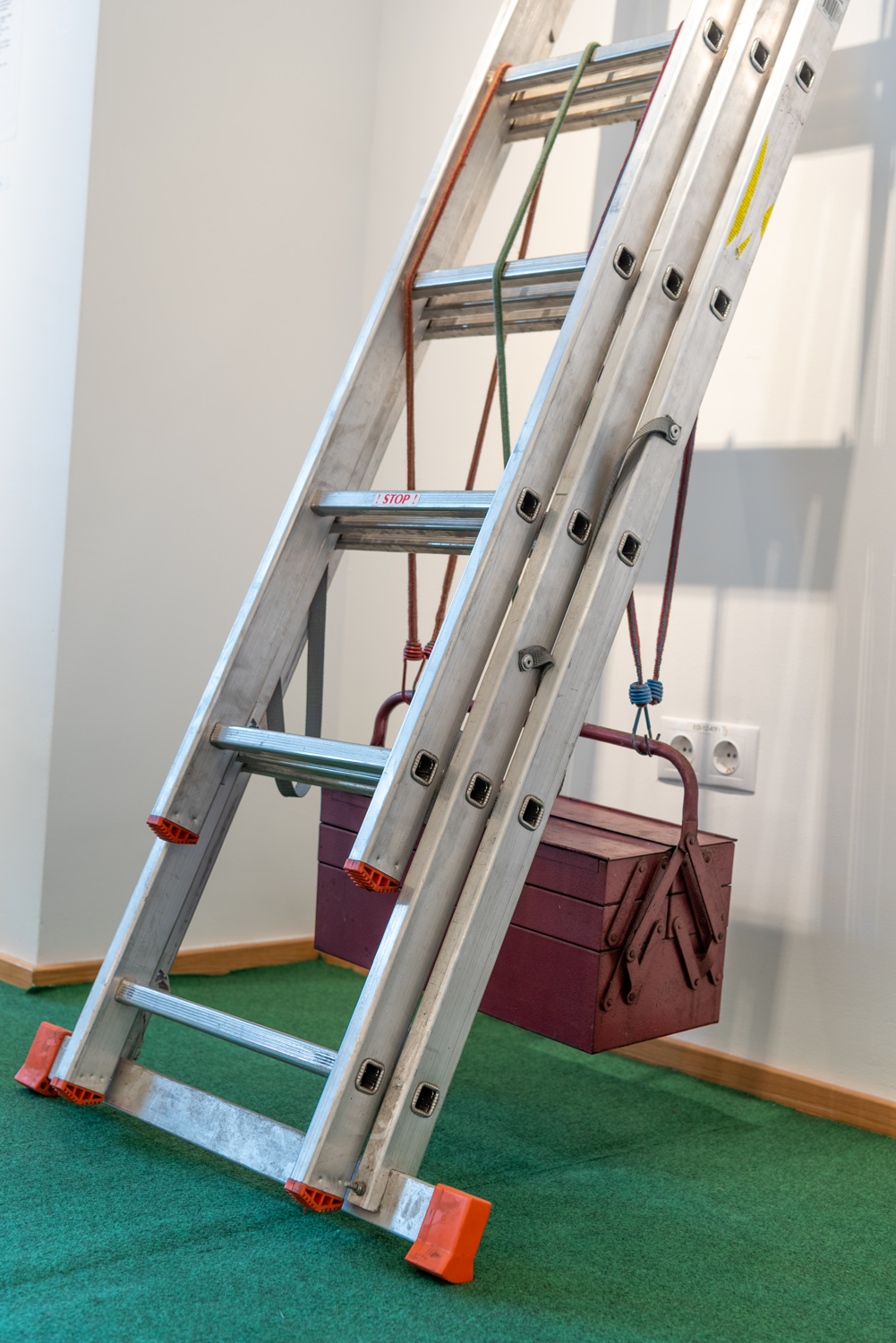
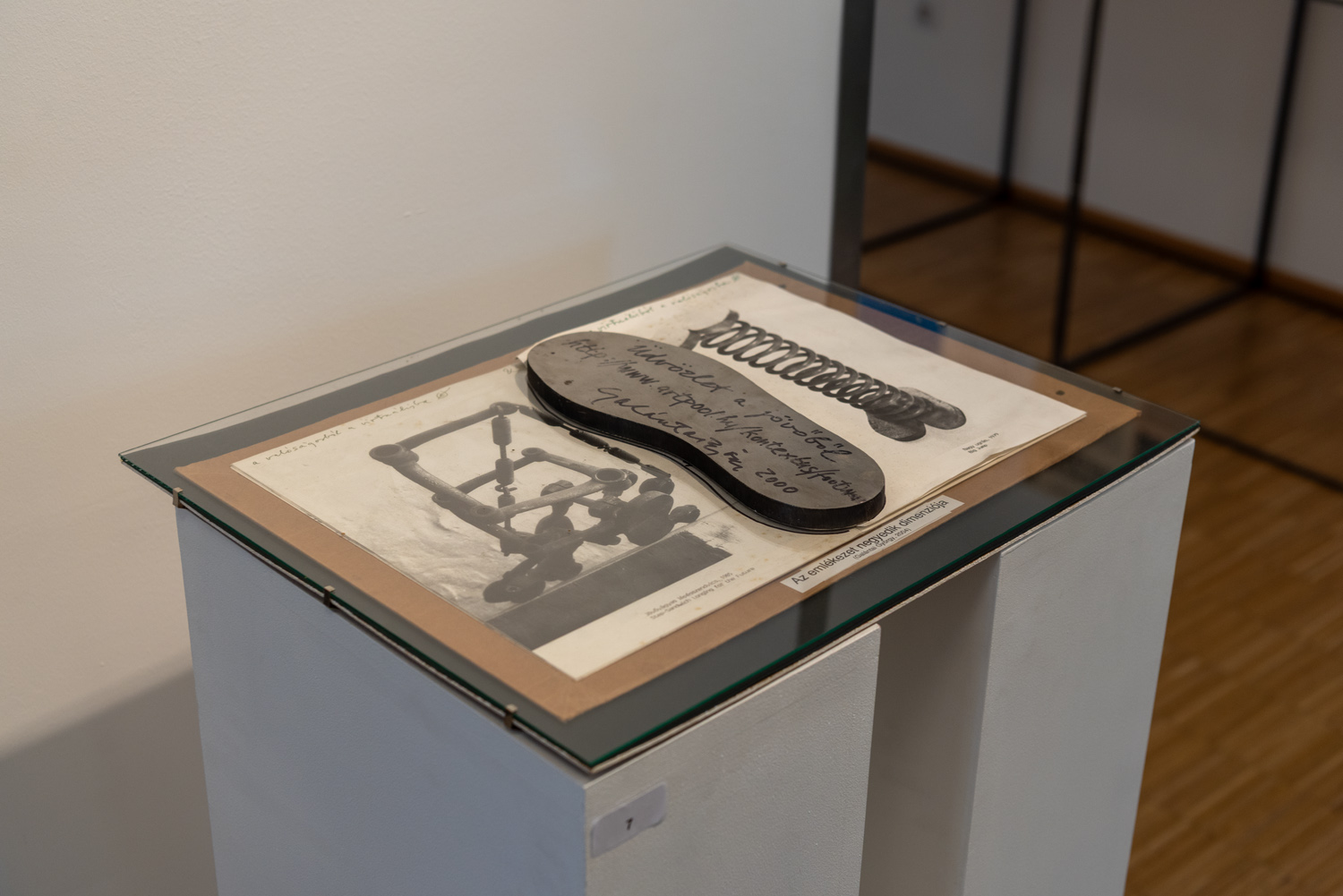
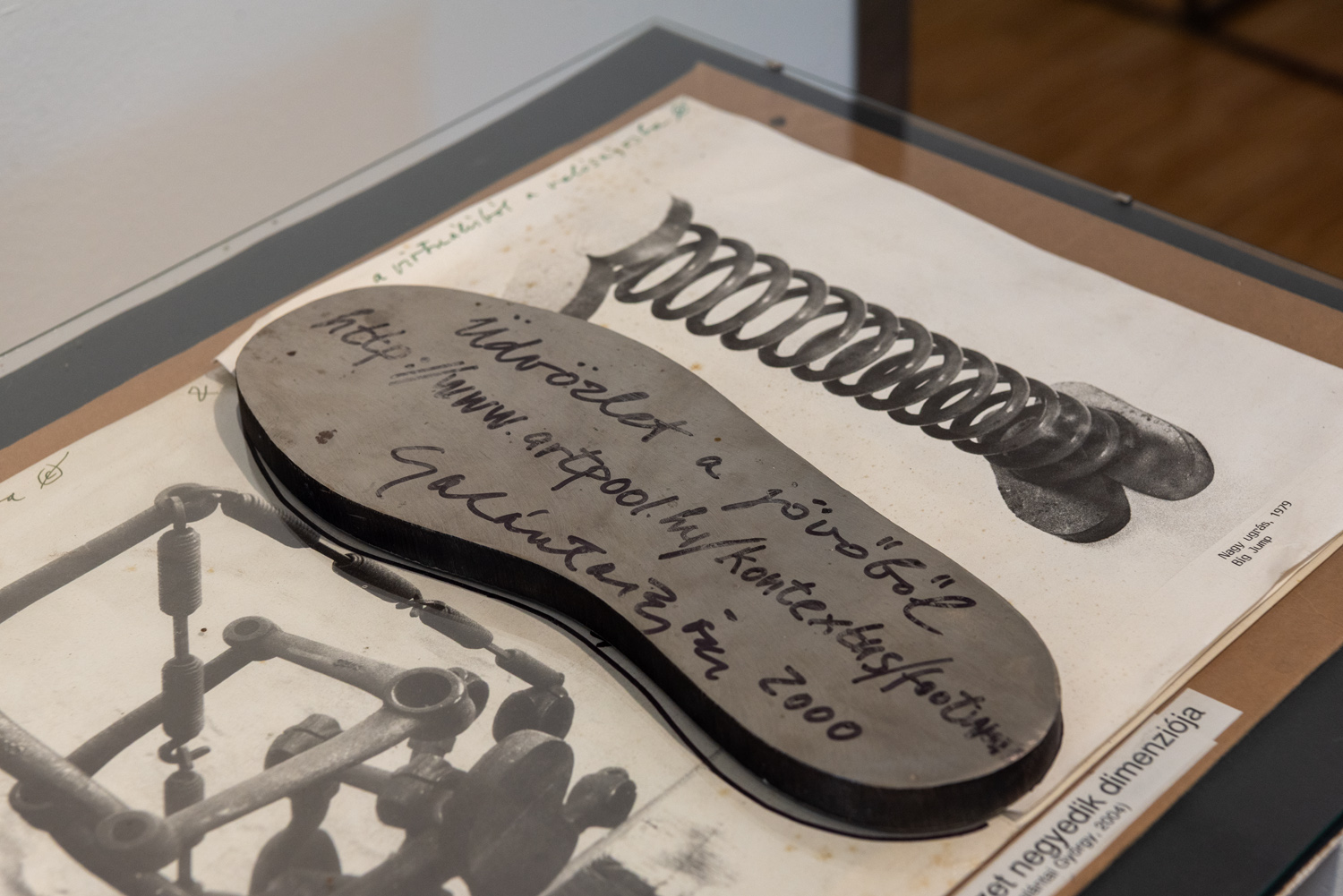
György Galántai: The Fourth Dimension of Memory, 2004
(An integrated 2004 version of three earlier works: Big Jump, 1979; Step Sandwich Longing for the Future, 1985; Greetings from the Future, 2000)
(Photos: Ádám Gara and Júlia Klaniczay)
8️⃣
ARTPOOL RADIO listening station [table, 8 chairs, A3 and A4 prints]
(Photos: Judit Bodor, Júlia Klaniczay, Ádám Gara)
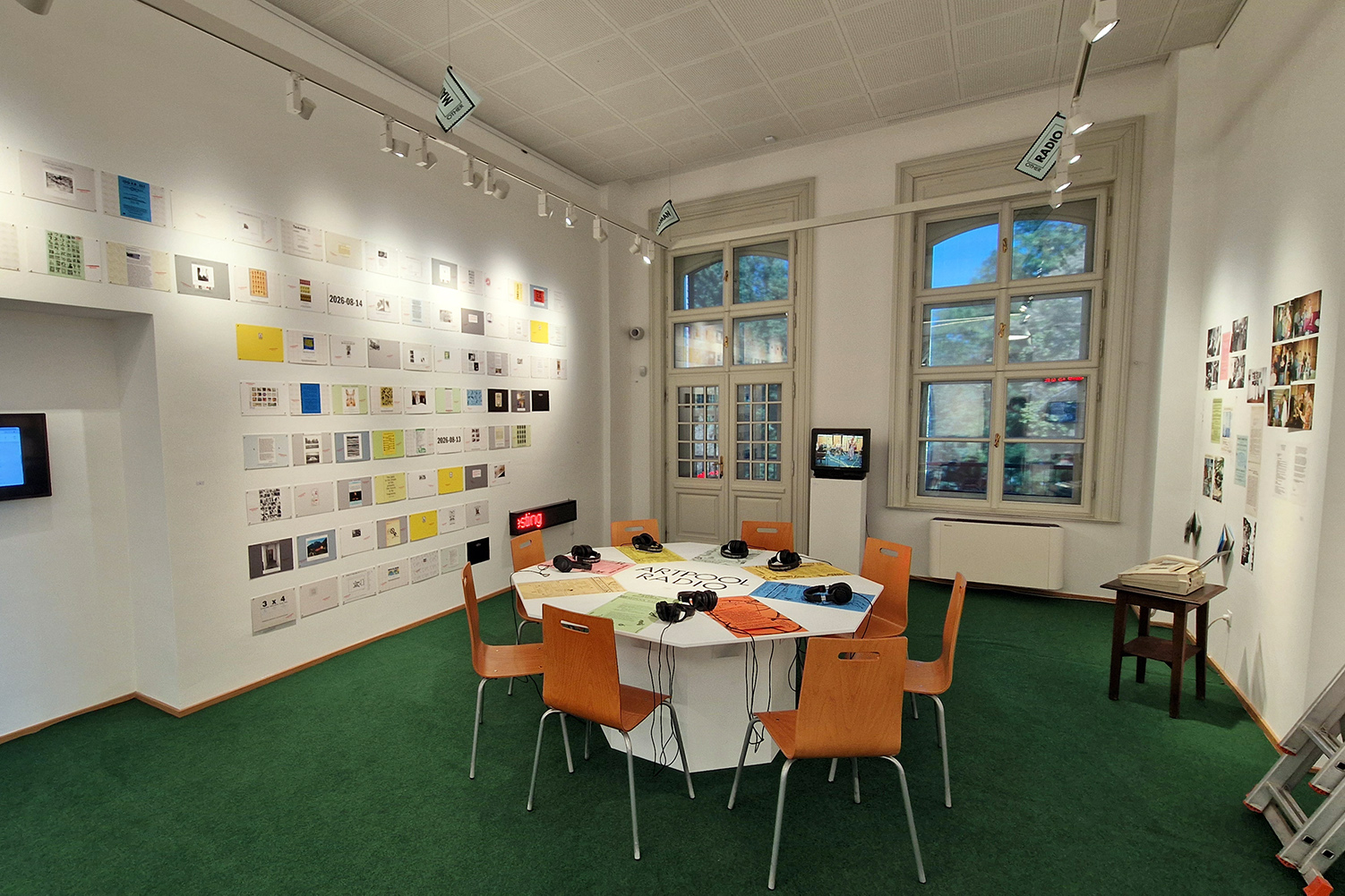
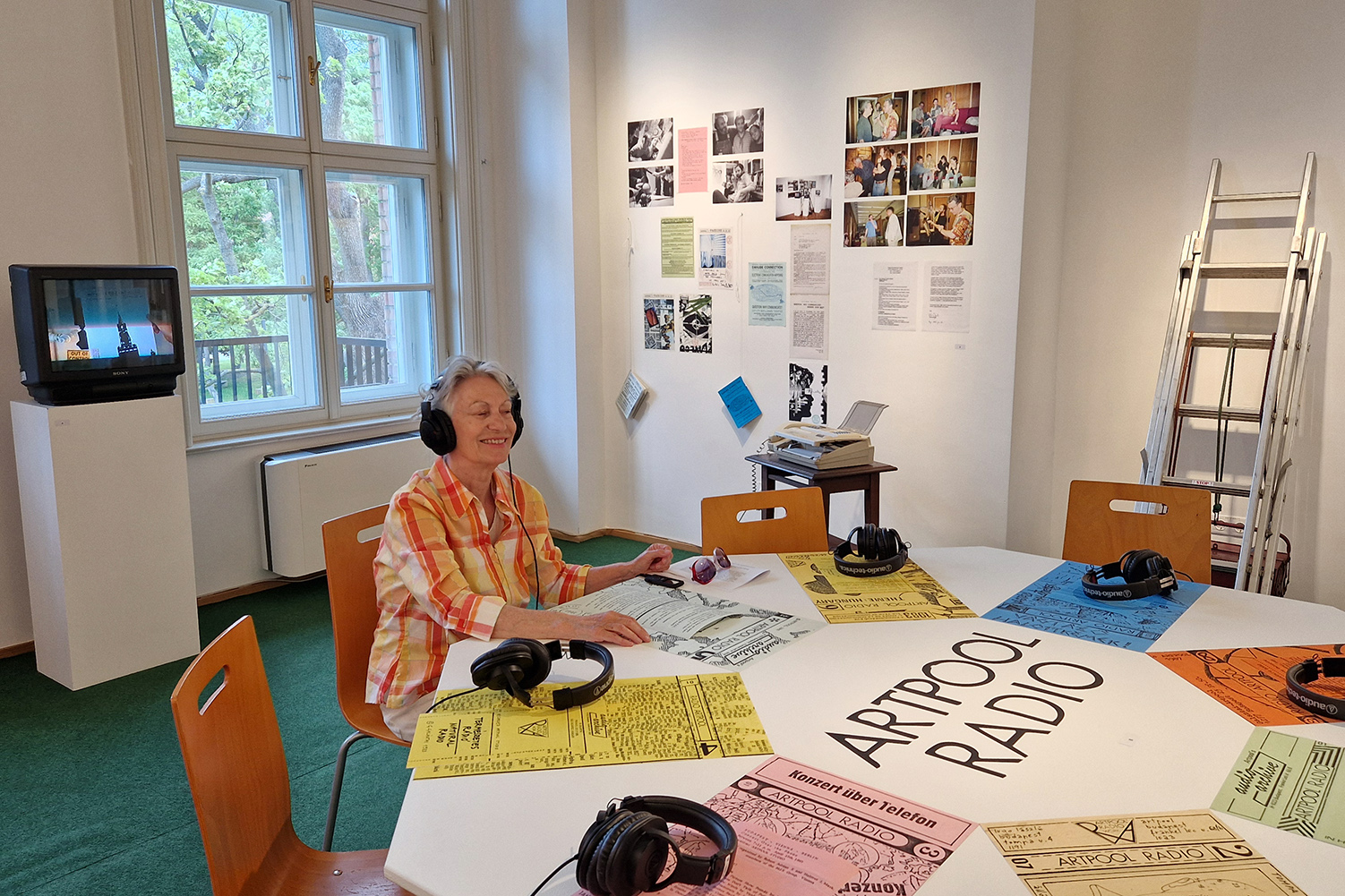
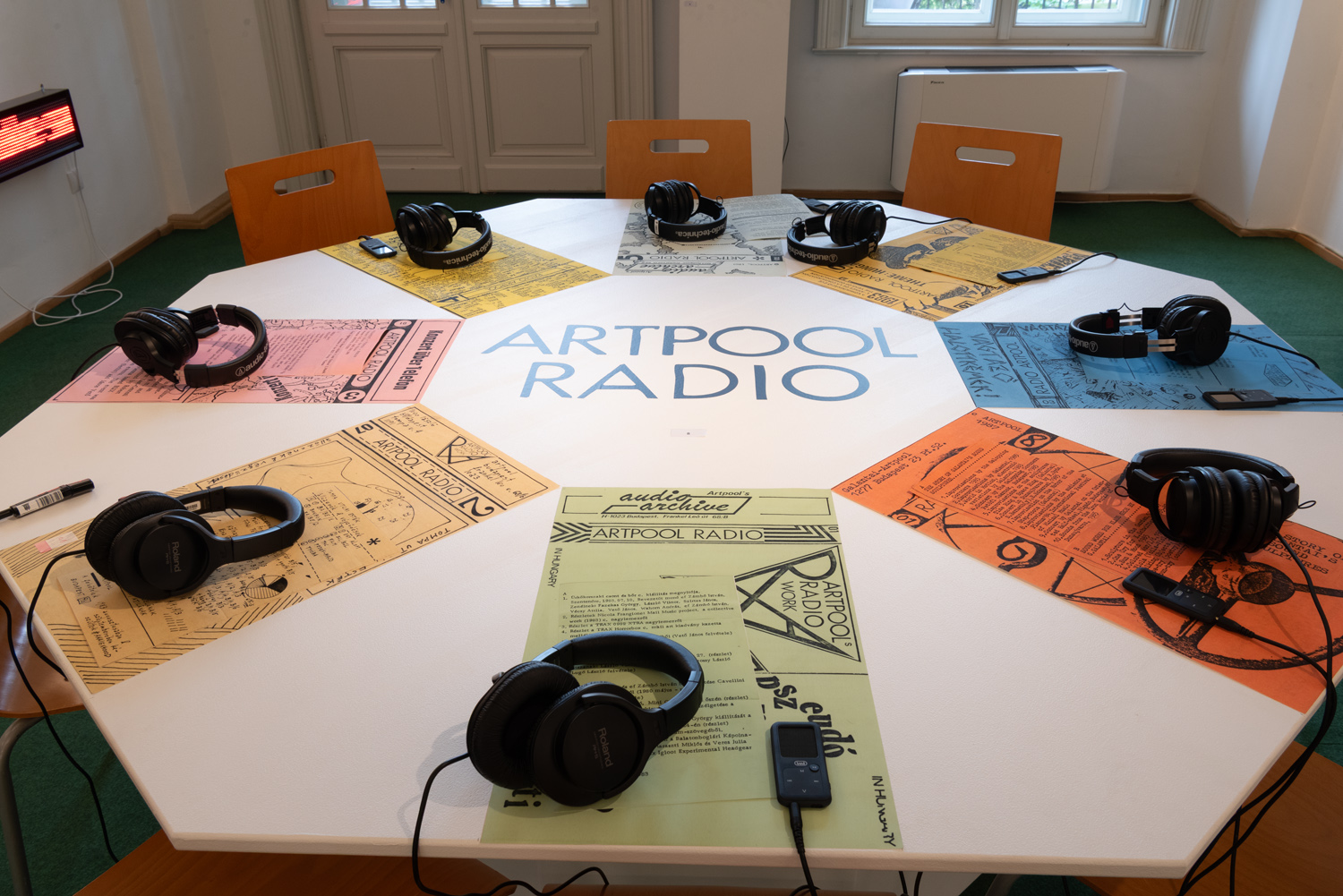
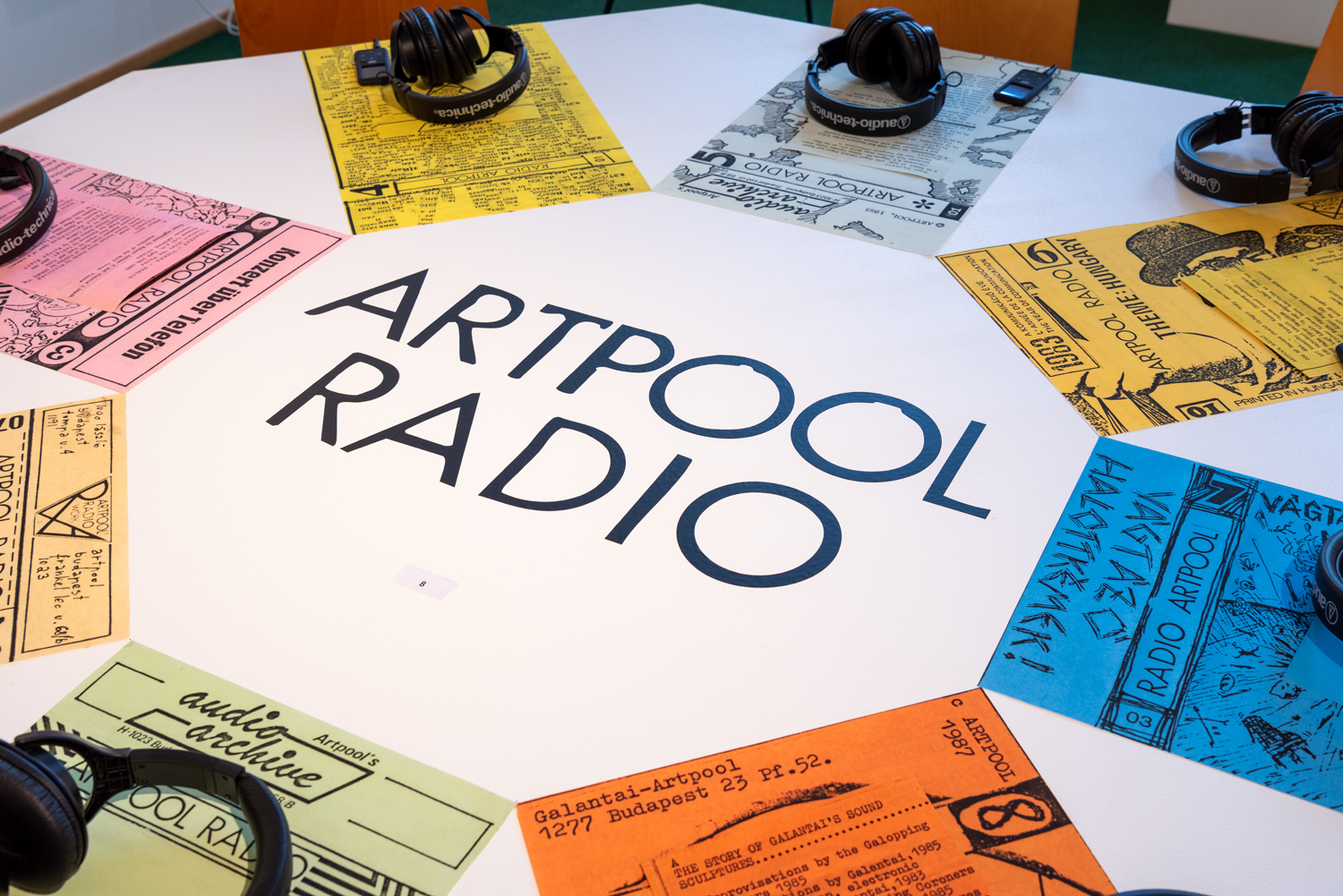
Another example of pre-internet (and at the time illegal) telecommunications projects was the Artpool Radio cassette series, consisting of 8 cassette releases, alongside the previously launched samizdat art journal Aktuális Levél / Artpool Letter (AL).
The radio cassettes were edited and compiled by György Galántai and Júlia Klaniczay between 1983 and 1987. Artpool Radio functioned as a kind of “pseudo-radio”: it had no access to radio waves, and digital platforms as we know them today did not yet exist. The cassette releases documented experimental music, sound poetry, and other events connected to Artpool’s social and artistic milieu and were distributed and exchanged by post or through personal encounters. Of particular historical significance is the recording of the 1983 Budapest–Vienna–Berlin telephone concert. Later, Artpool Radio was remediated on the artpool.hu website, which significantly transformed the experience of reception. While the tape cassettes reached participants through exchange and the principle of correspondence art, on the internet anonymous users can directly and simultaneously access all broadcasts. The listener can decide which broadcast to choose, making the relationship with the sound material more intuitive and less linear. This mode of internet-based operation is also evoked by the installation here: visitors can select which recording they wish to listen to through headphones, using enlarged cassette covers placed on the table for information.
9️⃣
c a p t u r i n g (artpool.hu)
86 double-sided A4 prints of artpool.hu webpages dated between 21 May and 14 August; video screen recordings, LED scrolling sign, performance
(Photos: Judit Bodor, Roddy Hunter, Ádám Gara)
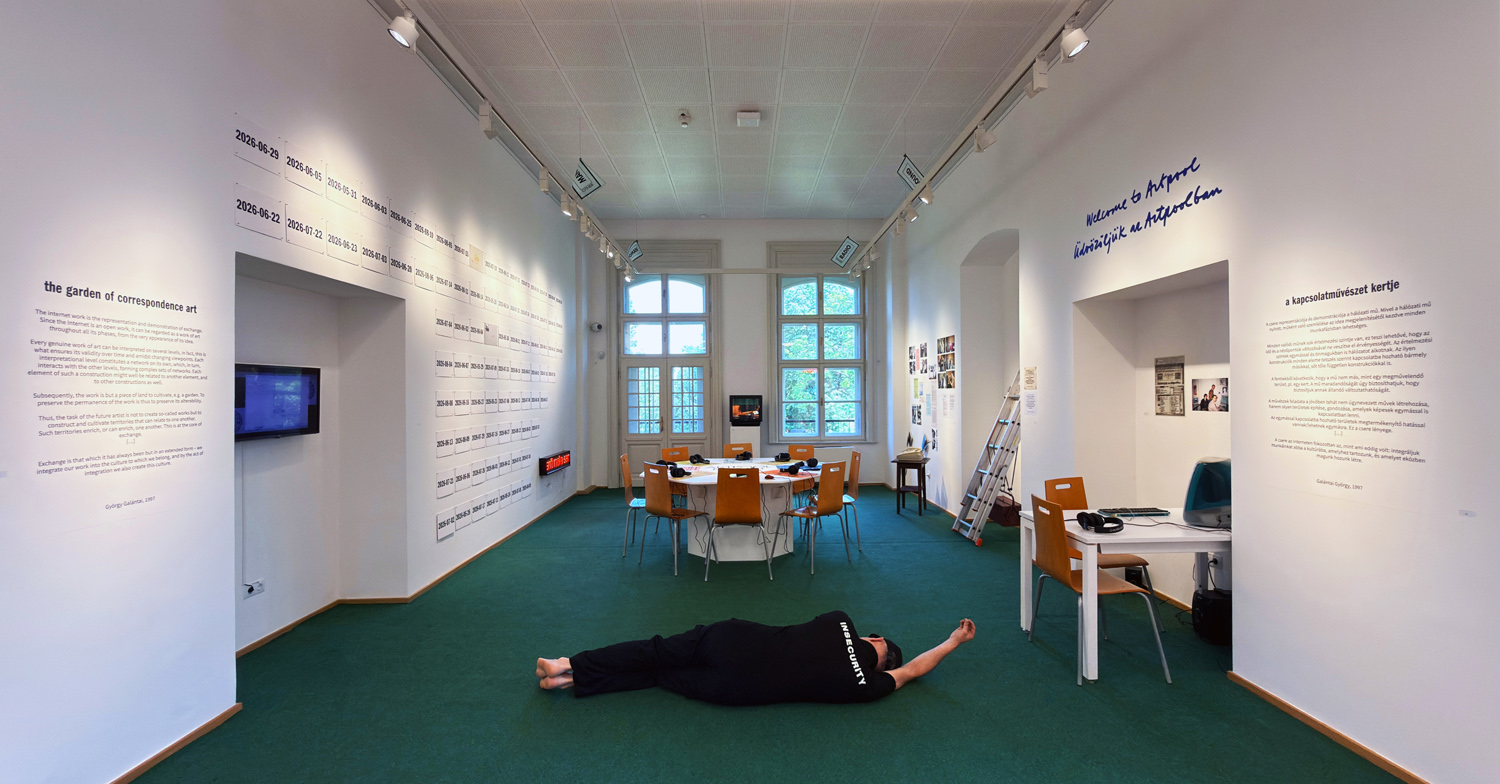
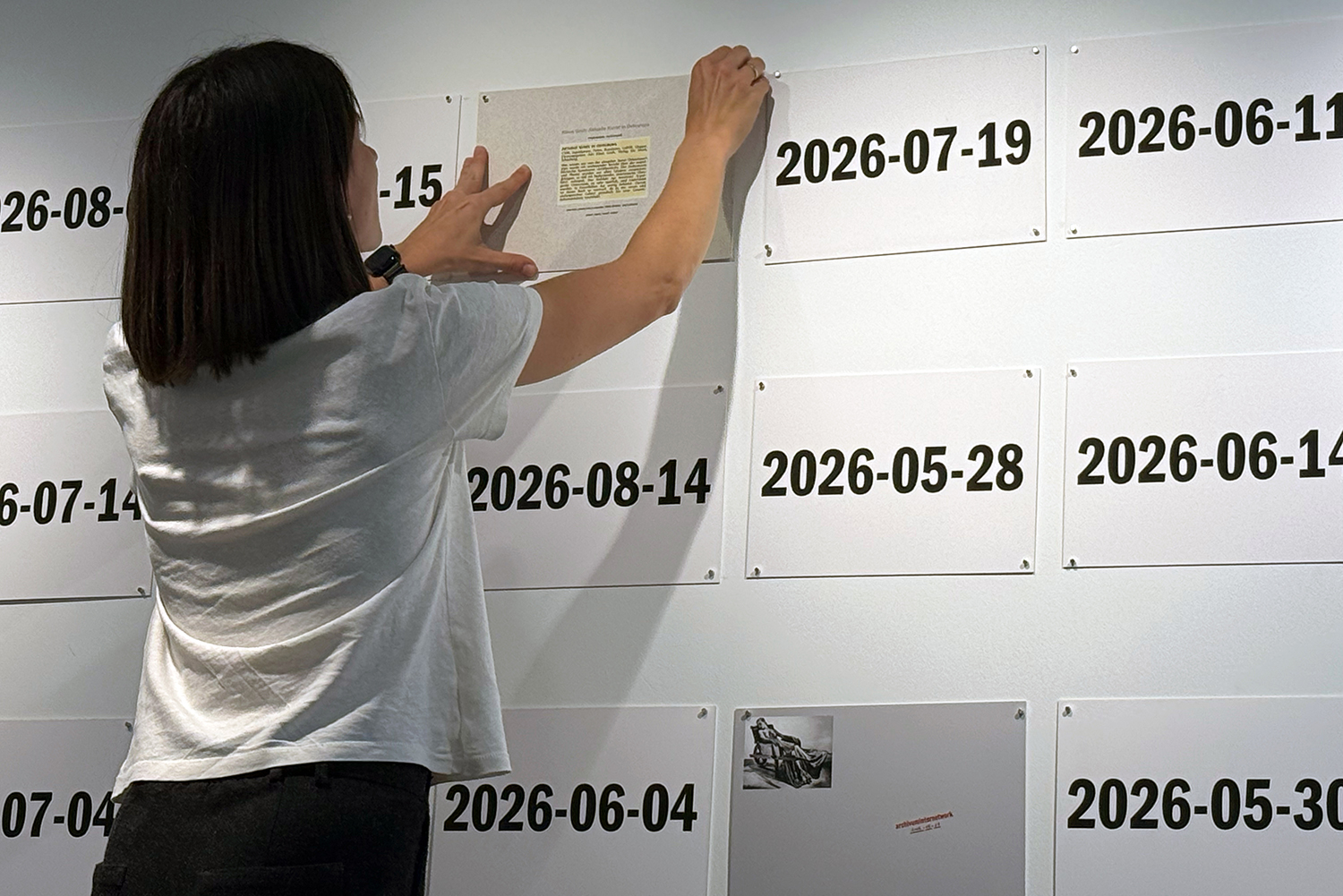
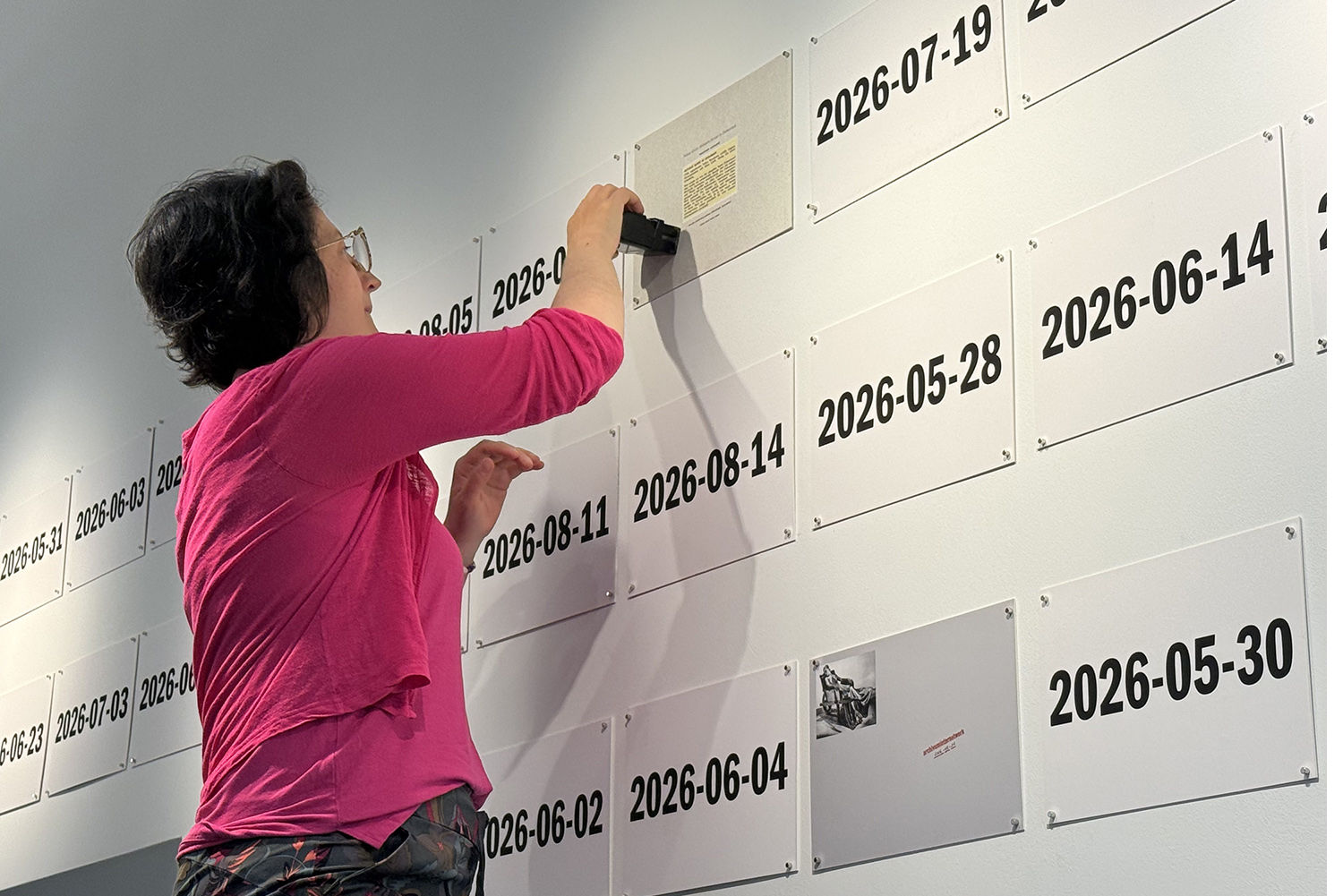
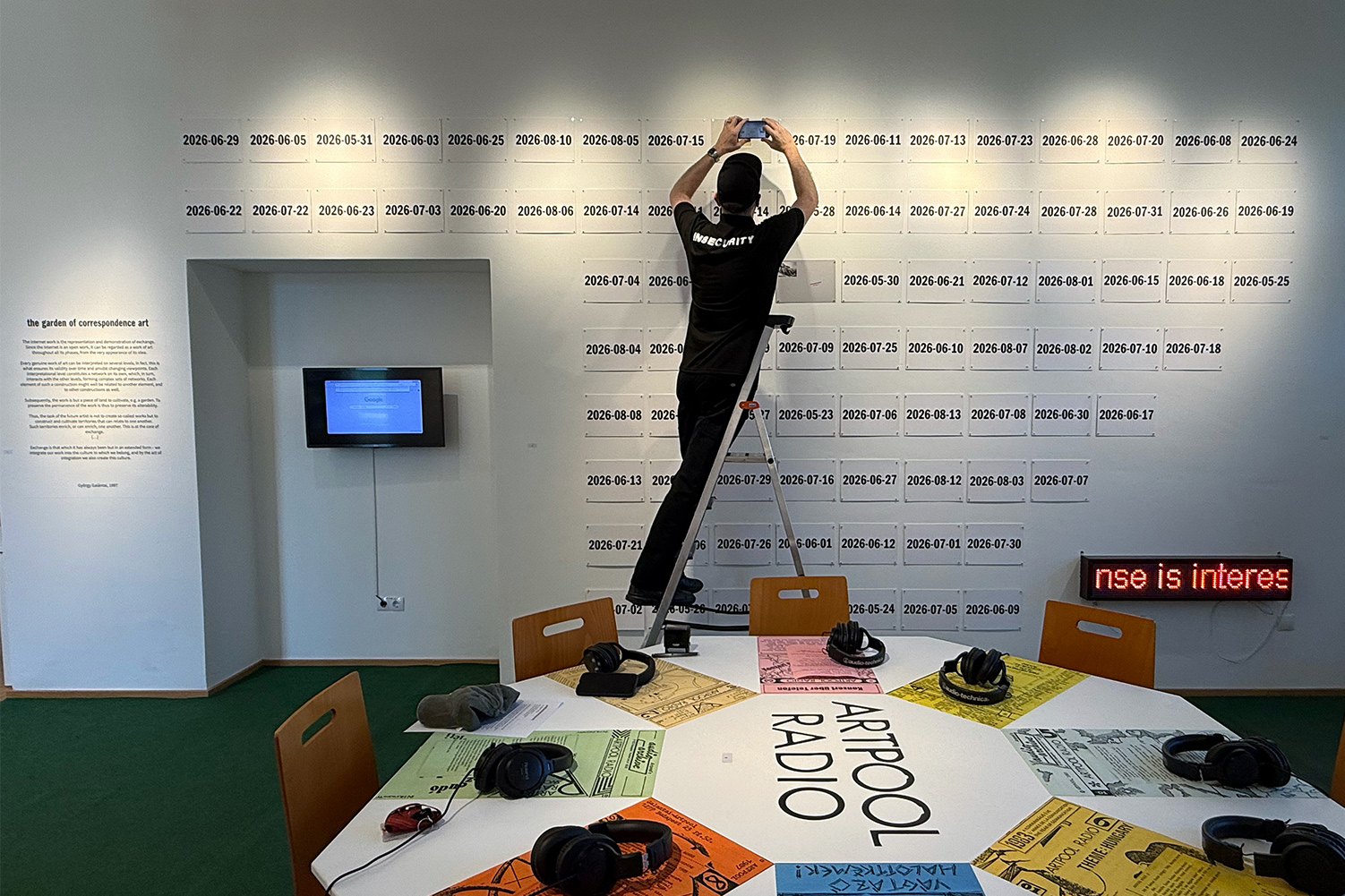
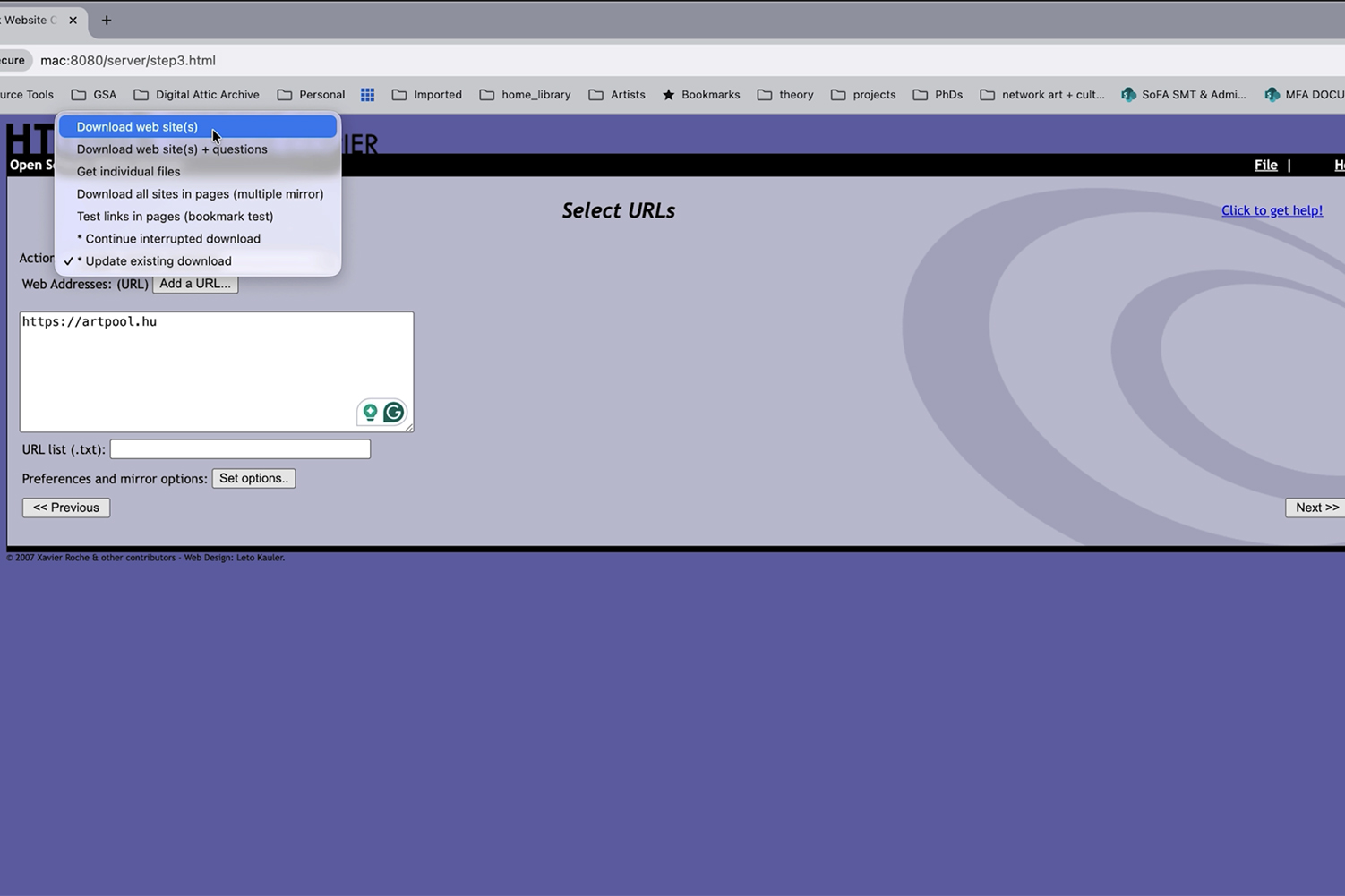
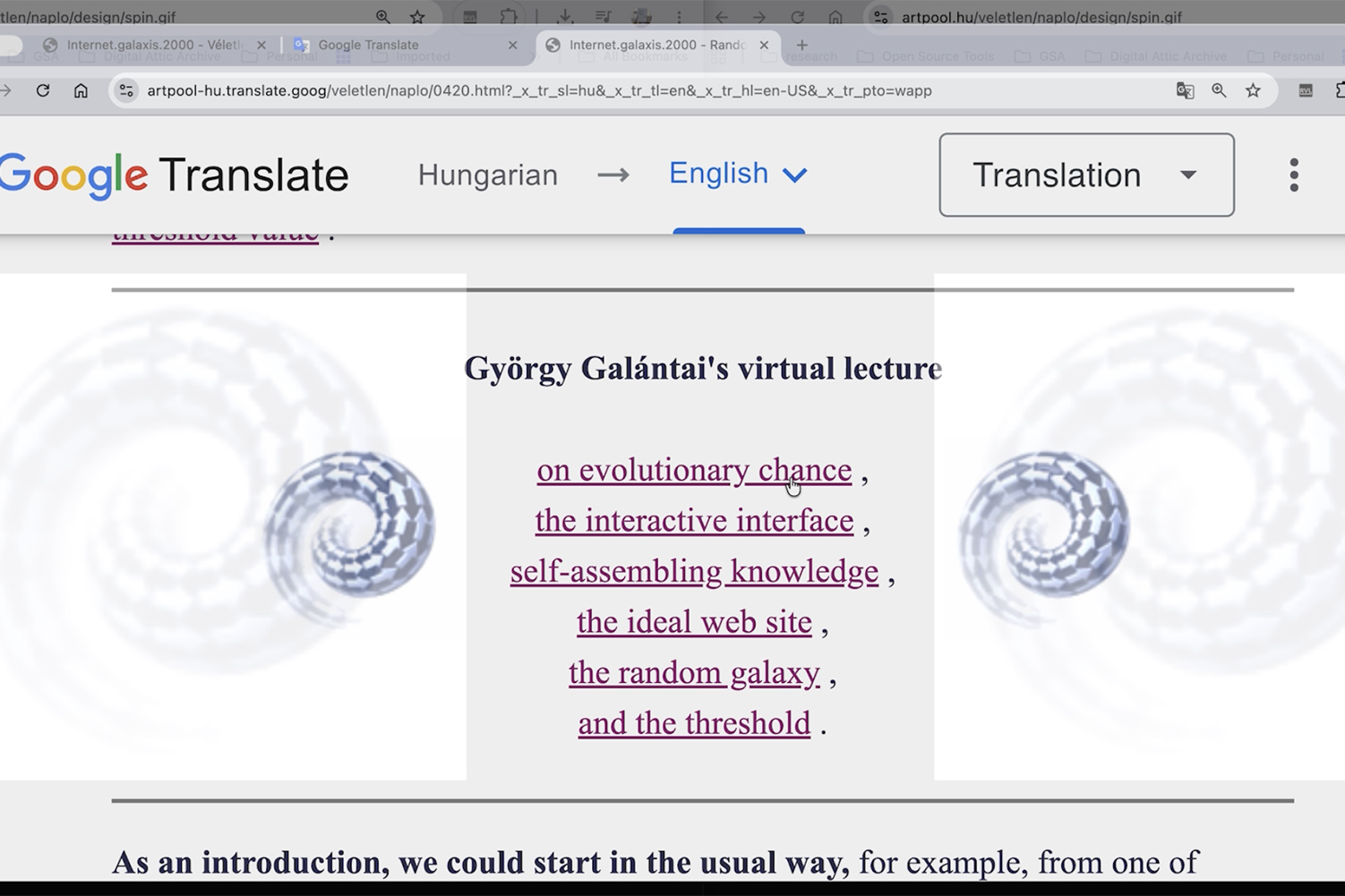
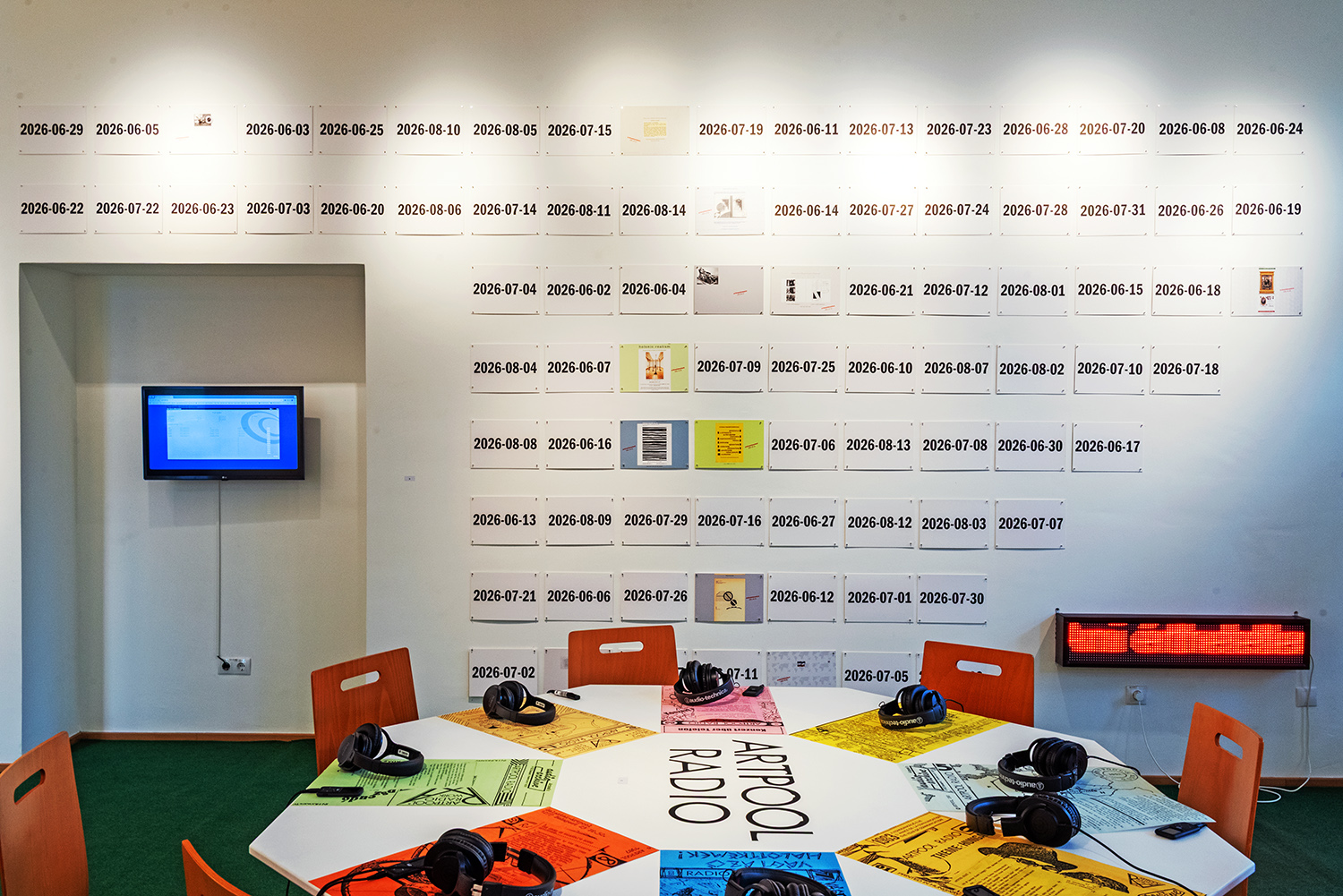
capturing (artpool.hu) is a new work made by Roddy Hunter and curated by Judit Bodor for this exhibition. It primarily consists of 86 double-sided A4 prints, each documenting a randomly selected, previously unarchived artpool.hu webpage, with one page revealed each day of the exhibition, initially planned to run from 21 May to 14 August but later extended to 16 October. All 86 pages are archived on the Internet Archive's Wayback Machine by the end of the exhibition.
The installation also features a video screen recording of an unseen hand downloading and making an offline copy of the entire artpool.hu website while reading György Galántai's virtual lecture, given at the Internet.galaxis conference in 2000, and locating some of the unarchived webpages selected for the work next to the monitor showing the video.
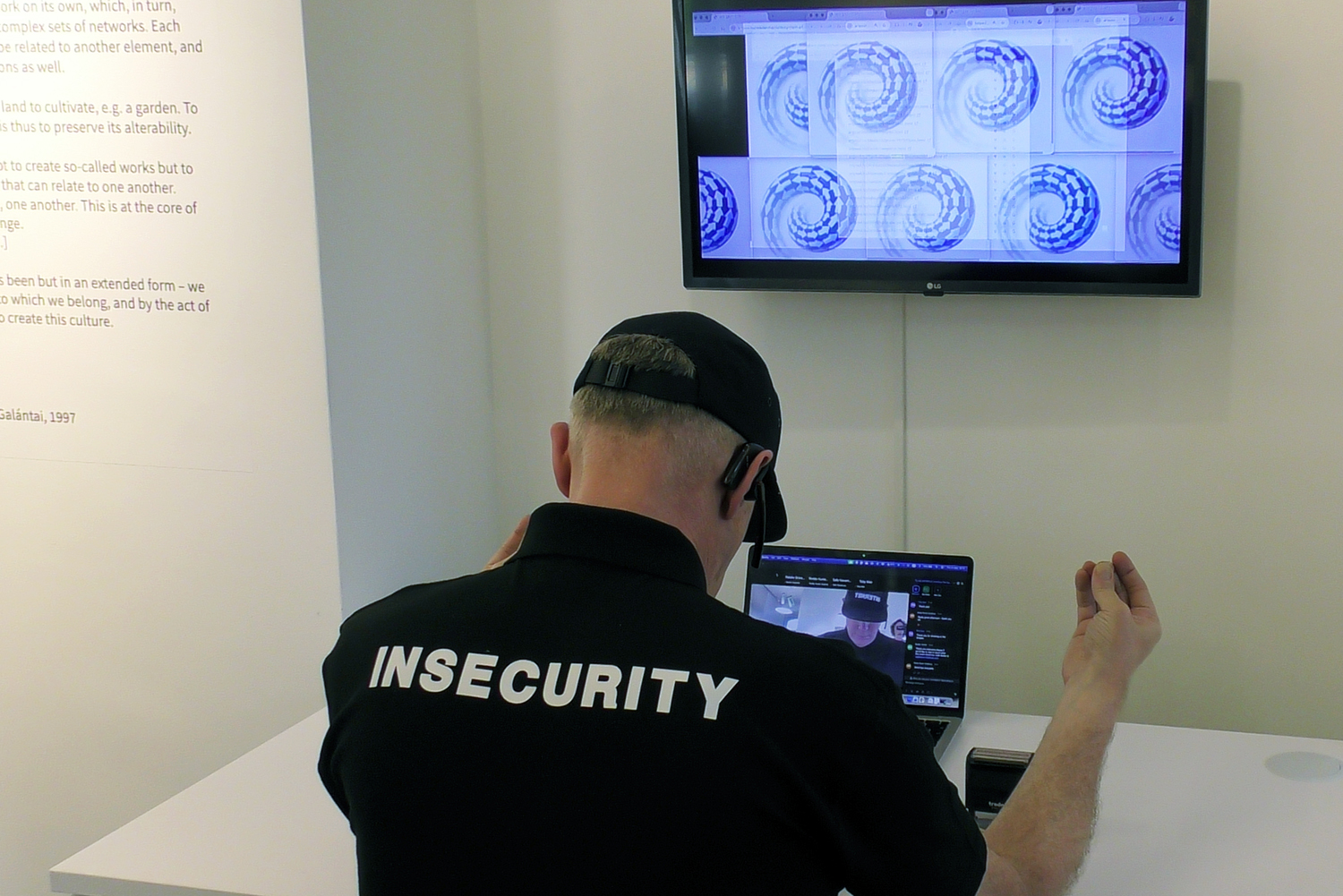
Another element of the work took place at the evening preview of the exhibition, where Roddy Hunter, performing as an "internet insecurity guard" within the museum, is stationed at the video screen, monitoring the video while simultaneously searching the live web for images of body parts and performing a body-scan exercise associated with PTSD recovery.
The work responds to a pressing question in digital culture: if artpool.hu documents and generates Artpool's archival activity, how will that activity itself be preserved? While the Internet Archive's Wayback Machine provides public infrastructure for cultural memory as an alternative to proprietary platforms like Google, Meta, Microsoft, and Amazon, its automated crawlers cannot navigate handmade, hand-linked legacy HTML sites with self-generating structures and deeply nested orphaned pages, exactly the kind of architecture artpool.hu embodies.
Through manual human intervention, capturing (artpool.hu) makes visible what algorithms miss. Capturing one page, one day at a time, the work operates simultaneously as an act of care and an expression of anxiety. It acknowledges that the choices embedded in automated preservation systems become invisible infrastructures of cultural memory and considers how archives themselves are preserved and what remains.
The exhibition guide was written by Judit Bodor and Roddy Hunter